
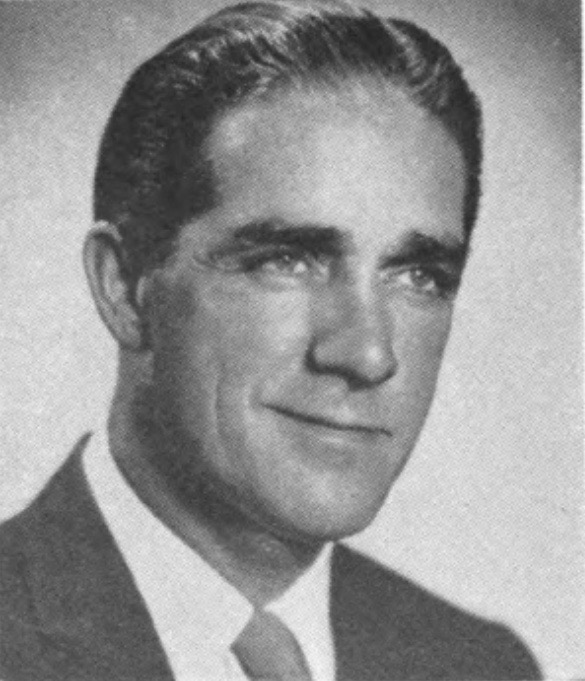
Historical · U.S. House · Illinois · District 11
Timothy Sheehan
Former U.S. Representative · Illinois District 11 · 1951–1959 · Republican
Timothy Sheehan represented Illinois's District 11 in the United States House of Representatives (1951–1959) for the Republican party. The page below collects sourced biographical facts, term history, committee roles, and provenance for Sheehan.
Bioguide ID: S000315
Key facts
- Full name
- Timothy Sheehan
- State
- Illinois
- District
- District 11
- Party
- Republican
- House service
- 1951–1959
- First House term
- 1951
- Status
- Left office
- Current term ends
- —
- Born
- 1909
- Bioguide ID
- S000315
- Committee assignments
- —
- Dataset version
- 1.20260605
Biographical narrative
877 words · sourced from the Wikipedia REST extract
Timothy Sheehan was a U.S. Representative from Illinois, serving in the House of Representatives from 1951 until 1959. A member of the Republican Party, Sheehan represented Illinois's 11th congressional district during a significant period in American history, marked by political change and social upheaval. His tenure in Congress was characterized by his involvement in various legislative matters and his interactions with prominent political figures of the time.
Early life and career
Timothy Patrick Sheehan was born on February 21, 1909, in Chicago, Illinois. His early life in Chicago, a city known for its vibrant political landscape, likely influenced his later career in public service. Details regarding his educational background and early professional life are limited, but it is known that he developed a keen interest in politics and governance, which would shape his future endeavors.
Before entering the political arena, Sheehan engaged in various occupations that provided him with insights into the workings of government and the needs of his constituents. His experiences in Chicago, a city with a rich history of political activity, helped him build a network of connections that would prove valuable in his political career.
Sheehan's political career began to take shape as he aligned himself with the Republican Party. His commitment to public service and his understanding of the political landscape in Illinois positioned him as a viable candidate for the U.S. House of Representatives. In 1950, he successfully ran for office, marking the beginning of his congressional career.
House tenure
Timothy Sheehan's first term in the U.S. House of Representatives commenced in 1951. Over the course of four terms, he represented Illinois's 11th congressional district, a role that allowed him to engage with key legislative issues of the time. His tenure in Congress coincided with a period of significant national and international events, including the Cold War and the civil rights movement.
During his time in the House, Sheehan was known for his ability to work across party lines. He developed relationships with members of both the Republican and Democratic parties, which facilitated his involvement in various legislative initiatives. Notably, he was recognized for his support of the Civil Rights Act of 1957, a landmark piece of legislation aimed at addressing racial discrimination and protecting voting rights for African Americans. This vote positioned him among those advocating for civil rights during a transformative era in American history.
Sheehan's congressional career was marked by his interactions with several prominent political figures, including John F. Kennedy, Richard Nixon, and Gerald Ford. These relationships not only shaped his legislative priorities but also provided him with a broader perspective on national issues. His ability to engage with influential leaders of the time contributed to his reputation as a respected member of Congress.
In 1959, Sheehan sought to expand his political influence by running for mayor of Chicago. However, he faced a challenging election against the incumbent Mayor Richard J. Daley. Despite a significant loss in this election, Sheehan maintained a cordial relationship with Daley, reflecting his ability to navigate the complexities of political rivalries. Their mutual respect was evident, as Daley acknowledged Sheehan's contributions to public service.
Legislative focus and committees
Throughout his time in the House of Representatives, Timothy Sheehan focused on a range of legislative issues that were pertinent to his constituents and the nation as a whole. His involvement in various committees allowed him to address topics such as civil rights, public policy, and economic development. Sheehan's legislative priorities were shaped by the needs of his district, as well as the broader national context.
One of the notable aspects of Sheehan's legislative focus was his support for civil rights initiatives. His vote in favor of the Civil Rights Act of 1957 demonstrated his commitment to addressing racial inequality and promoting social justice. This act was a significant step in the ongoing struggle for civil rights in the United States, and Sheehan's participation in its passage underscored his awareness of the pressing issues facing the nation.
In addition to civil rights, Sheehan was involved in discussions surrounding national security and foreign policy, particularly during the early years of the Cold War. He made headlines with his controversial suggestion that the United States should consider the annexation of Canada, a statement that drew attention both domestically and internationally. This proposal was met with criticism and was later referenced in Soviet propaganda, highlighting the complexities of Cold War politics and the perceptions of American expansionism.
Sheehan's tenure in Congress also included mentorship roles, as he was known for guiding younger politicians and helping them navigate the legislative process. His relationships with other members of Congress, including those from the opposing party, reflected his belief in collaboration and bipartisanship as essential components of effective governance.
Timothy Sheehan concluded his congressional career on January 3, 1959, after serving four terms in the House of Representatives. His legacy includes his contributions to civil rights legislation, his engagement with significant political figures, and his efforts to address the pressing issues of his time. Following his departure from Congress, Sheehan continued to be involved in public life, leaving a lasting impact on the political landscape of Illinois and the nation. He passed away on October 8, 2000, leaving behind a legacy of public service and political engagement.
Notable legislation
Sponsored and co-sponsored legislation for Timothy Sheehan is pending operator curation. The biographical narrative above carries the same provenance trail until per-bill rows are written.
Sources
- [1]https://en.wikipedia.org/wiki/Timothy_P._SheehanWikipedia · retrieved 2026-06-05
Notable quotes
Sourced quotes for Timothy Sheehan are pending operator curation. Narrative-scope provenance remains attached below.
Sources
- [1]https://en.wikipedia.org/wiki/Timothy_P._SheehanWikipedia · retrieved 2026-06-05
Key positions
Curated policy positions for Timothy Sheehan are pending operator review. The biographical narrative above carries the same provenance trail until per-topic positions are written.
Sources
- [1]https://en.wikipedia.org/wiki/Timothy_P._SheehanWikipedia · retrieved 2026-06-05
Terms served
- 1951–1953U.S. House · Term 1 · Republican
- 1953–1955U.S. House · Term 2 · Republican
- 1955–1957U.S. House · Term 3 · Republican
- 1957–1959U.S. House · Term 4 · Republican
Sources & provenance
Every attributable claim above carries a per-section [N] marker that resolves to the corresponding URL below. Each entry records the upstream provider, the canonical URL, and the timestamp at which the source was retrieved by the ingest pipeline.
Key facts
- https://bioguide.congress.gov/search/bio/S000315bioguide · retrieved 2026-06-05
- https://www.govtrack.us/congress/members/409813govtrack · retrieved 2026-06-05
Biographical narrative
- https://en.wikipedia.org/wiki/Timothy_P._Sheehanwikipedia · retrieved 2026-06-05
Find your representative
Every U.S. state elects representatives by district. Browse Illinois’s delegation, the full former-representative roster, or explore the role and term length.
Related on The Candidate
- Preceded by Chester ChesneyEarlier holder of the Illinois District 11 House seat · Democratic.Open
- Succeeded by Roman PucinskiLater holder of the Illinois District 11 House seat · Democratic.Open
- Abner TaylorFormer U.S. Representative · Illinois District 1 · RepublicanOpen
- Adam SnyderFormer U.S. Representative · Illinois District 1 · DemocraticOpen
- Arthur MitchellFormer U.S. Representative · Illinois District 1 · DemocraticOpen
- Bennett StewartFormer U.S. Representative · Illinois District 1 · DemocraticOpen