
Historical · U.S. House · Illinois · District 12
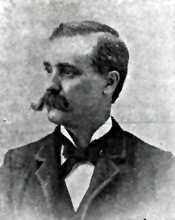
John McDannold
Former U.S. Representative · Illinois District 12 · 1893–1895 · Democratic
John McDannold represented Illinois's District 12 in the United States House of Representatives (1893–1895) for the Democratic party. The page below collects sourced biographical facts, term history, committee roles, and provenance for McDannold.
Bioguide ID: M000401
Key facts
- Full name
- John McDannold
- State
- Illinois
- District
- District 12
- Party
- Democratic
- House service
- 1893–1895
- First House term
- 1893
- Status
- Left office
- Current term ends
- —
- Born
- 1851
- Bioguide ID
- M000401
- Committee assignments
- —
- Dataset version
- 1.20260606
Biographical narrative
837 words · sourced from the Wikipedia REST extract
John McDannold was a Democratic politician and attorney who served as a U.S. Representative for Illinois' 12th congressional district from 1893 to 1895. Born in 1851 in Mount Sterling, Illinois, he had a legal career that included serving as a county judge before transitioning to national politics. His tenure in the House of Representatives was marked by the political dynamics of the early 1890s, a period characterized by significant social and economic changes in the United States. After his congressional term, McDannold returned to his legal practice in Chicago, where he continued to contribute to the legal profession until his death in 1904.
Early life and career
John McDannold was born on August 29, 1851, in Mount Sterling, a small town in Brown County, Illinois. He was raised in an environment that emphasized education, attending both public schools and a private institution in Quincy, Illinois. His academic pursuits culminated in his graduation from the law department of the University of Iowa in June 1874. Following his graduation, McDannold was admitted to the Illinois bar in September of the same year, which allowed him to begin his practice in Mount Sterling.
His early legal career was marked by a series of appointments and elections that showcased his growing prominence within the local legal community. In October 1885, he was appointed as a master in chancery for Brown County, a position that involved overseeing certain legal proceedings and assisting judges in managing cases. This role provided him with valuable experience in the judicial system, further solidifying his reputation as a capable legal professional.
In 1886, McDannold was elected as the county judge of Brown County, a position that allowed him to preside over legal matters within the county. His performance in this role led to his re-election in November 1890, indicating a strong support base within the community. However, after serving as county judge until October 2, 1892, McDannold resigned from this position to pursue a higher office, having been nominated for the U.S. Congress.
House tenure
McDannold's congressional career began when he was elected as a Democrat to the Fifty-third Congress, which spanned from March 4, 1893, to March 3, 1895. His election to the House of Representatives came during a time of considerable political change in the United States, as the nation was grappling with issues related to industrialization, labor rights, and economic inequality. McDannold's tenure in Congress was relatively brief, as he served only one term. During this period, he participated in the legislative process, contributing to discussions and decisions that would shape the future of his district and the nation.
Despite his efforts, McDannold faced challenges in securing renomination for a second term in 1894. The political landscape was competitive, and various factors influenced the outcomes of congressional races during this era. Following his defeat in the renomination process, McDannold's time in national politics came to an end, marking a transition in his career.
After concluding his term in the House, McDannold relocated to Chicago in 1895. This move was significant, as Chicago was a major urban center experiencing rapid growth and transformation during this period. The city offered new opportunities for legal practice and professional engagement, allowing McDannold to continue his career in law.
Legislative focus and committees
During his time in the House of Representatives, John McDannold was involved in legislative discussions pertinent to the issues of his era. While specific details regarding the bills he supported or the committees he served on are not documented, it is known that members of Congress at that time were often engaged in debates surrounding economic policies, labor rights, and social reforms. The early 1890s were marked by significant events such as the Panic of 1893, which led to widespread economic distress and influenced legislative priorities.
As a member of the Democratic Party, McDannold would have aligned with the party's platform, which often focused on issues such as tariff reform, support for labor, and addressing the needs of farmers and working-class citizens. The Democratic Party during this period was also concerned with the implications of industrialization on society, advocating for policies that would protect the interests of ordinary Americans.
After leaving Congress, McDannold returned to his legal practice in Chicago, where he continued to engage with the legal community until his death on February 3, 1904. His contributions to the legal field and his brief tenure in Congress reflect the complexities of American politics in the late 19th century, a time when the nation was navigating significant social and economic changes.
John McDannold's life and career encapsulate the journey of a local attorney who ascended to national politics, albeit for a short period. His experiences as a county judge and U.S. Representative illustrate the interconnectedness of local and national governance, as well as the evolving role of elected officials in addressing the needs of their constituents. Following his passing, he was interred in City Cemetery in Mount Sterling, Illinois, leaving behind a legacy tied to the legal and political history of his state.
Notable legislation
Sponsored and co-sponsored legislation for John McDannold is pending operator curation. The biographical narrative above carries the same provenance trail until per-bill rows are written.
Sources
- [1]https://en.wikipedia.org/wiki/John_James_McDannoldWikipedia · retrieved 2026-06-06
Notable quotes
Sourced quotes for John McDannold are pending operator curation. Narrative-scope provenance remains attached below.
Sources
- [1]https://en.wikipedia.org/wiki/John_James_McDannoldWikipedia · retrieved 2026-06-06
Key positions
Curated policy positions for John McDannold are pending operator review. The biographical narrative above carries the same provenance trail until per-topic positions are written.
Sources
- [1]https://en.wikipedia.org/wiki/John_James_McDannoldWikipedia · retrieved 2026-06-06
Terms served
- 1893–1895U.S. House · Term 1 · Democratic
Sources & provenance
Every attributable claim above carries a per-section [N] marker that resolves to the corresponding URL below. Each entry records the upstream provider, the canonical URL, and the timestamp at which the source was retrieved by the ingest pipeline.
Key facts
- https://bioguide.congress.gov/search/bio/M000401bioguide · retrieved 2026-06-06
- https://www.govtrack.us/congress/members/407402govtrack · retrieved 2026-06-06
Biographical narrative
- https://en.wikipedia.org/wiki/John_James_McDannoldwikipedia · retrieved 2026-06-06
Find your representative
Every U.S. state elects representatives by district. Browse Illinois’s delegation, the full former-representative roster, or explore the role and term length.
Related on The Candidate
- Preceded by Scott WikeEarlier holder of the Illinois District 12 House seat · Democratic.Open
- Succeeded by Charles FullerLater holder of the Illinois District 12 House seat · Republican.Open
- Abner TaylorFormer U.S. Representative · Illinois District 1 · RepublicanOpen
- Adam SnyderFormer U.S. Representative · Illinois District 1 · DemocraticOpen
- Arthur MitchellFormer U.S. Representative · Illinois District 1 · DemocraticOpen
- Bennett StewartFormer U.S. Representative · Illinois District 1 · DemocraticOpen