
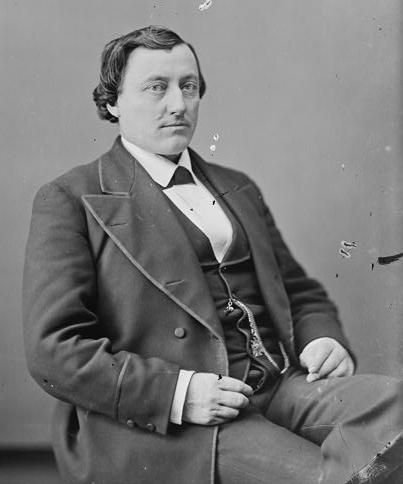
Historical · U.S. House · Illinois · District 12
Scott Wike
Former U.S. Representative · Illinois District 12 · 1875–1893 · Democratic
Scott Wike represented Illinois's District 12 in the United States House of Representatives (1875–1893) for the Democratic party. The page below collects sourced biographical facts, term history, committee roles, and provenance for Wike.
Bioguide ID: W000451
Key facts
- Full name
- Scott Wike
- State
- Illinois
- District
- District 12
- Party
- Democratic
- House service
- 1875–1893
- First House term
- 1875
- Status
- Left office
- Current term ends
- —
- Born
- 1834
- Bioguide ID
- W000451
- Committee assignments
- —
- Dataset version
- 1.20260606
Biographical narrative
961 words · sourced from the Wikipedia REST extract
Scott Wike was a notable figure in American politics during the late 19th century, serving as a U.S. Representative from Illinois. A member of the Democratic Party, Wike's political career spanned several years, during which he held office in the U.S. House of Representatives and contributed to various legislative efforts. His tenure in Congress was marked by a commitment to public service, and he later took on a significant role in the executive branch as Assistant Secretary of the Treasury. Wike's life and career reflect the complexities of the political landscape of his time, as well as the evolving nature of American governance.
Early life and career
Scott Wike was born on April 6, 1834, in Meadville, Pennsylvania. His early life was characterized by mobility, as his family relocated to Quincy, Illinois, in 1838, when he was just four years old. This move was followed by another relocation to Pike County in 1844, which would ultimately shape his identity and future career. Wike's educational journey began in earnest when he graduated from Lombard University in Galesburg, Illinois, in 1857. His academic pursuits laid a strong foundation for his later endeavors in law and politics.
After completing his education, Wike studied law, a decision that would lead him to a successful legal career. He was admitted to the bar in 1858, marking the beginning of his professional practice. Shortly thereafter, he graduated from Harvard Law School in 1859, an achievement that underscored his commitment to legal excellence. Following his graduation, Wike commenced his law practice in Pittsfield, Illinois, where he would become a prominent figure in the local legal community.
Wike's involvement in politics began with his election to the Illinois State House of Representatives, where he served from 1863 to 1867. His experience in the state legislature provided him with valuable insights into the workings of government and the legislative process. This period of service helped to establish his reputation as a dedicated public servant and laid the groundwork for his future endeavors at the federal level.
House tenure
Scott Wike's congressional career began when he was elected as a Democrat to the Forty-fourth Congress, serving from March 4, 1875, to March 3, 1877. His election to the House of Representatives marked a significant step in his political journey, as he transitioned from state-level politics to the national stage. During his first term, Wike engaged in various legislative activities, contributing to discussions and decisions that would impact his constituents and the nation as a whole.
Despite his initial success, Wike faced challenges in securing renomination for the Forty-fifth Congress in 1876. His bid for reelection was unsuccessful, but he did not remain inactive for long. Wike returned to the political arena and was subsequently elected to the Fifty-first and Fifty-second Congresses, serving from March 4, 1889, to March 3, 1893. His re-election to Congress demonstrated his resilience and ability to connect with the electorate.
Throughout his time in the House, Wike was involved in various legislative initiatives, although specific details regarding the bills he supported or opposed are not documented in the available records. His tenure coincided with a period of significant change in American society, including economic fluctuations and shifts in public policy. As a member of the Democratic Party, Wike likely aligned with the party's platform of the time, which focused on issues such as economic reform and social justice.
After completing his service in the House, Wike sought renomination in 1892 but was unsuccessful. This marked the end of his congressional career, but his commitment to public service did not wane. Following his time in Congress, Wike took on a new role in the federal government.
Legislative focus and committees
While specific details about Scott Wike's legislative focus and committee assignments during his time in Congress are not extensively documented, it is clear that he was an active participant in the legislative process. As a member of the Democratic Party, Wike would have been involved in discussions and initiatives that aligned with the party's priorities during the late 19th century. This period was marked by significant economic and social challenges, including the aftermath of the Civil War, industrialization, and labor movements.
Wike's experience in the Illinois State House of Representatives likely informed his approach to federal legislation. His background in law and public service would have provided him with a strong understanding of the legal and political frameworks necessary for effective governance. Although the specifics of his legislative contributions are not detailed, it can be inferred that he engaged with issues relevant to his constituents and the broader American populace.
In addition to his congressional duties, Wike was appointed as Assistant Secretary of the Treasury during the second administration of President Grover Cleveland. He served in this capacity from July 1, 1893, to May 4, 1897. This appointment marked a significant transition in Wike's career, as he moved from legislative responsibilities to an executive role within the federal government. His tenure as Assistant Secretary of the Treasury involved overseeing financial matters and contributing to the administration's economic policies during a challenging period in American history.
After concluding his service in the Treasury Department, Wike returned to his legal practice in Pittsfield, Illinois. His legal career continued to thrive, and he remained an influential figure in his community until his passing on January 15, 1901, near Barry, Illinois.
Scott Wike's life and career reflect the complexities of American politics in the late 19th century. His journey from a young man in Pennsylvania to a U.S. Representative and Assistant Secretary of the Treasury illustrates the opportunities and challenges faced by public servants of his era. Wike's contributions to the legislative process and his commitment to public service remain a part of the historical narrative of American governance.
Notable legislation
Sponsored and co-sponsored legislation for Scott Wike is pending operator curation. The biographical narrative above carries the same provenance trail until per-bill rows are written.
Sources
- [1]https://en.wikipedia.org/wiki/Scott_WikeWikipedia · retrieved 2026-06-06
Notable quotes
Sourced quotes for Scott Wike are pending operator curation. Narrative-scope provenance remains attached below.
Sources
- [1]https://en.wikipedia.org/wiki/Scott_WikeWikipedia · retrieved 2026-06-06
Key positions
Curated policy positions for Scott Wike are pending operator review. The biographical narrative above carries the same provenance trail until per-topic positions are written.
Sources
- [1]https://en.wikipedia.org/wiki/Scott_WikeWikipedia · retrieved 2026-06-06
Terms served
- 1875–1877U.S. House · Term 1 · Democratic
- 1889–1891U.S. House · Term 2 · Democratic
- 1891–1893U.S. House · Term 3 · Democratic
Sources & provenance
Every attributable claim above carries a per-section [N] marker that resolves to the corresponding URL below. Each entry records the upstream provider, the canonical URL, and the timestamp at which the source was retrieved by the ingest pipeline.
Key facts
- https://bioguide.congress.gov/search/bio/W000451bioguide · retrieved 2026-06-06
- https://www.govtrack.us/congress/members/411608govtrack · retrieved 2026-06-06
Biographical narrative
- https://en.wikipedia.org/wiki/Scott_Wikewikipedia · retrieved 2026-06-06
Find your representative
Every U.S. state elects representatives by district. Browse Illinois’s delegation, the full former-representative roster, or explore the role and term length.
Related on The Candidate
- Preceded by James RobinsonEarlier holder of the Illinois District 12 House seat · Democratic.Open
- Succeeded by John McDannoldLater holder of the Illinois District 12 House seat · Democratic.Open
- Abner TaylorFormer U.S. Representative · Illinois District 1 · RepublicanOpen
- Adam SnyderFormer U.S. Representative · Illinois District 1 · DemocraticOpen
- Arthur MitchellFormer U.S. Representative · Illinois District 1 · DemocraticOpen
- Bennett StewartFormer U.S. Representative · Illinois District 1 · DemocraticOpen