
Historical · U.S. House · Illinois · District 13
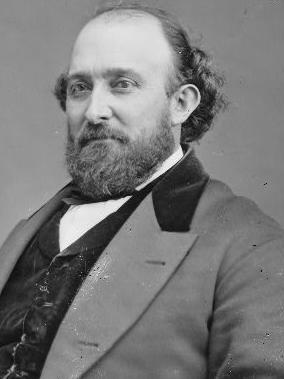
Green Raum
Former U.S. Representative · Illinois District 13 · 1867–1869 · Republican
Green Raum represented Illinois's District 13 in the United States House of Representatives (1867–1869) for the Republican party. The page below collects sourced biographical facts, term history, committee roles, and provenance for Raum.
Bioguide ID: R000071
Key facts
- Full name
- Green Raum
- State
- Illinois
- District
- District 13
- Party
- Republican
- House service
- 1867–1869
- First House term
- 1867
- Status
- Left office
- Current term ends
- —
- Born
- 1829
- Bioguide ID
- R000071
- Committee assignments
- —
- Dataset version
- 1.20260606
Biographical narrative
1,049 words · sourced from the Wikipedia REST extract
Green Raum was a prominent figure in American history, serving as a U.S. Representative for Illinois's 13th congressional district during the late 19th century. A member of the Republican Party, Raum's political career was preceded by a distinguished military service as a brigadier general in the Union Army during the American Civil War. His contributions extended beyond his military and political endeavors, as he was also a lawyer and an author, known for his writings on historical and political subjects. Raum's life spanned significant events in American history, and his legacy includes his service in Congress, his role in the Internal Revenue Service, and his involvement in various civic and political activities.
Early life and career
Green Raum was born on December 3, 1829, in Golconda, Illinois. He received his early education in the common schools of the area, which laid the groundwork for his future pursuits in law and public service. After completing his studies, Raum was admitted to the bar in 1853, marking the beginning of his legal career. He initially practiced law in Golconda from 1853 until 1856, after which he relocated to Kansas, where he continued his legal practice for two years. Following his time in Kansas, Raum returned to Illinois, settling in Harrisburg, where he continued to build his career.
The onset of the Civil War in 1861 prompted Raum to enlist in the Union Army. He began his military service as a major in the 56th Illinois Infantry, quickly rising to the rank of colonel in 1862. His leadership skills were evident during significant military engagements, including the Siege of Corinth in Mississippi, where he commanded his regiment under Major General William S. Rosecrans. Raum's tactical acumen was demonstrated when he led a successful charge that captured a Confederate artillery battery, contributing to the Union's efforts in the Western Theater of the war.
Raum's military career continued to flourish as he participated in the pivotal Vicksburg campaign in 1863, which was a turning point in the Civil War. He played a crucial role in the Chattanooga Campaign, where he was wounded at the Battle of Missionary Ridge. His leadership during the Atlanta campaign in 1864 further solidified his reputation, as he was responsible for maintaining critical lines of communication for Union forces. By the end of the war, he had been brevetted as a brigadier general of volunteers and later promoted to the full rank of brigadier general, serving until the conclusion of hostilities in 1865.
House tenure
After resigning from the military on May 6, 1865, Raum returned to Illinois and transitioned into civilian life. In 1866, he obtained a charter for the Cairo and Vincennes Railroad Company, which was significant for the region's transportation infrastructure. His leadership in this venture included serving as the company's first president, demonstrating his commitment to economic development in Illinois.
Raum's political career took a significant step forward when he was elected as a Republican to the Fortieth Congress, serving from March 4, 1867, to March 3, 1869. During his time in the House of Representatives, he contributed to various legislative discussions and initiatives reflective of the post-Civil War era. However, his tenure in Congress was relatively brief, as he was not successful in his bid for reelection in 1868 to the Forty-first Congress. Despite this setback, his experience in Congress provided him with valuable insights into the legislative process and the political landscape of the time.
Following his congressional service, Raum continued to engage in public service. He was appointed as the United States Commissioner of Internal Revenue, a position he held from 1876 to 1883. In this role, he was responsible for overseeing the collection of federal taxes, a critical function during a time when the government was working to stabilize its finances following the Civil War. His leadership in this position was marked by efforts to improve the efficiency and effectiveness of the revenue collection process.
Legislative focus and committees
During his time in the House of Representatives, Green Raum's legislative focus was shaped by the broader political and social issues of the post-Civil War United States. The Reconstruction era presented numerous challenges, including the integration of formerly enslaved individuals into society, the rebuilding of the Southern economy, and the establishment of civil rights for all citizens. While specific details of his legislative initiatives are not extensively documented, it can be inferred that Raum's background as a Union officer and his experiences during the war influenced his perspectives on these critical issues.
In addition to his congressional duties, Raum was active in the Republican Party at a national level. He served as the acting chairman of the 1880 Republican National Convention held in Chicago, which was a significant event in the party's history. His involvement in the convention underscored his ongoing commitment to the Republican Party and its platform during a time of significant political realignment in the United States.
Raum's later career included a role as the United States Commissioner of Pensions from 1889 to 1893, where he was responsible for overseeing pension applications for Civil War veterans. This position was particularly important given the large number of veterans seeking support in the aftermath of the war. His work in this capacity highlighted his dedication to ensuring that those who had served the nation received the benefits they deserved.
In addition to his public service, Raum was a prolific author, contributing to the historical and political discourse of his time. His writings included works on Illinois history and Republican governance, reflecting his deep engagement with the political issues of his era. Some of his notable publications addressed the conflict between Republican government and Southern oligarchy, as well as the development of the nation during the years following the Civil War.
Green Raum's life and career encapsulate a significant period in American history, marked by military service, political engagement, and contributions to public policy. His legacy includes not only his time in Congress but also his broader impact on the governance and historical understanding of the United States during a transformative era. He passed away on December 18, 1909, in Chicago, Illinois, leaving behind a legacy that continues to be recognized in the annals of American history. His burial at Arlington National Cemetery further honors his service to the nation.
Notable legislation
Sponsored and co-sponsored legislation for Green Raum is pending operator curation. The biographical narrative above carries the same provenance trail until per-bill rows are written.
Sources
- [1]https://en.wikipedia.org/wiki/Green_B._RaumWikipedia · retrieved 2026-06-06
Notable quotes
Sourced quotes for Green Raum are pending operator curation. Narrative-scope provenance remains attached below.
Sources
- [1]https://en.wikipedia.org/wiki/Green_B._RaumWikipedia · retrieved 2026-06-06
Key positions
Curated policy positions for Green Raum are pending operator review. The biographical narrative above carries the same provenance trail until per-topic positions are written.
Sources
- [1]https://en.wikipedia.org/wiki/Green_B._RaumWikipedia · retrieved 2026-06-06
Terms served
- 1867–1869U.S. House · Term 1 · Republican
Sources & provenance
Every attributable claim above carries a per-section [N] marker that resolves to the corresponding URL below. Each entry records the upstream provider, the canonical URL, and the timestamp at which the source was retrieved by the ingest pipeline.
Key facts
- https://bioguide.congress.gov/search/bio/R000071bioguide · retrieved 2026-06-06
- https://www.govtrack.us/congress/members/409051govtrack · retrieved 2026-06-06
Biographical narrative
- https://en.wikipedia.org/wiki/Green_B._Raumwikipedia · retrieved 2026-06-06
Find your representative
Every U.S. state elects representatives by district. Browse Illinois’s delegation, the full former-representative roster, or explore the role and term length.
Related on The Candidate
- Preceded by Andrew KuykendallEarlier holder of the Illinois District 13 House seat · Republican.Open
- Succeeded by John CrebsLater holder of the Illinois District 13 House seat · Democratic.Open
- Abner TaylorFormer U.S. Representative · Illinois District 1 · RepublicanOpen
- Adam SnyderFormer U.S. Representative · Illinois District 1 · DemocraticOpen
- Arthur MitchellFormer U.S. Representative · Illinois District 1 · DemocraticOpen
- Bennett StewartFormer U.S. Representative · Illinois District 1 · DemocraticOpen