
Historical · U.S. House · Illinois · District 13
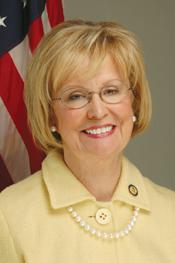
Judy Biggert
Former U.S. Representative · Illinois District 13 · 1999–2013 · Republican
Judy Biggert represented Illinois's District 13 in the United States House of Representatives (1999–2013) for the Republican party. The page below collects sourced biographical facts, term history, committee roles, and provenance for Biggert.
Bioguide ID: B001232
Key facts
- Full name
- Judy Biggert
- State
- Illinois
- District
- District 13
- Party
- Republican
- House service
- 1999–2013
- First House term
- 1999
- Status
- Left office
- Current term ends
- —
- Born
- 1937
- Bioguide ID
- B001232
- Committee assignments
- —
- Dataset version
- 1.20260605
Biographical narrative
979 words · sourced from the Wikipedia REST extract
Judith Gail Biggert, born on August 15, 1937, is a former U.S. Representative who served Illinois's 13th congressional district from 1999 until 2013. A member of the Republican Party, Biggert's political career spanned multiple levels of government, including a prior tenure in the Illinois House of Representatives. She is recognized for her moderate positions on various issues and her involvement in several congressional committees during her time in office.
Early life and career
Judy Biggert was born Judith Gail Borg in Chicago, Illinois, to Alvin Andrew Borg and Marjorie Virginia Mailler Borg. She was the second of four children in her family. Her father had a notable career with Walgreen Co., where he worked for over four decades and eventually became president. Biggert's paternal grandparents immigrated from Finland, while her maternal lineage is of English descent. She spent her childhood in Wilmette, a suburb located on the North Shore of Chicago.
Biggert graduated from New Trier High School in 1955 and subsequently attended Stanford University, where she earned a Bachelor of Arts degree in international relations in 1959. After completing her undergraduate education, she worked for a year in the women's apparel industry before pursuing a law degree at Northwestern University School of Law. During her time at law school, she served as an editor for the Northwestern University Law Review and obtained her Juris Doctor in 1963. Following her graduation, Biggert clerked for federal judge Luther Merritt Swygert at the U.S. Court of Appeals for the Seventh Circuit from 1963 to 1964.
After her clerkship, Biggert chose to focus on raising her children, although she continued to engage in legal work on a limited basis, assisting family and friends with wills, trusts, and real estate matters. Her community involvement began to take shape as she participated in various civic organizations and boards. In 1978, she was elected to the Hinsdale Township High School District 86 Board of Education, where she served until 1985, including a term as president from 1983 to 1985. Additionally, she chaired the Hinsdale Plan Commission from 1989 to 1993 and held leadership roles in organizations such as the Visiting Nurses Association and the Junior League.
Biggert's political career began in earnest in 1992 when she was elected to the Illinois House of Representatives, representing the newly drawn 81st District. She successfully secured re-election in 1994 and 1996 before making the decision to run for Congress in 1998.
House tenure
Judy Biggert was elected to the U.S. House of Representatives in 1998, beginning her first term in office in January 1999. Over the course of her congressional career, she served a total of seven terms, concluding her service on January 3, 2013. During her time in the House, Biggert was known for her moderate Republican stance and was involved in various legislative initiatives and committee assignments.
Throughout her tenure, Biggert was a member of several key committees, including the Committee on Education and the Workforce, where she participated in subcommittees focused on early childhood, elementary, and secondary education, as well as higher education and workforce training. She also served on the Committee on Financial Services, where she was involved in subcommittees related to capital markets, insurance, and government-sponsored enterprises, and chaired the subcommittee on insurance, housing, and community opportunity. Additionally, she was a member of the Committee on Science, Space and Technology, contributing to discussions on energy, environment, and technology innovation.
Biggert's legislative focus reflected her commitment to education, financial services, and scientific advancement. Her participation in various caucuses, including her role as co-chair of the Caucus on Women's Issues and membership in the Republican Main Street Partnership, underscored her engagement with issues pertinent to women's rights and moderate Republican values.
Legislative focus and committees
During her time in Congress, Judy Biggert's legislative priorities encompassed a range of issues, reflecting her moderate Republican ideology. She was known for her support of abortion rights and embryonic stem-cell research, earning mixed ratings from various interest groups. For instance, she received a 50% rating from NARAL Pro-Choice America and a 67% rating from Planned Parenthood, while also being recognized by anti-abortion organizations for her support of family planning initiatives.
In terms of fiscal policy, Biggert was an advocate for tax cuts and signed Grover Norquist's Americans for Tax Reform Taxpayer Protection Pledge, supporting the permanence of the Bush tax cuts. Her positions on social security included backing the partial privatization of the program, allowing individuals to divert a portion of their tax payments into private investment accounts. Additionally, she opposed the 2010 Democratic health care reform and sought its repeal, favoring alternative Republican proposals.
Biggert's stance on immigration was characterized by opposition to comprehensive reform that would provide a pathway to citizenship for undocumented immigrants. She also expressed support for measures aimed at combating illegal immigration.
On social issues, Biggert's voting record indicated a nuanced approach. She voted against the 2006 Federal Marriage Amendment, which aimed to ban same-sex marriage, and supported the repeal of the "Don't Ask, Don't Tell" policy. However, she opposed the repeal of the Defense of Marriage Act, which prohibited federal recognition of same-sex marriages. Her ratings from LGBTQ advocacy groups reflected this complexity, with a 70% rating from the Human Rights Campaign and a perfect score from PFLAG.
In the realm of campaign finance, Biggert opposed public financing for federal elections and advocated for the elimination of contribution limits, emphasizing the need for transparency in campaign funding.
Biggert's congressional career came to an end following her defeat in the 2012 election by former Congressman Bill Foster. Her departure marked the conclusion of a significant tenure in public service, during which she was the last Republican woman elected to Congress from Illinois until the election of Mary Miller in 2020. After leaving Congress, she continued to engage in public service by accepting an appointment to the Illinois Education Labor Relations Board.
Notable legislation
Sponsored and co-sponsored legislation for Judy Biggert is pending operator curation. The biographical narrative above carries the same provenance trail until per-bill rows are written.
Sources
- [1]https://en.wikipedia.org/wiki/Judy_BiggertWikipedia · retrieved 2026-06-05
Notable quotes
Sourced quotes for Judy Biggert are pending operator curation. Narrative-scope provenance remains attached below.
Sources
- [1]https://en.wikipedia.org/wiki/Judy_BiggertWikipedia · retrieved 2026-06-05
Key positions
Curated policy positions for Judy Biggert are pending operator review. The biographical narrative above carries the same provenance trail until per-topic positions are written.
Sources
- [1]https://en.wikipedia.org/wiki/Judy_BiggertWikipedia · retrieved 2026-06-05
Terms served
- 1999–2001U.S. House · Term 1 · Republican
- 2001–2003U.S. House · Term 2 · Republican
- 2003–2005U.S. House · Term 3 · Republican
- 2005–2007U.S. House · Term 4 · Republican
- 2007–2009U.S. House · Term 5 · Republican
- 2009–2011U.S. House · Term 6 · Republican
- 2011–2013U.S. House · Term 7 · Republican
Sources & provenance
Every attributable claim above carries a per-section [N] marker that resolves to the corresponding URL below. Each entry records the upstream provider, the canonical URL, and the timestamp at which the source was retrieved by the ingest pipeline.
Key facts
- https://bioguide.congress.gov/search/bio/B001232bioguide · retrieved 2026-06-05
- http://judybiggert.house.govhouse.gov · retrieved 2026-06-05
Biographical narrative
- https://en.wikipedia.org/wiki/Judy_Biggertwikipedia · retrieved 2026-06-05
Find your representative
Every U.S. state elects representatives by district. Browse Illinois’s delegation, the full former-representative roster, or explore the role and term length.
Related on The Candidate
- Preceded by Harris FawellEarlier holder of the Illinois District 13 House seat · Republican.Open
- Succeeded by Rodney DavisLater holder of the Illinois District 13 House seat · Republican.Open
- Abner TaylorFormer U.S. Representative · Illinois District 1 · RepublicanOpen
- Adam SnyderFormer U.S. Representative · Illinois District 1 · DemocraticOpen
- Arthur MitchellFormer U.S. Representative · Illinois District 1 · DemocraticOpen
- Bennett StewartFormer U.S. Representative · Illinois District 1 · DemocraticOpen