
Historical · U.S. House · Illinois · District 13
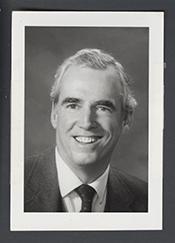
Harris Fawell
Former U.S. Representative · Illinois District 13 · 1985–1999 · Republican
Harris Fawell represented Illinois's District 13 in the United States House of Representatives (1985–1999) for the Republican party. The page below collects sourced biographical facts, term history, committee roles, and provenance for Fawell.
Bioguide ID: F000049
Key facts
- Full name
- Harris Fawell
- State
- Illinois
- District
- District 13
- Party
- Republican
- House service
- 1985–1999
- First House term
- 1985
- Status
- Left office
- Current term ends
- —
- Born
- 1929
- Bioguide ID
- F000049
- Committee assignments
- —
- Dataset version
- 1.20260605
Biographical narrative
953 words · sourced from the Wikipedia REST extract
Harris W. Fawell was an American lawyer and politician who served as a Republican member of the United States House of Representatives for Illinois' 13th congressional district from 1985 until 1999. Over the course of his political career, Fawell was known for his focus on reducing government spending and eliminating what he termed "pork barrel" projects. His legislative efforts were characterized by a commitment to fiscal responsibility and local issues, reflecting his background in law and public service.
Early life and career
Harris Walter Fawell was born on March 25, 1929. He completed his secondary education at West Chicago High School before pursuing higher education at North Central College in Naperville, Illinois, from 1947 to 1949. During his time at North Central College, Fawell also played baseball for a minor league affiliate of the Detroit Tigers, showcasing his athletic abilities alongside his academic pursuits.
After his college years, Fawell attended Chicago-Kent College of Law, where he earned his LL.B. He was admitted to the bar in 1952 and began practicing law in 1954. His legal career spanned three decades, during which he served as an Assistant State Attorney for DuPage County, Illinois. This role provided him with valuable experience in the legal system and public service, which would later inform his political career.
Fawell's entry into politics began in 1958 when he ran for the Illinois Senate, challenging the incumbent Lottie Holman O'Neill in the Republican primary. Although he was unsuccessful in that initial bid, he returned to the political arena four years later and won election to the Illinois Senate, succeeding O'Neill upon her retirement. Fawell served in the Illinois Senate from 1963 to 1977, during which time he became known for his advocacy of local park preservation and expansion. His efforts in this area garnered both support and opposition, particularly from developers and special interest groups.
In addition to his legislative work, Fawell was a delegate to the Republican National Conventions in 1968 and 1988, further solidifying his involvement in the Republican Party. He opted not to seek re-election to the state senate in 1976, instead pursuing a judicial seat. However, he was defeated in the Republican primary for the Illinois Supreme Court by Appellate Judge Thomas J. Moran. Following this setback, Fawell returned to his private law practice, where he represented various clients, including municipalities and park districts.
House tenure
In 1984, Fawell successfully ran for the U.S. House of Representatives, representing Illinois' 13th congressional district. His tenure in Congress began in 1985 and lasted until he chose not to seek re-election in 1999, completing a total of seven terms in office. Throughout his time in the House, Fawell became recognized for his efforts to identify and eliminate unnecessary government spending. He focused particularly on what he referred to as "pork barrel" spending, which he believed wasted taxpayer dollars on projects that lacked merit.
Fawell's commitment to fiscal responsibility led him to sponsor numerous bills aimed at curtailing wasteful spending. He is credited with successfully sponsoring 23 bills that targeted such spending practices, claiming that these initiatives resulted in significant savings for the federal government. His approach to governance emphasized accountability and efficiency, reflecting a broader Republican agenda during his time in office.
During his congressional career, Fawell was involved in various legislative initiatives and discussions, although specific details regarding the bills he sponsored or the committees he served on are not provided in the available information. His focus on reducing government expenditures resonated with many constituents in his district, contributing to his electoral success over the years.
Fawell's decision not to pursue an eighth term in Congress marked the end of his legislative career, and he officially retired from the House on January 3, 1999. His congressional papers are preserved at North Central College, providing a resource for those interested in his legislative contributions and political legacy.
Legislative focus and committees
Throughout his time in the U.S. House of Representatives, Harris Fawell maintained a clear focus on fiscal responsibility and government accountability. His efforts to combat what he perceived as wasteful spending were a hallmark of his legislative agenda. By sponsoring bills aimed at eliminating unnecessary projects, he sought to redirect federal funds toward more productive uses, aligning with the broader Republican emphasis on reducing the size and scope of government.
Fawell's legislative initiatives were characterized by a commitment to transparency and efficiency in government operations. He believed that taxpayers deserved to see their money spent wisely, and he worked diligently to advocate for policies that reflected this principle. While specific details regarding his committee assignments and the full scope of his legislative work are not included in the available information, his reputation as a fiscal conservative was well established during his time in office.
In addition to his focus on spending, Fawell's background as a lawyer likely influenced his approach to legislation and governance. His legal training provided him with a framework for understanding complex issues and navigating the legislative process. This experience, combined with his prior service in the Illinois Senate, equipped him with the skills necessary to advocate effectively for his constituents in the U.S. House.
Following his retirement from Congress, Fawell remained active in civic affairs, serving on the Board of Trustees at North Central College and participating in various community initiatives. His endorsement of Barack Obama in 2008, despite being a member of the Republican Party, illustrated his willingness to engage with political developments beyond his own party's lines.
Harris W. Fawell passed away on November 11, 2021, due to complications from Alzheimer's disease. His legacy as a public servant and advocate for fiscal responsibility continues to be recognized in discussions of his contributions to Illinois politics and the U.S. Congress.
Notable legislation
Sponsored and co-sponsored legislation for Harris Fawell is pending operator curation. The biographical narrative above carries the same provenance trail until per-bill rows are written.
Sources
- [1]https://en.wikipedia.org/wiki/Harris_FawellWikipedia · retrieved 2026-06-05
Notable quotes
Sourced quotes for Harris Fawell are pending operator curation. Narrative-scope provenance remains attached below.
Sources
- [1]https://en.wikipedia.org/wiki/Harris_FawellWikipedia · retrieved 2026-06-05
Key positions
Curated policy positions for Harris Fawell are pending operator review. The biographical narrative above carries the same provenance trail until per-topic positions are written.
Sources
- [1]https://en.wikipedia.org/wiki/Harris_FawellWikipedia · retrieved 2026-06-05
Terms served
- 1985–1987U.S. House · Term 1 · Republican
- 1987–1989U.S. House · Term 2 · Republican
- 1989–1991U.S. House · Term 3 · Republican
- 1991–1993U.S. House · Term 4 · Republican
- 1993–1995U.S. House · Term 5 · Republican
- 1995–1997U.S. House · Term 6 · Republican
- 1997–1999U.S. House · Term 7 · Republican
Sources & provenance
Every attributable claim above carries a per-section [N] marker that resolves to the corresponding URL below. Each entry records the upstream provider, the canonical URL, and the timestamp at which the source was retrieved by the ingest pipeline.
Key facts
- https://bioguide.congress.gov/search/bio/F000049bioguide · retrieved 2026-06-05
- https://www.govtrack.us/congress/members/404009govtrack · retrieved 2026-06-05
Biographical narrative
- https://en.wikipedia.org/wiki/Harris_Fawellwikipedia · retrieved 2026-06-05
Find your representative
Every U.S. state elects representatives by district. Browse Illinois’s delegation, the full former-representative roster, or explore the role and term length.
Related on The Candidate
- Preceded by John ErlenbornEarlier holder of the Illinois District 13 House seat · Republican.Open
- Succeeded by Judy BiggertLater holder of the Illinois District 13 House seat · Republican.Open
- Abner TaylorFormer U.S. Representative · Illinois District 1 · RepublicanOpen
- Adam SnyderFormer U.S. Representative · Illinois District 1 · DemocraticOpen
- Arthur MitchellFormer U.S. Representative · Illinois District 1 · DemocraticOpen
- Bennett StewartFormer U.S. Representative · Illinois District 1 · DemocraticOpen