
Historical · U.S. House · Illinois · District 13
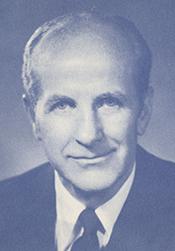
Robert McClory
Former U.S. Representative · Illinois District 13 · 1963–1983 · Republican
Robert McClory represented Illinois's District 13 in the United States House of Representatives (1963–1983) for the Republican party. The page below collects sourced biographical facts, term history, committee roles, and provenance for McClory.
Bioguide ID: M000340
Key facts
- Full name
- Robert McClory
- State
- Illinois
- District
- District 13
- Party
- Republican
- House service
- 1963–1983
- First House term
- 1963
- Status
- Left office
- Current term ends
- —
- Born
- 1908
- Bioguide ID
- M000340
- Committee assignments
- —
- Dataset version
- 1.20260605
Biographical narrative
938 words · sourced from the Wikipedia REST extract
Robert McClory was an American politician who served as a U.S. Representative for Illinois's 13th congressional district from 1963 until 1983. A member of the Republican Party, McClory was known for his involvement in significant legislative actions during his tenure, including votes on civil rights and healthcare initiatives. His political career was marked by a commitment to public service, which began at the state level before transitioning to the federal government.
Early life and career
Robert McClory was born on January 31, 1908, in Riverside, Illinois. He received his early education in public schools before attending L'Institut Sillig in Vevey, Switzerland, for a year from 1925 to 1926. Following this, he enrolled at Dartmouth College in Hanover, New Hampshire, where he studied from 1926 to 1928. McClory later graduated from Chicago-Kent College of Law in 1932 and was admitted to the bar the same year. He began his legal career practicing law in both state and federal courts in Cook and Lake counties, Illinois.
In addition to his legal work, McClory held the position of village attorney for Lake Bluff, Illinois, where he contributed to local governance. He was also actively involved in community service as the ScoutMaster of Lake Bluff Boy Scout Troop 42, demonstrating his commitment to youth development and civic engagement. His military service included a stint in the United States Marine Corps Reserve from 1933 to 1937, which further underscored his dedication to public service.
McClory's entry into politics began at the state level when he was elected to the Illinois House of Representatives in 1950. His political career continued to progress as he was elected to the Illinois Senate in 1952, a position he held through subsequent re-elections in 1956 and 1960. During his time in the Illinois legislature, he developed a reputation for his legislative work and commitment to various issues, laying the groundwork for his future role in the U.S. Congress.
House tenure
Robert McClory was elected to the U.S. House of Representatives in 1962 and began his first term on January 3, 1963. He would go on to serve a total of ten consecutive terms in the House, concluding his service on January 3, 1983. Throughout his tenure, McClory was known for his active participation in legislative matters and his role in various committees.
During his time in Congress, McClory was a member of the House Judiciary Committee, where he played a significant role in some of the most critical issues of the era. Notably, he was one of the few Republicans to support articles of impeachment against President Richard Nixon during the Watergate scandal, reflecting his willingness to prioritize accountability and integrity in government.
McClory's legislative actions included support for landmark civil rights legislation. He voted in favor of the Civil Rights Acts of 1964 and 1968 and the Voting Rights Act of 1965, aligning himself with efforts to promote equality and protect the rights of all citizens. His support for these measures demonstrated a commitment to social justice and civil rights during a transformative period in American history.
In the realm of healthcare, McClory was the only Republican in the Illinois congressional delegation to vote in favor of the Medicare program, indicating his support for expanding healthcare access to senior citizens. This decision was significant, as it highlighted his willingness to cross party lines on issues he deemed important for the welfare of his constituents.
After serving ten terms in the House, McClory chose not to seek re-election for the Ninety-ninth Congress. Following his departure from Congress, he returned to the practice of law, this time in Washington, D.C. His legal career continued alongside his involvement in various international legislative forums, including serving as a United States delegate to the Inter-Parliamentary Union Conference from 1963 to 1982. He was later designated as an honorary delegate from 1983 until his passing.
Legislative focus and committees
Throughout his time in the U.S. House of Representatives, Robert McClory's legislative focus encompassed a range of issues, with particular attention to civil rights, healthcare, and government accountability. His voting record on significant legislation reflected his commitment to these areas, as he often supported measures aimed at advancing social justice and improving public welfare.
As a member of the House Judiciary Committee, McClory was involved in critical discussions and decisions regarding the impeachment of President Nixon, showcasing his engagement with issues of governance and ethics. His willingness to support impeachment articles against a sitting president indicated a strong belief in the rule of law and the necessity of holding public officials accountable for their actions.
In addition to civil rights and impeachment matters, McClory's support for Medicare illustrated his advocacy for healthcare reform. By voting in favor of this program, he contributed to the expansion of healthcare access for millions of Americans, particularly the elderly population. His legislative actions in this area were part of a broader trend during the 1960s and 1970s aimed at addressing healthcare disparities and ensuring that vulnerable populations received necessary medical care.
McClory's legislative career was characterized by a pragmatic approach to governance, where he often sought bipartisan solutions to complex issues. His ability to navigate the political landscape of his time allowed him to work effectively with colleagues across party lines, contributing to the passage of significant legislation that shaped American society.
After concluding his congressional service, McClory remained active in legal and diplomatic circles until his death on July 24, 1988, in Washington, D.C. His legacy as a public servant is marked by his commitment to civil rights, healthcare access, and governmental integrity, reflecting the values he championed throughout his career in public office.
Notable legislation
Sponsored and co-sponsored legislation for Robert McClory is pending operator curation. The biographical narrative above carries the same provenance trail until per-bill rows are written.
Sources
- [1]https://en.wikipedia.org/wiki/Robert_McCloryWikipedia · retrieved 2026-06-05
Notable quotes
Sourced quotes for Robert McClory are pending operator curation. Narrative-scope provenance remains attached below.
Sources
- [1]https://en.wikipedia.org/wiki/Robert_McCloryWikipedia · retrieved 2026-06-05
Key positions
Curated policy positions for Robert McClory are pending operator review. The biographical narrative above carries the same provenance trail until per-topic positions are written.
Sources
- [1]https://en.wikipedia.org/wiki/Robert_McCloryWikipedia · retrieved 2026-06-05
Terms served
- 1963–1965U.S. House · Term 1 · Republican
- 1965–1967U.S. House · Term 2 · Republican
- 1967–1969U.S. House · Term 3 · Republican
- 1969–1971U.S. House · Term 4 · Republican
- 1971–1973U.S. House · Term 5 · Republican
- 1973–1975U.S. House · Term 6 · Republican
- 1975–1977U.S. House · Term 7 · Republican
- 1977–1979U.S. House · Term 8 · Republican
- 1979–1981U.S. House · Term 9 · Republican
- 1981–1983U.S. House · Term 10 · Republican
Sources & provenance
Every attributable claim above carries a per-section [N] marker that resolves to the corresponding URL below. Each entry records the upstream provider, the canonical URL, and the timestamp at which the source was retrieved by the ingest pipeline.
Key facts
- https://bioguide.congress.gov/search/bio/M000340bioguide · retrieved 2026-06-05
- https://www.govtrack.us/congress/members/407349govtrack · retrieved 2026-06-05
Biographical narrative
- https://en.wikipedia.org/wiki/Robert_McClorywikipedia · retrieved 2026-06-05
Find your representative
Every U.S. state elects representatives by district. Browse Illinois’s delegation, the full former-representative roster, or explore the role and term length.
Related on The Candidate
- Preceded by Marguerite ChurchEarlier holder of the Illinois District 13 House seat · Republican.Open
- Succeeded by Harris FawellLater holder of the Illinois District 13 House seat · Republican.Open
- Abner TaylorFormer U.S. Representative · Illinois District 1 · RepublicanOpen
- Adam SnyderFormer U.S. Representative · Illinois District 1 · DemocraticOpen
- Arthur MitchellFormer U.S. Representative · Illinois District 1 · DemocraticOpen
- Bennett StewartFormer U.S. Representative · Illinois District 1 · DemocraticOpen