
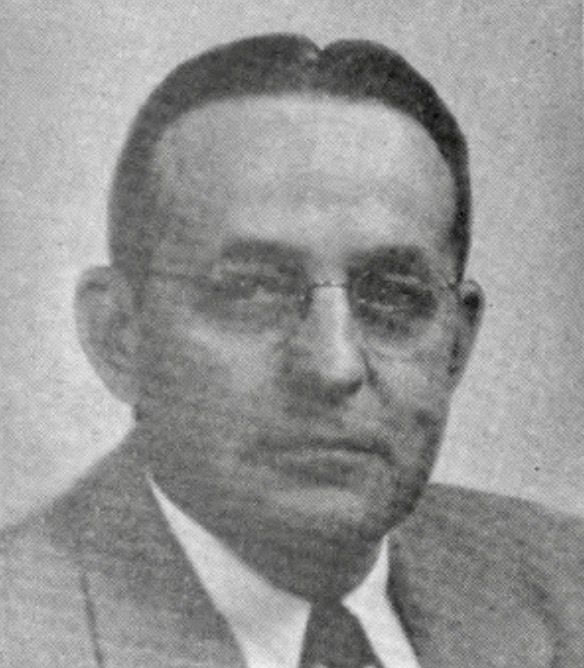
Historical · U.S. House · Illinois · District 14
Russell Keeney
Former U.S. Representative · Illinois District 14 · 1957–1959 · Republican
Russell Keeney represented Illinois's District 14 in the United States House of Representatives (1957–1959) for the Republican party. The page below collects sourced biographical facts, term history, committee roles, and provenance for Keeney.
Bioguide ID: K000042
Key facts
- Full name
- Russell Keeney
- State
- Illinois
- District
- District 14
- Party
- Republican
- House service
- 1957–1959
- First House term
- 1957
- Status
- Left office
- Current term ends
- —
- Born
- 1897
- Bioguide ID
- K000042
- Committee assignments
- —
- Dataset version
- 1.20260605
Biographical narrative
813 words · sourced from the Wikipedia REST extract
Russell Keeney was an American lawyer and politician who served as a U.S. Representative for Illinois's 14th congressional district. A member of the Republican Party, Keeney's tenure in the House of Representatives was brief, lasting just over a year before his death in early 1958. His political career was preceded by a significant background in law and local governance, which laid the foundation for his entry into national politics.
Early life and career
Russell Keeney was born on December 29, 1897, in Pittsfield, Illinois. He spent his formative years in Naperville, Illinois, where he attended both grade school and high school. Keeney pursued higher education at DePaul University in Chicago, graduating in 1919. Shortly after completing his studies, he was admitted to the Illinois bar in the same year, allowing him to begin his legal career in Naperville.
Keeney's early involvement in local governance began in 1920 when he was elected as the Justice of the Peace for Lisle Township. This role marked the start of his long-standing commitment to public service. In 1924, he took on the position of town clerk, further solidifying his presence in local politics. His legal career continued to evolve as he served as an assistant State's Attorney until 1935, gaining valuable experience in the legal system.
In 1936, Keeney was elected as the State's Attorney of Du Page County, a position he held until 1939. His work in this role contributed to his reputation as a dedicated public servant. Following this, he was appointed as a county judge for Du Page County, serving from 1940 to 1952. Keeney's judicial experience expanded when he became a Circuit Judge for the sixteenth judicial district of Illinois, a role he maintained from 1953 until 1956. His extensive background in law and local governance provided him with a solid foundation for his subsequent political career at the federal level.
House tenure
Russell Keeney's political career reached a new height when he was elected to the United States House of Representatives as a Republican. He was elected to the Eighty-fifth Congress, officially beginning his term on January 3, 1957. Keeney represented Illinois's 14th congressional district, a position that allowed him to participate in national legislative processes and contribute to discussions on various issues facing the country.
During his time in Congress, Keeney faced numerous challenges and responsibilities associated with representing his constituents. His tenure was marked by significant national events and legislative debates, including discussions surrounding civil rights. Notably, Keeney voted against the Civil Rights Act of 1957, a piece of legislation aimed at addressing racial discrimination and protecting voting rights for African Americans. This vote reflected the complex political landscape of the time and the differing perspectives within the Republican Party regarding civil rights issues.
Keeney's time in office was tragically cut short when he passed away on January 11, 1958, in Bethesda, Maryland. His death occurred just over a year into his congressional term, leaving a brief but impactful legacy in the House of Representatives. Following his passing, Keeney was interred in the Naperville Protestant Cemetery, where he was remembered by his community and colleagues.
Legislative focus and committees
During his brief tenure in the House of Representatives, Russell Keeney's legislative focus was shaped by the political climate of the late 1950s. As a member of the Republican Party, he was part of a larger national dialogue concerning various issues, including civil rights, economic policy, and foreign relations. Although specific details about his committee assignments are not documented, it is common for newly elected representatives to serve on committees that align with their interests and the needs of their constituents.
Keeney's opposition to the Civil Rights Act of 1957 indicates that he was engaged in the significant debates of his time, particularly those surrounding civil rights and social justice. The act itself was a response to the growing civil rights movement and aimed to address the systemic discrimination faced by African Americans. Keeney's vote against this legislation suggests that he may have aligned with certain conservative perspectives prevalent within his party during that period.
In addition to civil rights, other legislative matters likely occupied Keeney's attention during his time in office. The late 1950s were characterized by discussions on economic growth, infrastructure development, and national security, particularly in the context of the Cold War. As a representative from Illinois, Keeney would have been expected to advocate for policies that benefited his district and the broader state, which was experiencing its own economic and social changes.
Despite the brevity of his congressional career, Russell Keeney's contributions to the legislative process during a pivotal time in American history remain a part of his legacy. His background in law and local governance, combined with his role in the House of Representatives, reflects the interconnected nature of legal and political careers in shaping public policy and addressing the needs of constituents.
Notable legislation
Sponsored and co-sponsored legislation for Russell Keeney is pending operator curation. The biographical narrative above carries the same provenance trail until per-bill rows are written.
Sources
- [1]https://en.wikipedia.org/wiki/Russell_W._KeeneyWikipedia · retrieved 2026-06-05
Notable quotes
Sourced quotes for Russell Keeney are pending operator curation. Narrative-scope provenance remains attached below.
Sources
- [1]https://en.wikipedia.org/wiki/Russell_W._KeeneyWikipedia · retrieved 2026-06-05
Key positions
Curated policy positions for Russell Keeney are pending operator review. The biographical narrative above carries the same provenance trail until per-topic positions are written.
Sources
- [1]https://en.wikipedia.org/wiki/Russell_W._KeeneyWikipedia · retrieved 2026-06-05
Terms served
- 1957–1959U.S. House · Term 1 · Republican
Sources & provenance
Every attributable claim above carries a per-section [N] marker that resolves to the corresponding URL below. Each entry records the upstream provider, the canonical URL, and the timestamp at which the source was retrieved by the ingest pipeline.
Key facts
- https://bioguide.congress.gov/search/bio/K000042bioguide · retrieved 2026-06-05
- https://www.govtrack.us/congress/members/406212govtrack · retrieved 2026-06-05
Biographical narrative
- https://en.wikipedia.org/wiki/Russell_W._Keeneywikipedia · retrieved 2026-06-05
Find your representative
Every U.S. state elects representatives by district. Browse Illinois’s delegation, the full former-representative roster, or explore the role and term length.
Related on The Candidate
- Preceded by Chauncey ReedEarlier holder of the Illinois District 14 House seat · Republican.Open
- Succeeded by Elmer HoffmanLater holder of the Illinois District 14 House seat · Republican.Open
- Abner TaylorFormer U.S. Representative · Illinois District 1 · RepublicanOpen
- Adam SnyderFormer U.S. Representative · Illinois District 1 · DemocraticOpen
- Arthur MitchellFormer U.S. Representative · Illinois District 1 · DemocraticOpen
- Bennett StewartFormer U.S. Representative · Illinois District 1 · DemocraticOpen