
Historical · U.S. House · Illinois · District 15
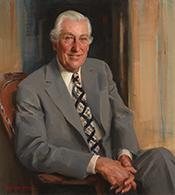
Leslie Arends
Former U.S. Representative · Illinois District 15 · 1935–1975 · Republican
Leslie Arends represented Illinois's District 15 in the United States House of Representatives (1935–1975) for the Republican party. The page below collects sourced biographical facts, term history, committee roles, and provenance for Arends.
Bioguide ID: A000216
Key facts
- Full name
- Leslie Arends
- State
- Illinois
- District
- District 15
- Party
- Republican
- House service
- 1935–1975
- First House term
- 1935
- Status
- Left office
- Current term ends
- —
- Born
- 1895
- Bioguide ID
- A000216
- Committee assignments
- —
- Dataset version
- 1.20260605
Biographical narrative
1,016 words · sourced from the Wikipedia REST extract
Leslie C. Arends was an American politician who served as a U.S. Representative for Illinois's 15th congressional district from 1935 until his resignation in 1974. A member of the Republican Party, Arends was known for his long tenure in Congress, during which he held significant leadership positions, including that of Republican Whip. His career spanned four decades, during which he was involved in numerous legislative efforts and maintained a strong influence within the Republican Party.
Early life and career
Leslie Cornelius Arends was born on September 27, 1895, in Melvin, Illinois. He was the youngest of ten children born to George Teis Arends and Talea (née Weiss) Arends, with only seven of the siblings surviving to adulthood. His father, originally from Peoria, had German roots, while his mother was born in Hanover, Germany. Arends received his early education in local schools before attending Oberlin College in Ohio for a brief period from 1912 to 1913.
During World War I, Arends enlisted in the United States Navy, where he contributed to the war effort by playing in the Navy band at various war bond rallies. After his discharge from military service, he returned to Illinois, where he became involved in farming and banking. He owned and rented out several farms and eventually rose to the position of president of the Commercial State Bank in Melvin, a financial institution established by his father. His involvement in local agriculture and banking helped him build a strong connection to his community.
In addition to his banking career, Arends was active in civic organizations. He was a member of the Ford County Farm Bureau and served on the board of trustees for Illinois Wesleyan University. His contributions to the university were recognized when he received an honorary Doctor of Laws degree in 1962.
House tenure
Leslie Arends's political career began when he was elected to the U.S. House of Representatives in 1934, representing Illinois's 15th congressional district. He officially took office on January 3, 1935, and would go on to serve a total of twenty terms in Congress, making him one of the longest-serving members in the history of the House. His tenure lasted until December 31, 1974, when he resigned just before the conclusion of his final term.
Throughout his time in Congress, Arends held various leadership roles, most notably serving as the Republican Whip from 1943 until his retirement in 1974. He was the longest-serving whip in the history of the U.S. House of Representatives. His leadership spanned periods of both Republican majority and minority, reflecting his adaptability and influence within the party. During his time as whip, he played a crucial role in maintaining party cohesion and strategizing legislative initiatives.
Arends was a member of the House Armed Services Committee, where he rose to the position of ranking minority member. His work on this committee included efforts to prevent the closure of Chanute Air Force Base in Illinois, which remained operational until 1993. His district was predominantly rural and heavily Republican, which shaped his legislative priorities and approach to governance.
A conservative politician, Arends was initially opposed to many aspects of the New Deal and maintained an isolationist stance until the United States entered World War II. He was instrumental in forming the Conservative Coalition, a powerful alliance of Republicans and Southern Democrats that dominated the domestic legislative agenda from 1937 to 1964. His leadership was tested during the tumultuous political climate following the Republican Party's significant losses in the 1964 elections. Despite challenges, he successfully retained his position as whip, relying on long-established relationships within the party.
Arends was known for his support of various Republican presidential candidates, including Robert A. Taft, Richard M. Nixon, and Barry Goldwater. He actively organized opposition to President Lyndon B. Johnson's Great Society initiatives. His voting record included support for key civil rights legislation, such as the Civil Rights Acts of 1957, 1964, and 1968, as well as the Voting Rights Act of 1965. However, he did not participate in the vote on the Civil Rights Act of 1960 and voted present on the 24th Amendment to the U.S. Constitution.
During the Watergate scandal, Arends remained a loyal supporter of President Nixon, publicly stating his opposition to impeachment based on his personal friendship with Nixon and his belief in Nixon's capabilities as president. Following Nixon's resignation, Arends maintained a good relationship with Nixon's successor, Gerald Ford, which further solidified his standing within the party.
Legislative focus and committees
Throughout his congressional career, Leslie Arends focused on a range of legislative issues, with a particular emphasis on defense and fiscal conservatism. His role as the ranking minority member of the House Armed Services Committee allowed him to influence military policy and funding decisions. He was particularly concerned with the military presence and infrastructure in his home state of Illinois, advocating for the continued operation of military installations like Chanute Air Force Base.
Arends's fiscal conservatism was evident in his opposition to excessive government spending. He was a vocal critic of many government programs that he believed expanded federal authority and increased public expenditure. His commitment to conservative principles was reflected in his legislative actions and his efforts to align the Republican Party with these values.
In addition to his work on the Armed Services Committee, Arends's leadership as whip involved coordinating party strategy on various legislative matters. He played a significant role in shaping the Republican response to major domestic policies and initiatives, particularly during periods of Democratic leadership in Congress.
After his resignation from Congress, Arends continued to contribute to public service by serving on the President's Intelligence Advisory Board. He spent his retirement between Melvin, Illinois, Naples, Florida, and Washington, D.C. Leslie C. Arends passed away on July 17, 1985, in Naples, Florida. He was buried in Melvin Cemetery, leaving behind a legacy of long-standing service in the U.S. Congress and a commitment to his community and party. His papers are preserved at Illinois Wesleyan University, where the special collections room is named in his honor. He is survived by his wife, Betty, and their daughter, Leslie.
Notable legislation
Sponsored and co-sponsored legislation for Leslie Arends is pending operator curation. The biographical narrative above carries the same provenance trail until per-bill rows are written.
Sources
- [1]https://en.wikipedia.org/wiki/Leslie_C._ArendsWikipedia · retrieved 2026-06-05
Notable quotes
Sourced quotes for Leslie Arends are pending operator curation. Narrative-scope provenance remains attached below.
Sources
- [1]https://en.wikipedia.org/wiki/Leslie_C._ArendsWikipedia · retrieved 2026-06-05
Key positions
Curated policy positions for Leslie Arends are pending operator review. The biographical narrative above carries the same provenance trail until per-topic positions are written.
Sources
- [1]https://en.wikipedia.org/wiki/Leslie_C._ArendsWikipedia · retrieved 2026-06-05
Terms served
- 1935–1937U.S. House · Term 1 · Republican
- 1937–1939U.S. House · Term 2 · Republican
- 1939–1941U.S. House · Term 3 · Republican
- 1941–1943U.S. House · Term 4 · Republican
- 1943–1945U.S. House · Term 5 · Republican
- 1945–1947U.S. House · Term 6 · Republican
- 1947–1949U.S. House · Term 7 · Republican
- 1949–1951U.S. House · Term 8 · Republican
- 1951–1953U.S. House · Term 9 · Republican
- 1953–1955U.S. House · Term 10 · Republican
- 1955–1957U.S. House · Term 11 · Republican
- 1957–1959U.S. House · Term 12 · Republican
- 1959–1961U.S. House · Term 13 · Republican
- 1961–1963U.S. House · Term 14 · Republican
- 1963–1965U.S. House · Term 15 · Republican
- 1965–1967U.S. House · Term 16 · Republican
- 1967–1969U.S. House · Term 17 · Republican
- 1969–1971U.S. House · Term 18 · Republican
- 1971–1973U.S. House · Term 19 · Republican
- 1973–1975U.S. House · Term 20 · Republican
Sources & provenance
Every attributable claim above carries a per-section [N] marker that resolves to the corresponding URL below. Each entry records the upstream provider, the canonical URL, and the timestamp at which the source was retrieved by the ingest pipeline.
Key facts
- https://bioguide.congress.gov/search/bio/A000216bioguide · retrieved 2026-06-05
- https://www.govtrack.us/congress/members/400915govtrack · retrieved 2026-06-05
Biographical narrative
- https://en.wikipedia.org/wiki/Leslie_C._Arendswikipedia · retrieved 2026-06-05
Find your representative
Every U.S. state elects representatives by district. Browse Illinois’s delegation, the full former-representative roster, or explore the role and term length.
Related on The Candidate
- Preceded by Burnett ChiperfieldEarlier holder of the Illinois District 15 House seat · Republican.Open
- Succeeded by Tim HallLater holder of the Illinois District 15 House seat · Democratic.Open
- Abner TaylorFormer U.S. Representative · Illinois District 1 · RepublicanOpen
- Adam SnyderFormer U.S. Representative · Illinois District 1 · DemocraticOpen
- Arthur MitchellFormer U.S. Representative · Illinois District 1 · DemocraticOpen
- Bennett StewartFormer U.S. Representative · Illinois District 1 · DemocraticOpen