
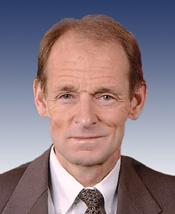
Historical · U.S. House · Illinois · District 15
Timothy Johnson
Former U.S. Representative · Illinois District 15 · 2001–2013 · Republican
Timothy Johnson represented Illinois's District 15 in the United States House of Representatives (2001–2013) for the Republican party. The page below collects sourced biographical facts, term history, committee roles, and provenance for Johnson.
Bioguide ID: J000285
Key facts
- Full name
- Timothy Johnson
- State
- Illinois
- District
- District 15
- Party
- Republican
- House service
- 2001–2013
- First House term
- 2001
- Status
- Left office
- Current term ends
- —
- Born
- 1946
- Bioguide ID
- J000285
- Committee assignments
- —
- Dataset version
- 1.20260605
Biographical narrative
956 words · sourced from the Wikipedia REST extract
Timothy V. Johnson was an American politician and lawyer who served as a U.S. Representative for Illinois's 15th congressional district from 2001 until 2013. A member of the Republican Party, Johnson's political career spanned several decades, during which he held various elected positions at both the local and state levels before his tenure in the U.S. House of Representatives. He was known for his moderate voting record among Illinois Republicans outside of the Chicago metropolitan area and was actively engaged with his constituents throughout his time in office.
Early life and career
Timothy Vincent Johnson was born on July 23, 1946, in Champaign, Illinois, to Robert and Margaret Evans Johnson. He spent his formative years in Urbana, where he completed his secondary education at Urbana High School. Johnson's academic journey began at the United States Military Academy at West Point in 1964, although he later transferred to the University of Illinois at Urbana-Champaign. There, he majored in history and graduated in 1969 with the distinction of Phi Beta Kappa, an honor awarded to the top three percent of undergraduates. He continued his education at the University of Illinois College of Law, where he graduated with honors in 1972 and was elected to the Order of the Coif, a national legal honor society recognizing academic excellence in legal education.
Johnson's political career began in 1971 when he was elected to the city council of Urbana. His involvement in local governance paved the way for his subsequent election to the Illinois House of Representatives in 1976, where he emerged victorious against five other Republican candidates in the primary. Johnson served in the Illinois legislature for nearly a quarter of a century, representing a predominantly rural and conservative constituency that included parts of Champaign, Ford, and Douglas counties. His tenure in the Illinois House was marked by both legislative accomplishments and controversies, including a notable incident in 1980 when he was accused of manipulating a voting panel at his desk to record votes in his absence. Although he initially denied the allegations, he later referred to the practice as "accepted" within the legislature.
Throughout his time in the Illinois House, Johnson faced various electoral challenges, including a significant race against Democrat Helen F. Satterthwaite after the 1990 census redistricting. The new district boundaries favored Johnson, allowing him to secure a decisive victory with 60 percent of the vote. His long-standing presence in state politics established him as a familiar figure in the region, ultimately leading to his candidacy for the U.S. House of Representatives.
House tenure
Johnson's congressional career began in 2001 when he was elected to represent Illinois's 15th congressional district. He served a total of six terms in the U.S. House, with his first term commencing that year. During his time in Congress, Johnson was known for his active engagement with constituents, reportedly making extensive cold calls to connect with over half a million residents during his tenure. His approach to constituent services was a defining aspect of his congressional career, reflecting his commitment to addressing the needs and concerns of those he represented.
In the 2004 election, Johnson faced Democratic candidate David Gill and won with a significant margin, securing 61 percent of the vote. His fundraising efforts during this campaign were notably lower than the national average for Republican incumbents, yet he managed to maintain a strong support base. Johnson's subsequent re-elections in 2006, 2008, and 2010 showcased his ability to adapt to changing political landscapes, although he faced challenges from Democratic opponents in each cycle. In 2006, he was re-elected with a narrower margin of 58 percent, while in 2008, he achieved a more substantial victory with over 64 percent of the vote against Democratic nominee Steve Cox.
The 2012 election cycle brought significant changes due to congressional redistricting following the 2010 Census. Johnson's district was renumbered as the 13th District, which encompassed a largely new constituency, retaining only about 30 percent of his previous territory. Despite winning the Republican nomination for the reconfigured district, Johnson announced his retirement from politics shortly thereafter, surprising many observers and constituents.
Legislative focus and committees
During his time in the U.S. House, Johnson's legislative focus and voting record were characterized by a blend of moderate and conservative positions. He was a member of the Republican Study Committee, which aligned with conservative principles, yet his voting patterns indicated a more centrist approach compared to many of his Illinois Republican colleagues. In 2010, he received one of the lowest ratings from the American Conservative Union among Illinois Republicans, reflecting his moderate stance on various issues.
Johnson's legislative decisions included notable votes against significant measures, such as the Stem Cell Research Enhancement Act, which ultimately passed but was vetoed by President George W. Bush. He also voted against net neutrality provisions, supporting the COPE Act while opposing amendments aimed at preserving network neutrality. His voting record on social issues was particularly scrutinized; he received a score of 0% from the Human Rights Campaign for his opposition to the Employment Non-Discrimination Act and for not adopting a written policy against discrimination based on sexual orientation in his office.
Conversely, Johnson garnered a perfect score from the Family Research Council, indicating strong alignment with conservative positions on social issues. His legislative actions and voting record reflected the complexities of navigating party expectations while addressing the diverse views of his constituents.
Timothy V. Johnson's political career concluded with his retirement from the House in 2013. His tenure was marked by a commitment to constituent engagement, a moderate legislative approach, and a long-standing presence in Illinois politics, spanning local, state, and national levels. After leaving office, he remained a notable figure in the political landscape until his passing in May 2022.
Notable legislation
Sponsored and co-sponsored legislation for Timothy Johnson is pending operator curation. The biographical narrative above carries the same provenance trail until per-bill rows are written.
Sources
- [1]https://en.wikipedia.org/wiki/Tim_Johnson_(Illinois_politician)Wikipedia · retrieved 2026-06-05
Notable quotes
Sourced quotes for Timothy Johnson are pending operator curation. Narrative-scope provenance remains attached below.
Sources
- [1]https://en.wikipedia.org/wiki/Tim_Johnson_(Illinois_politician)Wikipedia · retrieved 2026-06-05
Key positions
Curated policy positions for Timothy Johnson are pending operator review. The biographical narrative above carries the same provenance trail until per-topic positions are written.
Sources
- [1]https://en.wikipedia.org/wiki/Tim_Johnson_(Illinois_politician)Wikipedia · retrieved 2026-06-05
Terms served
- 2001–2003U.S. House · Term 1 · Republican
- 2003–2005U.S. House · Term 2 · Republican
- 2005–2007U.S. House · Term 3 · Republican
- 2007–2009U.S. House · Term 4 · Republican
- 2009–2011U.S. House · Term 5 · Republican
- 2011–2013U.S. House · Term 6 · Republican
Sources & provenance
Every attributable claim above carries a per-section [N] marker that resolves to the corresponding URL below. Each entry records the upstream provider, the canonical URL, and the timestamp at which the source was retrieved by the ingest pipeline.
Key facts
- https://bioguide.congress.gov/search/bio/J000285bioguide · retrieved 2026-06-05
- http://www.house.gov/timjohnsonhouse.gov · retrieved 2026-06-05
Biographical narrative
- https://en.wikipedia.org/wiki/Tim_Johnson_(Illinois_politician)wikipedia · retrieved 2026-06-05
Find your representative
Every U.S. state elects representatives by district. Browse Illinois’s delegation, the full former-representative roster, or explore the role and term length.
Related on The Candidate
- Preceded by Thomas EwingEarlier holder of the Illinois District 15 House seat · Republican.Open
- Abner TaylorFormer U.S. Representative · Illinois District 1 · RepublicanOpen
- Adam SnyderFormer U.S. Representative · Illinois District 1 · DemocraticOpen
- Arthur MitchellFormer U.S. Representative · Illinois District 1 · DemocraticOpen
- Bennett StewartFormer U.S. Representative · Illinois District 1 · DemocraticOpen
- Republican PartyFederal candidates and office holders on the Republican line.Open