
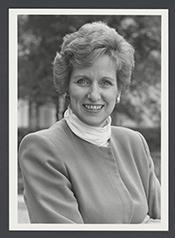
Historical · U.S. House · Illinois · District 16
Lynn Martin
Former U.S. Representative · Illinois District 16 · 1981–1991 · Republican
Lynn Martin represented Illinois's District 16 in the United States House of Representatives (1981–1991) for the Republican party. The page below collects sourced biographical facts, term history, committee roles, and provenance for Martin.
Bioguide ID: M000195
Key facts
- Full name
- Lynn Martin
- State
- Illinois
- District
- District 16
- Party
- Republican
- House service
- 1981–1991
- First House term
- 1981
- Status
- Left office
- Current term ends
- —
- Born
- 1939
- Bioguide ID
- M000195
- Committee assignments
- —
- Dataset version
- 1.20260605
Biographical narrative
929 words · sourced from the Wikipedia REST extract
Lynn M. Martin is a former American politician and businesswoman who served as a U.S. Representative for Illinois's 16th congressional district from 1981 to 1991. A member of the Republican Party, she was notable for being the first woman elected to a leadership position within the Republican House. Following her congressional tenure, Martin held the position of Secretary of Labor under President George H. W. Bush from 1991 to 1993. Throughout her political career, she was recognized for her fiscal conservatism combined with socially liberal views, making her a distinctive figure in the Republican Party.
Early life and career
Lynn Morley Martin was born on December 26, 1939, in Evanston, Illinois, to Helen Catherine Hall and Lawrence William Morley, an accountant. She attended Taft High School in Chicago, where she was recognized for her achievements and later inducted into the school's Hall of Fame. Martin pursued higher education at the University of Illinois, graduating in 1960. While at the university, she was a member of the Gamma Phi Beta sorority.
After completing her education, Martin began her career as a teacher in the Rockford Public School District. Her involvement in public service began in earnest when she was elected to the Winnebago County Board, where she served from 1972 to 1976. Following her tenure on the county board, she transitioned to state politics, serving in the Illinois House of Representatives from 1977 to 1979 and subsequently in the Illinois State Senate from 1979 to 1980. This experience laid the groundwork for her later election to the U.S. House of Representatives.
House tenure
In 1980, Lynn Martin sought election to the U.S. House of Representatives after the retirement of incumbent John B. Anderson, who had chosen to run for president. She successfully navigated a competitive four-way Republican primary to secure the nomination for Illinois's 16th congressional district. Martin's campaign platform was characterized by a blend of fiscal conservatism, advocating for lower taxes and business deregulation, alongside socially liberal positions, including support for pro-choice policies and the Equal Rights Amendment.
During her time in the House, which lasted from 1981 until 1991, Martin held several significant roles. She served as the vice chair of the House Republican Conference, becoming the first woman to be elected to a leadership position within the Republican House. Her committee assignments included the Armed Services Committee, the Budget Committee, and the House Rules Committee. Martin was known for her commitment to reducing government spending, earning her the nickname "the Axe" due to her efforts on the Budget Committee.
Throughout her congressional career, Martin occasionally diverged from the Republican Party's mainstream positions. She advocated for an increase in the minimum wage, voted to override President Reagan's veto of a sanctions bill against South Africa's apartheid regime, and joined Democrats in supporting stricter penalties for white-collar crimes. Her willingness to cross party lines on certain issues highlighted her independent approach to governance.
In addition to her legislative responsibilities, Martin played a role in the broader Republican Party. She assisted then-Vice President George H. W. Bush in preparing for the 1984 vice presidential debate, where her aggressive mock debate style helped shape Bush's approach to his opponent. Martin was also selected to deliver Bush's nominating speech at the Republican National Convention, and she was considered a potential running mate for him in the 1988 presidential campaign, although he ultimately chose Indiana Senator Dan Quayle.
In 1990, Martin ran for the U.S. Senate against incumbent Democrat Paul Simon. Despite being viewed as a strong challenger, her campaign struggled due to factors such as limited fundraising and a series of missteps, including a controversial advertising strategy that was perceived as petty. Ultimately, Simon won re-election decisively, which marked a significant setback in Martin's political career.
Legislative focus and committees
Throughout her tenure in the U.S. House of Representatives, Lynn Martin focused on a range of issues that reflected her unique blend of fiscal conservatism and social liberalism. As a member of the Budget Committee, she was particularly focused on reducing government spending and promoting fiscal responsibility. Her nickname, "the Axe," was indicative of her reputation for advocating for budget cuts and efficiency in government operations.
Martin's role on the Armed Services Committee allowed her to engage with national defense issues, where she contributed to discussions on military funding and defense policy. Her involvement in the House Rules Committee further positioned her to influence legislative procedures and the flow of legislation through the House.
In addition to her committee work, Martin was known for her advocacy on social issues. Her support for pro-choice legislation and the Equal Rights Amendment set her apart from many of her Republican colleagues, illustrating her commitment to women's rights and gender equality. This duality in her political stance often placed her in a unique position within the party, where she was able to bridge gaps between more traditional conservative views and progressive social policies.
Martin's legislative career was marked by her willingness to engage in bipartisan efforts, particularly on issues where she believed that collaboration could lead to meaningful change. Her approach often involved working with members across the aisle to address complex issues, reflecting her belief in the importance of dialogue and compromise in governance.
After leaving Congress in 1991, Martin transitioned to the role of Secretary of Labor in the George H. W. Bush administration, where she continued to advocate for workforce development and equality in the workplace. Her legacy as a trailblazer for women in politics and her contributions to both state and national governance remain significant aspects of her career.
Notable legislation
Sponsored and co-sponsored legislation for Lynn Martin is pending operator curation. The biographical narrative above carries the same provenance trail until per-bill rows are written.
Sources
- [1]https://en.wikipedia.org/wiki/Lynn_M._MartinWikipedia · retrieved 2026-06-05
Notable quotes
Sourced quotes for Lynn Martin are pending operator curation. Narrative-scope provenance remains attached below.
Sources
- [1]https://en.wikipedia.org/wiki/Lynn_M._MartinWikipedia · retrieved 2026-06-05
Key positions
Curated policy positions for Lynn Martin are pending operator review. The biographical narrative above carries the same provenance trail until per-topic positions are written.
Sources
- [1]https://en.wikipedia.org/wiki/Lynn_M._MartinWikipedia · retrieved 2026-06-05
Terms served
- 1981–1983U.S. House · Term 1 · Republican
- 1983–1985U.S. House · Term 2 · Republican
- 1985–1987U.S. House · Term 3 · Republican
- 1987–1989U.S. House · Term 4 · Republican
- 1989–1991U.S. House · Term 5 · Republican
Sources & provenance
Every attributable claim above carries a per-section [N] marker that resolves to the corresponding URL below. Each entry records the upstream provider, the canonical URL, and the timestamp at which the source was retrieved by the ingest pipeline.
Key facts
- https://bioguide.congress.gov/search/bio/M000195bioguide · retrieved 2026-06-05
- https://www.govtrack.us/congress/members/407215govtrack · retrieved 2026-06-05
Biographical narrative
- https://en.wikipedia.org/wiki/Lynn_M._Martinwikipedia · retrieved 2026-06-05
Find your representative
Every U.S. state elects representatives by district. Browse Illinois’s delegation, the full former-representative roster, or explore the role and term length.
Related on The Candidate
- Preceded by John AndersonEarlier holder of the Illinois District 16 House seat · Republican.Open
- Succeeded by John Cox Jr.Later holder of the Illinois District 16 House seat · Democratic.Open
- Abner TaylorFormer U.S. Representative · Illinois District 1 · RepublicanOpen
- Adam SnyderFormer U.S. Representative · Illinois District 1 · DemocraticOpen
- Arthur MitchellFormer U.S. Representative · Illinois District 1 · DemocraticOpen
- Bennett StewartFormer U.S. Representative · Illinois District 1 · DemocraticOpen