
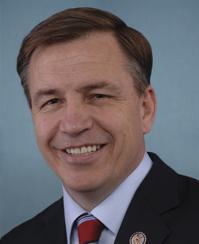
Historical · U.S. House · Illinois · District 17
Bobby Schilling
Former U.S. Representative · Illinois District 17 · 2011–2013 · Republican
Bobby Schilling represented Illinois's District 17 in the United States House of Representatives (2011–2013) for the Republican party. The page below collects sourced biographical facts, term history, committee roles, and provenance for Schilling.
Bioguide ID: S001182
Key facts
- Full name
- Bobby Schilling
- State
- Illinois
- District
- District 17
- Party
- Republican
- House service
- 2011–2013
- First House term
- 2011
- Status
- Left office
- Current term ends
- —
- Born
- 1964
- Bioguide ID
- S001182
- Committee assignments
- —
- Dataset version
- 1.20260605
Biographical narrative
950 words · sourced from the Wikipedia REST extract
Robert T. Schilling was an American businessman and politician who served as a U.S. Representative for Illinois's 17th congressional district from 2011 to 2013. A member of the Republican Party, Schilling transitioned from a career in business to politics, successfully defeating the incumbent Democrat in the 2010 election. His tenure in Congress was marked by a focus on conservative principles and a commitment to limit his time in office. After losing his re-election bid in 2012, Schilling continued to engage in political activities, including a subsequent run for office in Iowa.
Early life and career
Robert Todd Schilling was born on January 23, 1964, in Rock Island, Illinois. He grew up in the area and completed his education at Alleman Catholic High School. Following high school, he attended Black Hawk College, where he began to develop his career. Schilling's early professional experiences included working for the Container Corporation of America from 1983 to 1987, during which time he also served as a union steward for the local chapter of the United Paper Workers International Union. This experience in labor relations would later inform his political perspectives.
Between 1987 and 1995, Schilling worked as an insurance agent for Prudential Insurance Company. His performance in this role was noteworthy, as he ranked in the top 5% of all Prudential agents during his final year with the company. Additionally, he served as the treasurer for the United Food and Commercial Workers Union for four years during this period, further solidifying his involvement in labor issues.
In 1996, Schilling and his wife established a family business, Saint Giuseppe's Heavenly Pizza, in Moline, Illinois. Schilling managed the restaurant until he entered Congress, at which point he passed the operational responsibilities to his son. The restaurant became a significant part of Schilling's identity, both personally and politically, as it was a local business that contributed to the community's economy. However, financial disclosures indicated that the restaurant's value declined in the early 2010s, reflecting broader economic challenges in the region.
Schilling's political transformation began as he shifted from his upbringing as a Democrat to adopting more conservative views, ultimately identifying as a "Reagan Republican." Influenced by media figures such as Glenn Beck, Schilling became active in the political landscape, particularly through the 9–12 Project, a movement advocating for conservative principles. His decision to run for office was prompted by his observations of government policies, particularly those articulated by then-Presidential candidate Barack Obama, which he perceived as detrimental to small businesses.
House tenure
Schilling announced his candidacy for the U.S. House of Representatives in April 2009, officially filing for the Republican nomination later that year. He faced no opposition in the primary election, positioning himself as the Republican candidate for the 17th congressional district. Initially, political analysts rated the race as "safe Democratic," but as the election approached, assessments shifted to "leans Republican." Schilling's campaign gained traction, and he was recognized as one of the National Republican Congressional Committee's "Young Guns," highlighting his potential as a candidate.
In the general election held in November 2010, Schilling faced incumbent Democrat Phil Hare. Despite initial skepticism regarding his chances, Schilling won the election by a notable margin, securing approximately 53% of the vote compared to Hare's 43%. His victory was particularly significant as he managed to win Hare's home county, Rock Island County, which had traditionally leaned Democratic. Schilling's campaign was characterized by strong grassroots support, with a substantial portion of his funding coming from individual donors.
Following his election, Schilling focused on establishing his office and building a team. He appointed Mike Roman as his chief of staff, a political consultant with a background in election-related controversies. However, Roman and another staff member resigned from Schilling's office in April 2011, indicating some early challenges in his congressional tenure.
In 2012, Schilling sought re-election but faced a competitive race against Democrat Cheri Bustos, a former East Moline City Council member. The election was closely contested, and Schilling ultimately lost to Bustos, marking the end of his term in Congress. Following his defeat, Schilling remained active in political circles and continued to pursue opportunities for public service.
Legislative focus and committees
During his time in the House of Representatives, Schilling's legislative focus aligned with his conservative principles. He emphasized issues such as fiscal responsibility, limited government, and support for small businesses. Schilling was known for his commitment to transparency and accountability in government, pledging not to participate in the congressional pension program and to maintain his private health insurance. He also vowed to donate any pay raises he received and to limit his congressional service to eight years.
Schilling's approach to legislation was characterized by a desire to engage with constituents and address their concerns. He aimed to be a representative who was accessible and responsive to the needs of the people in his district. His business background informed his perspectives on economic issues, and he often advocated for policies that would benefit small businesses and promote job growth.
Despite the challenges he faced in his re-election campaign, Schilling's tenure in Congress was marked by a commitment to his principles and a focus on the issues he believed were important to his constituents. After leaving office in January 2013, he continued to engage in political activities, including a run for Iowa's 2nd congressional district in 2020, although he was unsuccessful in that bid as well.
Robert T. Schilling's political career reflects a journey from local business owner to U.S. Representative, underscoring the intersection of personal experience and public service in American politics. His legacy includes his contributions to the political landscape of Illinois and his efforts to represent the interests of his constituents during his time in office.
Notable legislation
Sponsored and co-sponsored legislation for Bobby Schilling is pending operator curation. The biographical narrative above carries the same provenance trail until per-bill rows are written.
Sources
- [1]https://en.wikipedia.org/wiki/Bobby_SchillingWikipedia · retrieved 2026-06-05
Notable quotes
Sourced quotes for Bobby Schilling are pending operator curation. Narrative-scope provenance remains attached below.
Sources
- [1]https://en.wikipedia.org/wiki/Bobby_SchillingWikipedia · retrieved 2026-06-05
Key positions
Curated policy positions for Bobby Schilling are pending operator review. The biographical narrative above carries the same provenance trail until per-topic positions are written.
Sources
- [1]https://en.wikipedia.org/wiki/Bobby_SchillingWikipedia · retrieved 2026-06-05
Terms served
- 2011–2013U.S. House · Term 1 · Republican
Sources & provenance
Every attributable claim above carries a per-section [N] marker that resolves to the corresponding URL below. Each entry records the upstream provider, the canonical URL, and the timestamp at which the source was retrieved by the ingest pipeline.
Key facts
- https://bioguide.congress.gov/search/bio/S001182bioguide · retrieved 2026-06-05
- http://schilling.house.gov/house.gov · retrieved 2026-06-05
Biographical narrative
- https://en.wikipedia.org/wiki/Bobby_Schillingwikipedia · retrieved 2026-06-05
Find your representative
Every U.S. state elects representatives by district. Browse Illinois’s delegation, the full former-representative roster, or explore the role and term length.
Related on The Candidate
- Preceded by Phil HareEarlier holder of the Illinois District 17 House seat · Democratic.Open
- Succeeded by Cheri BustosLater holder of the Illinois District 17 House seat · Democratic.Open
- Abner TaylorFormer U.S. Representative · Illinois District 1 · RepublicanOpen
- Adam SnyderFormer U.S. Representative · Illinois District 1 · DemocraticOpen
- Arthur MitchellFormer U.S. Representative · Illinois District 1 · DemocraticOpen
- Bennett StewartFormer U.S. Representative · Illinois District 1 · DemocraticOpen