
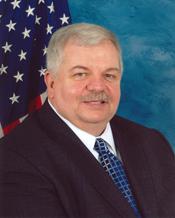
Historical · U.S. House · Illinois · District 17
Phil Hare
Former U.S. Representative · Illinois District 17 · 2007–2011 · Democratic
Phil Hare represented Illinois's District 17 in the United States House of Representatives (2007–2011) for the Democratic party. The page below collects sourced biographical facts, term history, committee roles, and provenance for Hare.
Bioguide ID: H001040
Key facts
- Full name
- Phil Hare
- State
- Illinois
- District
- District 17
- Party
- Democratic
- House service
- 2007–2011
- First House term
- 2007
- Status
- Left office
- Current term ends
- —
- Born
- 1949
- Bioguide ID
- H001040
- Committee assignments
- —
- Dataset version
- 1.20260605
Biographical narrative
871 words · sourced from the Wikipedia REST extract
Philip Gary Hare is a former American politician who served as the U.S. Representative for Illinois's 17th congressional district from 2007 until 2011. A member of the Democratic Party, Hare's congressional career was marked by a focus on labor rights, health care reform, and social issues. His district encompassed parts of the Quad Cities area, including cities such as Rock Island, Moline, Quincy, Decatur, Galesburg, and a portion of Springfield.
Early life and career
Phil Hare was born on February 21, 1949, in Galesburg, Illinois, but he grew up in Rock Island. He completed his secondary education at Alleman High School, graduating in 1967. Following high school, Hare began working at the Seaford Clothing Factory in Rock Island, where he remained for 13 years. During this time, he became involved in labor issues and served as a union leader, eventually becoming the President of HERE Local 617. Hare also pursued higher education, earning an Associate of Arts degree from Black Hawk College in Moline, Illinois.
Hare's commitment to public service began with his military service in the U.S. Army Reserves, where he served from 1969 to 1975. His political career took shape in 1980 when he ran as an alternate delegate to the Democratic National Convention, supporting the presidential campaign of Senator Edward Kennedy. Although he was not successful in securing the delegate position, this experience marked the beginning of his involvement in politics.
In 1982, Hare transitioned from his union role to assist Lane Evans, a friend and fellow Democrat, in his campaign for the U.S. House of Representatives. Evans was challenging the long-serving Republican incumbent Tom Railsback. After Evans won the election, he appointed Hare as his district director, a position he held for 24 years. In this role, Hare focused on constituent services and labor-related issues. As Evans faced health challenges later in his congressional career, Hare increasingly represented him at public events and debates.
House tenure
Hare's journey to the U.S. House of Representatives began in earnest when Lane Evans announced his retirement in March 2006. Hare quickly declared his candidacy for the Democratic nomination to succeed Evans. He received the endorsement of Evans and won a special Democratic caucus, defeating four other candidates to become the party's nominee. In the November 2006 general election, Hare faced Republican candidate Andrea Zinga and won with a significant majority, securing approximately 57% of the vote.
In 2008, Hare ran for re-election unopposed, which allowed him to focus on his legislative agenda without the pressures of a competitive campaign. However, in 2010, he faced a more challenging race against Republican nominee Bobby Schilling and Green Party candidate Roger K. Davis. The election was characterized as a toss-up by various political analysts, and as the campaign progressed, it became evident that Hare was in a competitive position. Ultimately, he lost the election to Schilling, receiving about 42% of the vote compared to Schilling's 53%. This defeat was notable as Hare lost his home county, Rock Island County, which had traditionally leaned Democratic.
Legislative focus and committees
During his time in Congress, Hare's voting record was generally aligned with liberal positions, reflecting the influence of his predecessor, Lane Evans. He was a founding member of the LGBT Equality Caucus and participated in the Congressional Progressive Caucus, which advocates for progressive policies.
Hare was particularly vocal about health care reform, advocating for a robust public health insurance option. He initially took a strong stance on the issue, emphasizing the importance of a public option in any health care reform legislation. However, after engaging with constituents and participating in town hall meetings, he moderated his position, stating that while he supported a public option, it was not a deal-breaker for him.
In addition to health care, Hare was a staunch supporter of labor rights. He advocated for the living wage and supported the Employee Free Choice Act, which aimed to enhance workers' rights to organize and bargain collectively. In 2010, he introduced the Jobs Through Procurement Act, which sought to prevent government contracts from going to companies that utilized sweatshop labor.
Hare's stance on reproductive rights was also clear; he consistently supported access to contraception and maintained a pro-choice position on abortion. His views on these issues garnered him endorsements from organizations such as NARAL Pro-Choice America, reflecting his commitment to reproductive rights.
Throughout his congressional career, Hare faced some controversies, particularly regarding his military service. He served in the Army Reserves during the Vietnam War, accruing 160 days of active duty. This led to debates about his status as a veteran, especially in light of accusations from opponents during his campaigns. Additionally, Hare encountered scrutiny for comments made during a town hall meeting regarding his views on the Constitution in relation to health care reform. His remarks were interpreted by some as dismissive of constitutional considerations, prompting clarification from his staff about the context of his statements.
Phil Hare's tenure in the U.S. House of Representatives concluded on January 3, 2011, following his electoral defeat. His legislative focus and advocacy efforts during his time in office reflected his background in labor and commitment to progressive values, shaping his approach to the various issues he addressed as a member of Congress.
Notable legislation
Sponsored and co-sponsored legislation for Phil Hare is pending operator curation. The biographical narrative above carries the same provenance trail until per-bill rows are written.
Sources
- [1]https://en.wikipedia.org/wiki/Phil_HareWikipedia · retrieved 2026-06-05
Notable quotes
Sourced quotes for Phil Hare are pending operator curation. Narrative-scope provenance remains attached below.
Sources
- [1]https://en.wikipedia.org/wiki/Phil_HareWikipedia · retrieved 2026-06-05
Key positions
Curated policy positions for Phil Hare are pending operator review. The biographical narrative above carries the same provenance trail until per-topic positions are written.
Sources
- [1]https://en.wikipedia.org/wiki/Phil_HareWikipedia · retrieved 2026-06-05
Terms served
- 2007–2009U.S. House · Term 1 · Democratic
- 2009–2011U.S. House · Term 2 · Democratic
Sources & provenance
Every attributable claim above carries a per-section [N] marker that resolves to the corresponding URL below. Each entry records the upstream provider, the canonical URL, and the timestamp at which the source was retrieved by the ingest pipeline.
Key facts
- https://bioguide.congress.gov/search/bio/H001040bioguide · retrieved 2026-06-05
- http://hare.house.govhouse.gov · retrieved 2026-06-05
Biographical narrative
- https://en.wikipedia.org/wiki/Phil_Harewikipedia · retrieved 2026-06-05
Find your representative
Every U.S. state elects representatives by district. Browse Illinois’s delegation, the full former-representative roster, or explore the role and term length.
Related on The Candidate
- Preceded by Lane EvansEarlier holder of the Illinois District 17 House seat · Democratic.Open
- Succeeded by Bobby SchillingLater holder of the Illinois District 17 House seat · Republican.Open
- Abner TaylorFormer U.S. Representative · Illinois District 1 · RepublicanOpen
- Adam SnyderFormer U.S. Representative · Illinois District 1 · DemocraticOpen
- Arthur MitchellFormer U.S. Representative · Illinois District 1 · DemocraticOpen
- Bennett StewartFormer U.S. Representative · Illinois District 1 · DemocraticOpen