
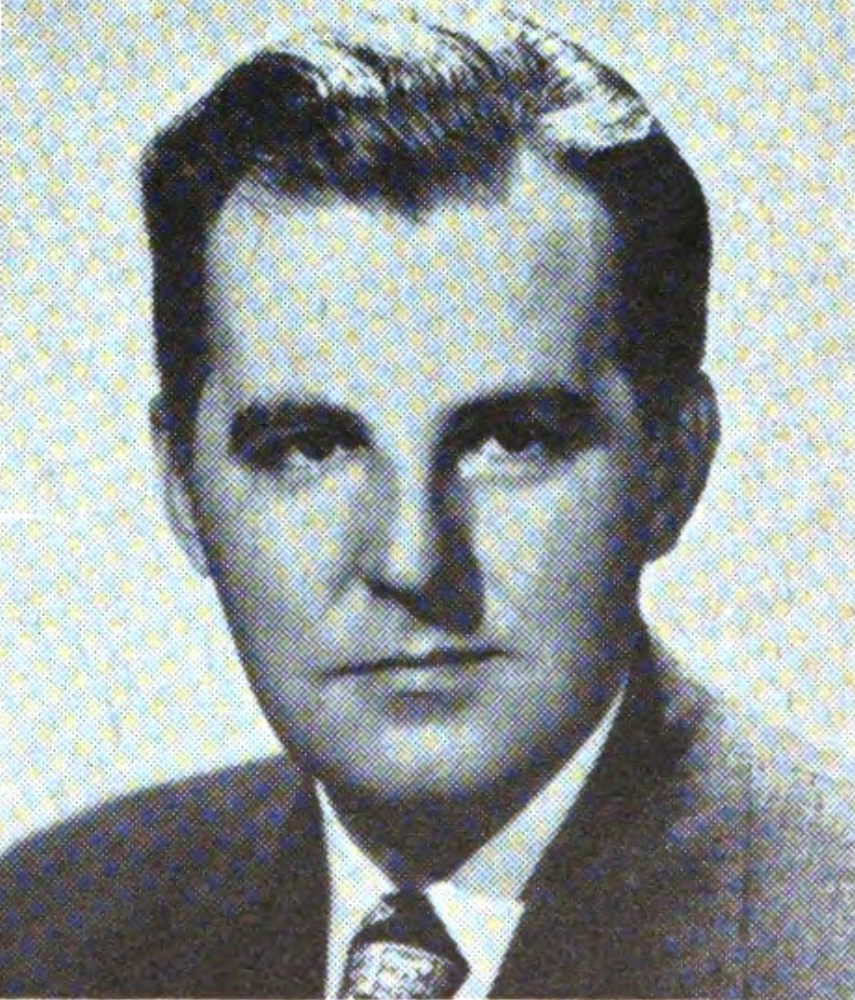
Historical · U.S. House · Illinois · District 18
Harold Velde
Former U.S. Representative · Illinois District 18 · 1949–1957 · Republican
Harold Velde represented Illinois's District 18 in the United States House of Representatives (1949–1957) for the Republican party. The page below collects sourced biographical facts, term history, committee roles, and provenance for Velde.
Bioguide ID: V000082
Key facts
- Full name
- Harold Velde
- State
- Illinois
- District
- District 18
- Party
- Republican
- House service
- 1949–1957
- First House term
- 1949
- Status
- Left office
- Current term ends
- —
- Born
- 1910
- Bioguide ID
- V000082
- Committee assignments
- —
- Dataset version
- 1.20260605
Biographical narrative
1,009 words · sourced from the Wikipedia REST extract
Harold Velde was a prominent Republican politician from Illinois who served as a U.S. Representative for the state's 18th congressional district from 1949 until 1957. During his tenure in Congress, he held significant leadership roles, notably as the chairman of the House Un-American Activities Committee from 1953 to 1955. Velde's career was marked by his legal background, military service, and involvement in various political and judicial capacities, reflecting a commitment to public service that spanned several decades.
Early life and career
Harold Himmel Velde was born on April 1, 1910, on a farm near Parkland, Illinois. Growing up in a rural environment, he attended local grade schools and high school, which provided him with a foundational education. Following his secondary education, Velde pursued higher education at Bradley University from 1927 to 1929. He later transferred to Northwestern University, where he completed his undergraduate studies in 1931. His academic journey culminated at the University of Illinois Law School, where he earned his law degree in 1937.
After being admitted to the bar, Velde began his legal career in Pekin, Illinois, where he established a law practice. His professional path took a significant turn when he enlisted in the United States Army during World War II. In 1942, he served as a private in the Army Signal Corps, a role that involved communication and information management critical to military operations. In 1943, he transitioned to a position with the Federal Bureau of Investigation (FBI), where he worked as a special agent in the sabotage and counterespionage division. This role placed him at the forefront of national security efforts during a tumultuous period in American history, and he remained with the FBI until his discharge in 1946.
Following his military service, Velde returned to public life and was elected as a judge for Tazewell County, Illinois, in 1946. He held this judicial position until 1949, gaining valuable experience in the legal system and further establishing his reputation as a dedicated public servant. His judicial role likely contributed to his understanding of legislative processes and the importance of law in governance.
In 1948, Velde transitioned from the judiciary to the legislative branch, winning election to the United States House of Representatives. He officially took his seat on January 3, 1949, marking the beginning of his congressional career. His election to Congress reflected the trust and support he garnered from his constituents in Illinois's 18th congressional district.
House tenure
Harold Velde served a total of four terms in the U.S. House of Representatives, representing his district during a period of significant political and social change in the United States. His tenure in Congress began in the 81st Congress and continued through the 84th Congress, concluding on January 3, 1957. Throughout these years, Velde participated in various legislative activities and discussions that shaped national policy.
One of the most notable aspects of Velde's congressional career was his appointment as chairman of the House Un-American Activities Committee (HUAC) during the 83rd Congress. He assumed this leadership role in 1953 after the previous chairman, J. Parnell Thomas, was imprisoned for corruption. As chairman, Velde oversaw investigations into alleged communist activities within the United States, a contentious issue during the early years of the Cold War. The committee's work often involved high-profile hearings and investigations that attracted significant media attention and public scrutiny.
Velde's leadership of HUAC placed him at the center of national debates regarding civil liberties, anti-communism, and the role of government in monitoring political dissent. The committee's activities were often controversial, as they raised questions about the balance between national security and individual rights. Velde's position required him to navigate these complex issues while representing the interests of his constituents and the broader Republican Party.
During his time in Congress, Velde was involved in various legislative matters beyond his work with HUAC. He participated in discussions and votes on a range of issues affecting his district and the nation, including economic policies, social programs, and foreign affairs. His legislative contributions reflected the priorities of his party and the interests of his constituents in Illinois.
Despite his active role in Congress, Velde chose not to seek re-election in 1956, concluding his four terms in office on January 3, 1957. His decision to step away from the political arena marked the end of a significant chapter in his public service career, allowing him to transition back into the legal profession.
Legislative focus and committees
Throughout his congressional career, Harold Velde's legislative focus was influenced by his background in law, his experiences during World War II, and the political climate of the time. As a member of the Republican Party, he aligned with the party's platform, which emphasized anti-communism, economic growth, and a strong national defense. His role as chairman of the House Un-American Activities Committee was particularly significant, as it underscored his commitment to addressing perceived threats to American democracy during the Cold War.
In addition to his leadership of HUAC, Velde's committee assignments and legislative initiatives reflected a broader interest in national security and domestic policy. He engaged in discussions related to civil rights, labor relations, and economic issues, often advocating for policies that aligned with the Republican agenda. His legal background likely informed his approach to legislative matters, as he sought to balance the interests of his constituents with the national priorities of his party.
After leaving Congress, Velde returned to the practice of law, working as an attorney in Urbana, Illinois, and Washington, D.C., until 1969. His legal career continued to evolve, and he took on a role as regional counsel for the General Services Administration in Lansing, Illinois, further contributing to public service in a different capacity.
Harold Velde passed away on September 1, 1985, in Sun City, Arizona. His ashes were interred in Pekin, Illinois, marking the end of a life dedicated to public service and the legal profession. Velde's legacy as a U.S. Representative and his contributions to American politics during a pivotal era remain a part of the historical record of the 18th congressional district of Illinois.
Notable legislation
Sponsored and co-sponsored legislation for Harold Velde is pending operator curation. The biographical narrative above carries the same provenance trail until per-bill rows are written.
Sources
- [1]https://en.wikipedia.org/wiki/Harold_H._VeldeWikipedia · retrieved 2026-06-05
Notable quotes
Sourced quotes for Harold Velde are pending operator curation. Narrative-scope provenance remains attached below.
Sources
- [1]https://en.wikipedia.org/wiki/Harold_H._VeldeWikipedia · retrieved 2026-06-05
Key positions
Curated policy positions for Harold Velde are pending operator review. The biographical narrative above carries the same provenance trail until per-topic positions are written.
Sources
- [1]https://en.wikipedia.org/wiki/Harold_H._VeldeWikipedia · retrieved 2026-06-05
Terms served
- 1949–1951U.S. House · Term 1 · Republican
- 1951–1953U.S. House · Term 2 · Republican
- 1953–1955U.S. House · Term 3 · Republican
- 1955–1957U.S. House · Term 4 · Republican
Sources & provenance
Every attributable claim above carries a per-section [N] marker that resolves to the corresponding URL below. Each entry records the upstream provider, the canonical URL, and the timestamp at which the source was retrieved by the ingest pipeline.
Key facts
- https://bioguide.congress.gov/search/bio/V000082bioguide · retrieved 2026-06-05
- https://www.govtrack.us/congress/members/411138govtrack · retrieved 2026-06-05
Biographical narrative
- https://en.wikipedia.org/wiki/Harold_H._Veldewikipedia · retrieved 2026-06-05
Find your representative
Every U.S. state elects representatives by district. Browse Illinois’s delegation, the full former-representative roster, or explore the role and term length.
Related on The Candidate
- Preceded by Jessie SumnerEarlier holder of the Illinois District 18 House seat · Republican.Open
- Succeeded by Robert MichelLater holder of the Illinois District 18 House seat · Republican.Open
- Abner TaylorFormer U.S. Representative · Illinois District 1 · RepublicanOpen
- Adam SnyderFormer U.S. Representative · Illinois District 1 · DemocraticOpen
- Arthur MitchellFormer U.S. Representative · Illinois District 1 · DemocraticOpen
- Bennett StewartFormer U.S. Representative · Illinois District 1 · DemocraticOpen