
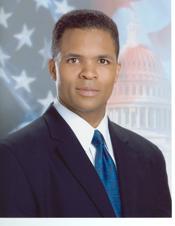
Historical · U.S. House · Illinois · District 2
Jesse Jackson Jr.
Former U.S. Representative · Illinois District 2 · 1995–2012 · Democratic
Jesse Jackson Jr. represented Illinois's District 2 in the United States House of Representatives (1995–2012) for the Democratic party. The page below collects sourced biographical facts, term history, committee roles, and provenance for Jr..
Bioguide ID: J000283
Key facts
- Full name
- Jesse Jackson Jr.
- State
- Illinois
- District
- District 2
- Party
- Democratic
- House service
- 1995–2012
- First House term
- 1995
- Status
- Left office
- Current term ends
- —
- Born
- 1965
- Bioguide ID
- J000283
- Committee assignments
- —
- Dataset version
- 1.20260605
Biographical narrative
1,033 words · sourced from the Wikipedia REST extract
Jesse L. Jackson, Jr. is a former U.S. Representative who served Illinois's 2nd congressional district from 1995 until 2012. A member of the Democratic Party, Jackson's political career was marked by his involvement in civil rights and community activism, influenced significantly by his father's legacy. His tenure in Congress ended amid investigations into financial improprieties, leading to his resignation and subsequent legal issues.
Early life and career
Jesse Louis Jackson Jr. was born on March 11, 1965, in Chicago, Illinois, into a prominent family known for its civil rights activism. He is the son of Jesse Jackson Sr., a well-known civil rights leader and founder of the Rainbow/PUSH Coalition, and Jacqueline Brown. Growing up in the Jackson Park Highlands District of the South Shore community area, Jackson was one of five children. His early education began at the University of Chicago nursery school, followed by John J. Pershing Elementary School.
From a young age, Jackson was exposed to the world of politics and activism, often accompanying his father to various events. At the age of five, he famously mimicked his father by delivering a speech atop a milk crate at the Operation PUSH headquarters. This early involvement in political activities laid the groundwork for his future career in public service.
Jackson's educational journey included attending Le Mans Academy in Rolling Prairie, Indiana, where he faced disciplinary challenges but ultimately rose to the rank of Company Commander. He later graduated from St. Albans School in Washington, D.C., where he excelled as an all-state running back, earning recognition in the sports community. His athletic achievements were highlighted in the February 1984 issue of Sports Illustrated, which featured him in the "Faces in the Crowd" section.
Following high school, Jackson enrolled at North Carolina A&T University, his father's alma mater, where he earned a Bachelor of Science degree magna cum laude in 1987. He then pursued a master's degree at the Chicago Theological Seminary, completing it a year early but choosing not to pursue ordination. Jackson continued his education at the University of Illinois College of Law, where he obtained his Juris Doctor in 1993, although he did not take the bar exam.
During his college years, Jackson was actively involved in political initiatives, including a successful voter registration drive that registered thousands of students. After graduating, he served as the executive director of the Rainbow Coalition, continuing his family's legacy of civil rights advocacy. His political involvement deepened during the 1988 Democratic primaries, where he played a role in his father's campaign and was appointed as an at-large member of the Democratic National Committee (DNC).
In addition to his work with the DNC, Jackson was involved in various civil rights activities, including protests against apartheid. He was arrested multiple times for his activism, including a notable demonstration on his twenty-first birthday. His commitment to civil rights was further exemplified by his participation in events alongside prominent figures, such as Nelson Mandela during Mandela's historic visit to the United States.
House tenure
Jesse Jackson Jr. was elected to the U.S. House of Representatives in 1995, representing Illinois's 2nd congressional district. Over the course of his nine terms in office, he focused on a range of issues, including civil rights, economic development, and healthcare. His election marked a continuation of his family's political legacy, as he succeeded his father in the political arena, although the two held different positions within the Democratic Party.
Throughout his tenure, Jackson was known for his active engagement in the legislative process and his efforts to address the needs of his constituents. He participated in various committees and caucuses, advocating for policies that aimed to improve the lives of those in his district. His background in civil rights and community organizing informed his approach to legislation, as he sought to address systemic inequalities and promote social justice.
However, Jackson's time in Congress was not without controversy. In October 2012, he became the subject of an investigation regarding financial improprieties, specifically concerning the misuse of campaign funds. This investigation ultimately led to his resignation from Congress on November 21, 2012. Citing mental and physical health issues, including bipolar disorder and gastrointestinal problems, Jackson stepped down amid growing scrutiny of his financial practices.
Legislative focus and committees
During his time in the House of Representatives, Jesse Jackson Jr. was involved in various legislative initiatives that reflected his commitment to civil rights and social justice. He was a member of the Congressional Black Caucus and actively participated in discussions about issues affecting African American communities and other marginalized groups. His work often centered on promoting equitable policies in areas such as education, healthcare, and economic development.
Jackson's legislative focus included efforts to stimulate job creation and economic growth in his district, which faced significant challenges. He advocated for policies aimed at improving access to healthcare and education, recognizing the importance of these issues in addressing the needs of his constituents. His background in civil rights activism informed his approach to legislation, as he sought to address systemic inequalities and promote social justice.
In addition to his legislative work, Jackson served on various committees during his time in Congress. His involvement in these committees allowed him to influence policy decisions and advocate for the interests of his constituents. He also worked on initiatives related to voter registration and education, reflecting his long-standing commitment to increasing civic engagement and participation in the political process.
Despite his contributions to legislative efforts, Jackson's career was overshadowed by the legal issues that arose toward the end of his tenure. Following his resignation, he admitted to violating federal campaign laws by using campaign funds for personal expenses. In 2013, he pleaded guilty to charges of wire and mail fraud, resulting in a 30-month prison sentence. He was released in March 2015.
In the years following his release, Jackson attempted to re-enter the political arena, running for his former congressional seat in 2026. However, he placed second in the Democratic primary, indicating the challenges he faced in regaining his political footing. Throughout his career, Jackson's legacy has been shaped by both his contributions to civil rights and the controversies that ultimately defined the latter part of his public service.
Notable legislation
Sponsored and co-sponsored legislation for Jesse Jackson Jr. is pending operator curation. The biographical narrative above carries the same provenance trail until per-bill rows are written.
Sources
- [1]https://en.wikipedia.org/wiki/Jesse_Jackson_Jr.Wikipedia · retrieved 2026-06-05
Notable quotes
Sourced quotes for Jesse Jackson Jr. are pending operator curation. Narrative-scope provenance remains attached below.
Sources
- [1]https://en.wikipedia.org/wiki/Jesse_Jackson_Jr.Wikipedia · retrieved 2026-06-05
Key positions
Curated policy positions for Jesse Jackson Jr. are pending operator review. The biographical narrative above carries the same provenance trail until per-topic positions are written.
Sources
- [1]https://en.wikipedia.org/wiki/Jesse_Jackson_Jr.Wikipedia · retrieved 2026-06-05
Terms served
- 1995–1997U.S. House · Term 1 · Democratic
- 1997–1999U.S. House · Term 2 · Democratic
- 1999–2001U.S. House · Term 3 · Democratic
- 2001–2003U.S. House · Term 4 · Democratic
- 2003–2005U.S. House · Term 5 · Democratic
- 2005–2007U.S. House · Term 6 · Democratic
- 2007–2009U.S. House · Term 7 · Democratic
- 2009–2011U.S. House · Term 8 · Democratic
- 2011–2012U.S. House · Term 9 · Democratic
Sources & provenance
Every attributable claim above carries a per-section [N] marker that resolves to the corresponding URL below. Each entry records the upstream provider, the canonical URL, and the timestamp at which the source was retrieved by the ingest pipeline.
Key facts
- https://bioguide.congress.gov/search/bio/J000283bioguide · retrieved 2026-06-05
- http://www.house.gov/jackson/house.gov · retrieved 2026-06-05
Biographical narrative
- https://en.wikipedia.org/wiki/Jesse_Jackson_Jr.wikipedia · retrieved 2026-06-05
Find your representative
Every U.S. state elects representatives by district. Browse Illinois’s delegation, the full former-representative roster, or explore the role and term length.
Related on The Candidate
- Preceded by Mel ReynoldsEarlier holder of the Illinois District 2 House seat · Democratic.Open
- Abner TaylorFormer U.S. Representative · Illinois District 1 · RepublicanOpen
- Adam SnyderFormer U.S. Representative · Illinois District 1 · DemocraticOpen
- Arthur MitchellFormer U.S. Representative · Illinois District 1 · DemocraticOpen
- Bennett StewartFormer U.S. Representative · Illinois District 1 · DemocraticOpen
- Democratic PartyFederal candidates and office holders on the Democratic line.Open