
Historical · U.S. House · Illinois · District 2
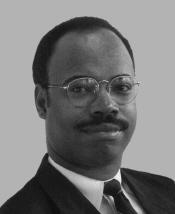
Mel Reynolds
Former U.S. Representative · Illinois District 2 · 1993–1995 · Democratic
Mel Reynolds represented Illinois's District 2 in the United States House of Representatives (1993–1995) for the Democratic party. The page below collects sourced biographical facts, term history, committee roles, and provenance for Reynolds.
Bioguide ID: R000178
Key facts
- Full name
- Mel Reynolds
- State
- Illinois
- District
- District 2
- Party
- Democratic
- House service
- 1993–1995
- First House term
- 1993
- Status
- Left office
- Current term ends
- —
- Born
- 1952
- Bioguide ID
- R000178
- Committee assignments
- —
- Dataset version
- 1.20260605
Biographical narrative
995 words · sourced from the Wikipedia REST extract
Mel Reynolds is a former American politician who served as a U.S. Representative for Illinois's 2nd congressional district from 1993 until his resignation in 1995. A member of the Democratic Party, Reynolds's political career was marked by both electoral success and significant legal controversies, ultimately leading to his conviction on multiple charges, including sexual assault and bank fraud.
Early life and career
Melvin Reynolds was born on January 8, 1952, in Mound Bayou, Mississippi, to Reverend J. J. Reynolds and Essie Mae Prather. He grew up alongside his twin brother, Marvin Jerry Reynolds, and the family later relocated to Chicago, Illinois, during his childhood. Reynolds pursued higher education, earning an Associate of Arts degree from one of the City Colleges of Chicago. He continued his studies at the University of Illinois at Urbana-Champaign, where he completed his undergraduate education. Furthering his academic pursuits, he attended Harvard University, obtaining a Master of Public Administration (M.P.A.). Additionally, he was awarded a Rhodes Scholarship, which allowed him to study at the University of Oxford, where he attended Lincoln College and earned a Bachelor of Laws (LL.B.).
Before entering the political arena, Reynolds worked as an assistant professor of political science at Roosevelt University in Chicago. He also founded the Community Economic Development and Education Foundation, which aimed to address issues related to economic development and education in urban communities.
House tenure
Reynolds's political career began with several attempts to secure a seat in the U.S. House of Representatives. He ran three times between 1988 and 1992 for the Democratic nomination in Illinois's 2nd congressional district, facing off against incumbent Gus Savage. Reynolds's initial attempts were met with limited success; in 1988, he finished third in a crowded primary with only 14% of the vote. However, as Savage's conduct came under scrutiny due to allegations of misconduct, Reynolds's subsequent campaigns gained traction. In 1990, he lost the primary but significantly narrowed the margin against Savage, who faced criticism from both sides of the political spectrum.
The 1992 redistricting of Illinois's 2nd congressional district, which shifted the district further into Chicago's suburbs, proved advantageous for Reynolds. His platform, which emphasized accountability and racial unity, resonated with middle-class black moderates and white constituents who were disillusioned with Savage's controversial rhetoric. During the primary campaign, Reynolds faced a violent incident when gunmen fired at his vehicle, leading to increased police protection. Despite accusations from Savage's supporters suggesting that Reynolds staged the attack for sympathy, he won the Democratic primary on March 17, 1992, and subsequently secured victory in the general election held in November.
Once in Congress, Reynolds was appointed to the prestigious Ways and Means Committee, making him the first freshman representative to serve on this committee in 14 years. His legislative actions included voting in favor of the North American Free Trade Agreement and introducing measures related to gun control.
Legislative focus and committees
Reynolds's time in the House was marked by a focus on economic issues and social policies. His appointment to the Ways and Means Committee allowed him to engage in discussions and decisions regarding taxation, trade, and social security, among other critical areas of public policy. His support for the North American Free Trade Agreement indicated his alignment with pro-trade policies, which were a significant aspect of the Democratic Party's platform during the early 1990s.
However, Reynolds's congressional career was abruptly overshadowed by serious legal troubles. In August 1994, he was indicted on charges of sexual assault and criminal sexual abuse related to a sexual relationship with a 16-year-old campaign volunteer. Additional charges included solicitation of child pornography and obstruction of justice, stemming from his attempts to influence the testimony of those involved. Despite these serious allegations, Reynolds continued his campaign and was re-elected in November 1994 without opposition. He initially denied the charges, claiming they were racially motivated.
On August 22, 1995, Reynolds was convicted on multiple counts, including criminal sexual assault and solicitation of child pornography. Following his conviction, he resigned from Congress on October 1, 1995. House rules prohibited him from participating in congressional activities due to his felony conviction, which limited his capacity to serve effectively if he had chosen to remain in office. Reynolds was subsequently sentenced to five years in federal prison.
In 1997, Reynolds faced additional legal issues when he was convicted on 16 counts of bank fraud, which included misusing campaign funds for personal expenses and providing false information to Federal Election Commission investigators. This led to a consecutive sentence of 78 months in prison, adding to his earlier sentence. He completed his initial sentence and served an additional 42 months for the bank fraud charges. His sentence was later commuted by President Bill Clinton, allowing him to be released from prison and transition to a halfway house.
Following his release, Reynolds sought to re-enter the political sphere. In January 2001, he joined Jesse Jackson's Rainbow/PUSH Coalition, focusing on initiatives aimed at reducing the incarceration rates of young African Americans. He attempted to reclaim his former House seat in 2004 but was defeated in the Democratic primary by Jesse Jackson, Jr., who garnered a significant majority of the votes. Reynolds made another attempt in a special election in 2013 but finished in seventh place in the Democratic primary.
Reynolds's later years were marked by further legal troubles. In February 2014, he was arrested in Zimbabwe for overstaying his visa and was found in possession of pornographic videos. Although the pornography charges were eventually dropped, he pleaded guilty to immigration violations and was deported. He claimed to be hiding from alleged threats against his life due to his knowledge of illegal activities involving American companies in Zimbabwe. In June 2015, Reynolds faced additional legal issues when he was indicted for failing to file federal income tax returns for the year 2009.
Throughout his life, Reynolds's career has been characterized by significant achievements in education and politics, as well as profound legal challenges that have shaped his legacy.
Notable legislation
Sponsored and co-sponsored legislation for Mel Reynolds is pending operator curation. The biographical narrative above carries the same provenance trail until per-bill rows are written.
Sources
- [1]https://en.wikipedia.org/wiki/Mel_ReynoldsWikipedia · retrieved 2026-06-05
Notable quotes
Sourced quotes for Mel Reynolds are pending operator curation. Narrative-scope provenance remains attached below.
Sources
- [1]https://en.wikipedia.org/wiki/Mel_ReynoldsWikipedia · retrieved 2026-06-05
Key positions
Curated policy positions for Mel Reynolds are pending operator review. The biographical narrative above carries the same provenance trail until per-topic positions are written.
Sources
- [1]https://en.wikipedia.org/wiki/Mel_ReynoldsWikipedia · retrieved 2026-06-05
Terms served
- 1993–1995U.S. House · Term 1 · Democratic
- 1995–1995U.S. House · Term 2 · Democratic
Sources & provenance
Every attributable claim above carries a per-section [N] marker that resolves to the corresponding URL below. Each entry records the upstream provider, the canonical URL, and the timestamp at which the source was retrieved by the ingest pipeline.
Key facts
- https://bioguide.congress.gov/search/bio/R000178bioguide · retrieved 2026-06-05
- https://www.govtrack.us/congress/members/409154govtrack · retrieved 2026-06-05
Biographical narrative
- https://en.wikipedia.org/wiki/Mel_Reynoldswikipedia · retrieved 2026-06-05
Find your representative
Every U.S. state elects representatives by district. Browse Illinois’s delegation, the full former-representative roster, or explore the role and term length.
Related on The Candidate
- Preceded by Gus SavageEarlier holder of the Illinois District 2 House seat · Democratic.Open
- Succeeded by Jesse Jackson Jr.Later holder of the Illinois District 2 House seat · Democratic.Open
- Abner TaylorFormer U.S. Representative · Illinois District 1 · RepublicanOpen
- Adam SnyderFormer U.S. Representative · Illinois District 1 · DemocraticOpen
- Arthur MitchellFormer U.S. Representative · Illinois District 1 · DemocraticOpen
- Bennett StewartFormer U.S. Representative · Illinois District 1 · DemocraticOpen