
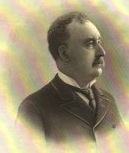
Historical · U.S. House · Illinois · District 2
John Finerty
Former U.S. Representative · Illinois District 2 · 1883–1885 · Ind. Democrat
John Finerty represented Illinois's District 2 in the United States House of Representatives (1883–1885) for the Ind. Democrat party. The page below collects sourced biographical facts, term history, committee roles, and provenance for Finerty.
Bioguide ID: F000127
Key facts
- Full name
- John Finerty
- State
- Illinois
- District
- District 2
- Party
- Ind. Democrat
- House service
- 1883–1885
- First House term
- 1883
- Status
- Left office
- Current term ends
- —
- Born
- 1846
- Bioguide ID
- F000127
- Committee assignments
- —
- Dataset version
- 1.20260606
Biographical narrative
849 words · sourced from the Wikipedia REST extract
John Finerty was a journalist and politician who served as a U.S. Representative for Illinois's 2nd congressional district from 1883 to 1885. An Independent Democrat, Finerty's career was marked by his commitment to journalism and his involvement in political affairs, reflecting his background as an Irish nationalist and a war correspondent. His experiences in both journalism and politics shaped his contributions to American society during the late 19th century.
Early life and career
John Finerty was born on September 10, 1846, in Galway, Ireland, to M. J. Finerty, who was the editor of the Galway Vindicator, and Margaret Finerty (née Flynn). Following the early death of his father, Finerty was raised by an uncle, which allowed him to pursue a strong education through national schools and private tutors. His academic interests were particularly focused on history and literature, subjects that would later influence his writing and reporting.
At the age of eleven, Finerty moved to Tipperary, where he was significantly influenced by Father John Kenyon, an Irish patriot. This exposure to nationalist ideas led him to become an Irish nationalist himself, and he joined the National Brotherhood of St. Patrick, an organization dedicated to the cause of Irish independence. However, his political activities in Ireland put him at risk of arrest, prompting him to flee to the United States during the tumultuous period of the American Civil War.
Upon arriving in the U.S., Finerty enlisted in the Union Army, serving in the Ninety-ninth Regiment of the New York State Militia. His military service coincided with his burgeoning career in journalism. He became a war correspondent for the Chicago Times, covering various conflicts, including the Sioux War of 1876, the Northern Indian War of 1879, the Ute campaign of 1879, and the Apache campaign of 1881. His reporting during these conflicts showcased his ability to capture the complexities of war and the experiences of those involved.
In addition to his war correspondence, Finerty established the Citizen, an Irish weekly newspaper, in Chicago in 1882. This publication served as a platform for his views and for issues relevant to the Irish-American community. His fascination with Mexico also led him to report extensively from the country, documenting his experiences and observations during various assignments. These reports would later be compiled and published, contributing to the understanding of U.S.-Mexico relations during that era.
House tenure
Finerty's political career culminated in his election to the United States Congress as an Independent Democrat. He served in the Forty-eighth Congress from March 4, 1883, until March 3, 1885. His tenure was characterized by his commitment to representing the interests of his constituents in Illinois. As a member of the House of Representatives, Finerty participated in legislative discussions and contributed to the political landscape of the time.
While specific details regarding his legislative actions and the bills he supported during his time in office are not extensively documented, his background as a journalist likely informed his approach to governance. His experiences in reporting and understanding public sentiment may have influenced his perspectives on various issues facing the nation.
Following his congressional term, Finerty continued to engage in local politics, serving on the board of local improvements from 1906 to 1908. His involvement in local governance demonstrated his ongoing commitment to public service and community development.
Legislative focus and committees
During his time in Congress, Finerty's legislative focus and committee assignments are not extensively detailed in available records. However, given his background as a journalist and war correspondent, it can be inferred that he may have been particularly interested in issues related to military affairs, veterans' rights, and the rights of immigrants, especially those from Ireland. His experiences in reporting on various conflicts and his understanding of the immigrant experience in America likely shaped his views on these topics.
As an Independent Democrat, Finerty's political stance may have allowed him to navigate between party lines, advocating for policies that aligned with his principles rather than strictly adhering to party ideology. This independence could have enabled him to address the needs of his constituents more effectively, particularly in a diverse and rapidly changing urban environment like Chicago.
Finerty's contributions to the legislative process, while not extensively documented, were likely influenced by his commitment to social justice and his understanding of the complexities of American society during the late 19th century. His background as a journalist would have provided him with a unique perspective on the issues facing his constituents, allowing him to advocate for their needs and concerns.
After leaving Congress, Finerty continued to write and publish works that reflected his interests in history and military affairs. His notable publications include "Ireland: The People's History of Ireland" and "War-Path and Bivouac: The Conquest of the Sioux," which further established his reputation as a significant figure in both journalism and literature.
Finerty passed away on June 10, 1908, in Chicago, where he was interred in Calvary Cemetery. His life and career reflect the intersections of journalism, politics, and the immigrant experience in America, highlighting the contributions of individuals who shaped the nation's history during a transformative period.
Notable legislation
Sponsored and co-sponsored legislation for John Finerty is pending operator curation. The biographical narrative above carries the same provenance trail until per-bill rows are written.
Sources
- [1]https://en.wikipedia.org/wiki/John_F._FinertyWikipedia · retrieved 2026-06-06
Notable quotes
Sourced quotes for John Finerty are pending operator curation. Narrative-scope provenance remains attached below.
Sources
- [1]https://en.wikipedia.org/wiki/John_F._FinertyWikipedia · retrieved 2026-06-06
Key positions
Curated policy positions for John Finerty are pending operator review. The biographical narrative above carries the same provenance trail until per-topic positions are written.
Sources
- [1]https://en.wikipedia.org/wiki/John_F._FinertyWikipedia · retrieved 2026-06-06
Terms served
- 1883–1885U.S. House · Term 1 · Ind. Democrat
Sources & provenance
Every attributable claim above carries a per-section [N] marker that resolves to the corresponding URL below. Each entry records the upstream provider, the canonical URL, and the timestamp at which the source was retrieved by the ingest pipeline.
Key facts
- https://bioguide.congress.gov/search/bio/F000127bioguide · retrieved 2026-06-06
- https://www.govtrack.us/congress/members/404082govtrack · retrieved 2026-06-06
Biographical narrative
- https://en.wikipedia.org/wiki/John_F._Finertywikipedia · retrieved 2026-06-06
Find your representative
Every U.S. state elects representatives by district. Browse Illinois’s delegation, the full former-representative roster, or explore the role and term length.
Related on The Candidate
- Preceded by Carter HarrisonEarlier holder of the Illinois District 2 House seat · Democratic.Open
- Succeeded by Frank LawlerLater holder of the Illinois District 2 House seat · Democratic.Open
- Abner TaylorFormer U.S. Representative · Illinois District 1 · RepublicanOpen
- Adam SnyderFormer U.S. Representative · Illinois District 1 · DemocraticOpen
- Arthur MitchellFormer U.S. Representative · Illinois District 1 · DemocraticOpen
- Bennett StewartFormer U.S. Representative · Illinois District 1 · DemocraticOpen