
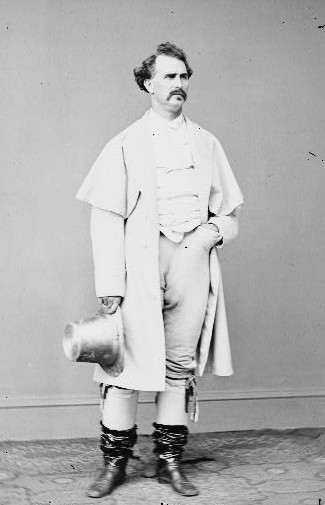
Historical · U.S. House · Illinois · District 2
Frank Lawler
Former U.S. Representative · Illinois District 2 · 1885–1891 · Democratic
Frank Lawler represented Illinois's District 2 in the United States House of Representatives (1885–1891) for the Democratic party. The page below collects sourced biographical facts, term history, committee roles, and provenance for Lawler.
Bioguide ID: L000128
Key facts
- Full name
- Frank Lawler
- State
- Illinois
- District
- District 2
- Party
- Democratic
- House service
- 1885–1891
- First House term
- 1885
- Status
- Left office
- Current term ends
- —
- Born
- 1842
- Bioguide ID
- L000128
- Committee assignments
- —
- Dataset version
- 1.20260606
Biographical narrative
802 words · sourced from the Wikipedia REST extract
Frank Lawler was a U.S. Representative from Illinois, serving as a member of the Democratic Party. His congressional career spanned three terms in the late 19th century, during which he represented Illinois's 2nd congressional district. Lawler's political journey was marked by his involvement in local governance and labor organization, reflecting the socio-economic dynamics of his time. He was born on June 25, 1842, and passed away on January 17, 1896.
Early life and career
Frank Lawler was born in Rochester, New York, where he received his early education in public schools. In 1854, when he was twelve years old, his family relocated to Chicago, Illinois. This move would prove significant, as Chicago was a burgeoning city with a rapidly growing economy during the mid-19th century. Lawler's early work experiences included various roles that contributed to his understanding of labor and trade. He worked as a newsagent on a railroad and later as a brakeman, gaining firsthand experience in the transportation sector.
In addition to his work in transportation, Lawler learned the shipbuilding trade, which further diversified his skill set. His involvement in labor issues began to take shape as he became active in organizing trade and labor unions. His leadership capabilities were recognized when he served as president of the Ship Carpenters and Calkers' Association, a position that underscored his commitment to advocating for workers' rights and improving labor conditions.
From 1869 to 1877, Lawler was employed as a letter carrier in the Chicago post office. This role not only provided him with a stable income but also allowed him to engage with the community, further solidifying his reputation as a public servant. In 1876, he transitioned into politics by becoming a member of the Chicago city council, a position he held until 1885. During this time, he was involved in various local governance issues, laying the groundwork for his future political career.
In 1878, Lawler ventured into business as a liquor merchant, which was a common occupation during that era. His experiences in both business and public service equipped him with a unique perspective on the challenges facing his constituents, particularly in an industrializing city like Chicago.
House tenure
Frank Lawler's congressional career began when he was elected as a Democrat to the Forty-ninth Congress, which commenced on March 4, 1885. He was subsequently re-elected to the Fiftieth and Fifty-first Congresses, serving until March 3, 1891. Throughout his time in the House of Representatives, Lawler was involved in various legislative activities that reflected the interests and concerns of his constituents in Illinois's 2nd congressional district.
During his tenure, Lawler participated in discussions and debates on a range of issues pertinent to the era, including labor rights, economic development, and social welfare. His background in labor organization likely influenced his legislative priorities, as he sought to represent the working-class interests of his district. Lawler's experience as a city council member provided him with insights into local governance, which he brought to his role in Congress.
Despite his efforts and contributions, Lawler faced challenges in his political career. In 1891, he ran for the position of sheriff of Cook County but was unsuccessful in his bid. His political aspirations continued, and he sought election to the Fifty-fourth Congress in 1895; however, he was not elected.
Legislative focus and committees
Throughout his time in the House of Representatives, Frank Lawler's legislative focus was likely shaped by his background in labor and local governance. While specific details about the bills he sponsored or the committees he served on are not documented, it can be inferred that his experiences as a labor leader and city council member would have informed his approach to legislation. He was likely involved in discussions related to labor rights, economic policies, and urban development, reflecting the needs of his constituents in a rapidly changing industrial landscape.
Lawler's commitment to labor issues and his advocacy for workers' rights were consistent with the broader Democratic Party platform of the time, which often emphasized the importance of supporting the working class. His leadership roles in labor organizations would have positioned him as a voice for those advocating for better working conditions and fair wages.
After his congressional career, Lawler returned to local politics, being elected again to the board of aldermen in 1896. This role allowed him to continue his public service until his death later that year in Chicago. His burial took place at Calvary Cemetery in Evanston, Illinois, marking the end of a life dedicated to public service and labor advocacy.
Frank Lawler's legacy is reflective of the complexities of American politics during the late 19th century, characterized by rapid industrialization, labor movements, and urbanization. His contributions to both local and national governance highlight the interconnectedness of labor issues and political representation during a transformative period in U.S. history.
Notable legislation
Sponsored and co-sponsored legislation for Frank Lawler is pending operator curation. The biographical narrative above carries the same provenance trail until per-bill rows are written.
Sources
- [1]https://en.wikipedia.org/wiki/Frank_LawlerWikipedia · retrieved 2026-06-06
Notable quotes
Sourced quotes for Frank Lawler are pending operator curation. Narrative-scope provenance remains attached below.
Sources
- [1]https://en.wikipedia.org/wiki/Frank_LawlerWikipedia · retrieved 2026-06-06
Key positions
Curated policy positions for Frank Lawler are pending operator review. The biographical narrative above carries the same provenance trail until per-topic positions are written.
Sources
- [1]https://en.wikipedia.org/wiki/Frank_LawlerWikipedia · retrieved 2026-06-06
Terms served
- 1885–1887U.S. House · Term 1 · Democratic
- 1887–1889U.S. House · Term 2 · Democratic
- 1889–1891U.S. House · Term 3 · Democratic
Sources & provenance
Every attributable claim above carries a per-section [N] marker that resolves to the corresponding URL below. Each entry records the upstream provider, the canonical URL, and the timestamp at which the source was retrieved by the ingest pipeline.
Key facts
- https://bioguide.congress.gov/search/bio/L000128bioguide · retrieved 2026-06-06
- https://www.govtrack.us/congress/members/406633govtrack · retrieved 2026-06-06
Biographical narrative
- https://en.wikipedia.org/wiki/Frank_Lawlerwikipedia · retrieved 2026-06-06
Find your representative
Every U.S. state elects representatives by district. Browse Illinois’s delegation, the full former-representative roster, or explore the role and term length.
Related on The Candidate
- Preceded by John FinertyEarlier holder of the Illinois District 2 House seat · Ind. Democrat.Open
- Succeeded by James MannLater holder of the Illinois District 2 House seat · Republican.Open
- Abner TaylorFormer U.S. Representative · Illinois District 1 · RepublicanOpen
- Adam SnyderFormer U.S. Representative · Illinois District 1 · DemocraticOpen
- Arthur MitchellFormer U.S. Representative · Illinois District 1 · DemocraticOpen
- Bennett StewartFormer U.S. Representative · Illinois District 1 · DemocraticOpen