
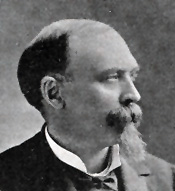
Historical · U.S. House · Illinois · District 4
Charles Woodman
Former U.S. Representative · Illinois District 4 · 1895–1897 · Republican
Charles Woodman represented Illinois's District 4 in the United States House of Representatives (1895–1897) for the Republican party. The page below collects sourced biographical facts, term history, committee roles, and provenance for Woodman.
Bioguide ID: W000715
Key facts
- Full name
- Charles Woodman
- State
- Illinois
- District
- District 4
- Party
- Republican
- House service
- 1895–1897
- First House term
- 1895
- Status
- Left office
- Current term ends
- —
- Born
- 1844
- Bioguide ID
- W000715
- Committee assignments
- —
- Dataset version
- 1.20260606
Biographical narrative
943 words · sourced from the Wikipedia REST extract
Charles Woodman was a U.S. Representative from Illinois, serving in the House of Representatives as a member of the Republican Party. His congressional career was marked by a single term, during which he represented Illinois's 4th congressional district from 1895 to 1897. Born in Denmark, Woodman emigrated to the United States in the 19th century, where he pursued a career in law and public service before entering politics. His life was characterized by significant professional achievements, although it was ultimately marred by personal challenges that led to his untimely death in 1898.
Early life and career
Charles Woodman was born on March 11, 1844, in Aalborg, Denmark. His early education took place in his native country, where he likely received a foundational understanding of various subjects that would later aid him in his professional pursuits. In 1863, at the age of 19, Woodman made the decision to emigrate to the United States, arriving in Philadelphia. This move was part of a broader trend during the 19th century, as many individuals sought better opportunities and living conditions in America.
Upon his arrival in the United States, Woodman quickly enlisted in the Gulf Squadron of the United States Navy, a decision that reflected both a sense of duty and a desire to contribute to the nation during a tumultuous period in its history. His military service would have provided him with valuable experiences and skills that would later inform his career in law and politics. After serving in the Navy, Woodman moved to Chicago in 1865, a city that was rapidly growing and becoming a hub of commerce and industry.
In Chicago, Woodman pursued a legal education, enrolling in the law department of Chicago University. He graduated in 1871, marking the beginning of his professional career in law. Shortly after his graduation, he was admitted to the Illinois bar, allowing him to practice law in the state. Woodman's legal career began in earnest as he established himself in Chicago, where he gained a reputation for his legal acumen and dedication to public service.
In 1877, Woodman was appointed as the prosecuting attorney for the lower courts, a role that placed him in a position of significant responsibility within the legal system. This appointment highlighted his capabilities and the trust that the community placed in him. Four years later, in 1881, he was appointed Justice of the Peace by the judges of Cook County, further solidifying his standing in the legal community. These roles not only provided Woodman with practical experience in the legal field but also served as a stepping stone to his eventual entry into politics.
House tenure
Charles Woodman's political career began in earnest when he was elected to the United States House of Representatives as a Republican. He took office on March 4, 1895, representing Illinois's 4th congressional district. His election to the Fifty-fourth Congress marked a significant milestone in his career, as he transitioned from legal practice to legislative responsibilities. During his time in Congress, Woodman participated in the legislative process, contributing to discussions and decisions that would shape national policy.
Woodman's tenure in the House was relatively brief, lasting until March 3, 1897. Throughout his time in office, he was involved in various legislative activities, although specific details regarding his contributions and the bills he supported are not extensively documented. His role as a congressman would have required him to engage with constituents, advocate for their interests, and navigate the complexities of federal legislation.
Despite his initial success in securing a congressional seat, Woodman's political career faced challenges. He sought reelection in 1896 for the Fifty-fifth Congress but was unsuccessful in his bid. This defeat marked the end of his formal political career, although the reasons for his electoral loss are not detailed in the available records. Following his departure from Congress, Woodman's life took a difficult turn.
Legislative focus and committees
While specific information regarding Charles Woodman's legislative focus and committee assignments during his time in Congress is limited, it can be inferred that, as a member of the Republican Party, he would have aligned with the party's platform and priorities of the time. The Republican Party in the late 19th century was characterized by its support for industrialization, economic growth, and a strong national defense, among other issues. Woodman's background in law and public service may have influenced his perspectives on various legislative matters, particularly those related to justice, governance, and community welfare.
The political landscape during Woodman's tenure was marked by significant changes and challenges, including debates over tariffs, immigration, and labor rights. As a representative from Illinois, a state that was experiencing rapid industrial growth, Woodman may have been involved in discussions related to economic development and infrastructure, although specific details are not available.
Following his congressional term, Woodman's life took a tragic turn. In October 1897, he was found to be insane due to overwork, a condition that led to his confinement in an asylum in Elgin, Illinois. This period of mental health struggles would have had a profound impact on his life and legacy. Charles Woodman passed away on March 18, 1898, just over a year after leaving office. He was interred in Rosehill Cemetery in Chicago, where he remains a part of the city's historical narrative.
In summary, Charles Woodman's life was marked by significant achievements in law and politics, as well as personal challenges that ultimately shaped his legacy. His journey from Denmark to the United States, his service in the Navy, and his career in law and politics reflect the experiences of many individuals who sought to contribute to American society during a transformative period in its history.
Notable legislation
Sponsored and co-sponsored legislation for Charles Woodman is pending operator curation. The biographical narrative above carries the same provenance trail until per-bill rows are written.
Sources
- [1]https://en.wikipedia.org/wiki/Charles_W._WoodmanWikipedia · retrieved 2026-06-06
Notable quotes
Sourced quotes for Charles Woodman are pending operator curation. Narrative-scope provenance remains attached below.
Sources
- [1]https://en.wikipedia.org/wiki/Charles_W._WoodmanWikipedia · retrieved 2026-06-06
Key positions
Curated policy positions for Charles Woodman are pending operator review. The biographical narrative above carries the same provenance trail until per-topic positions are written.
Sources
- [1]https://en.wikipedia.org/wiki/Charles_W._WoodmanWikipedia · retrieved 2026-06-06
Terms served
- 1895–1897U.S. House · Term 1 · Republican
Sources & provenance
Every attributable claim above carries a per-section [N] marker that resolves to the corresponding URL below. Each entry records the upstream provider, the canonical URL, and the timestamp at which the source was retrieved by the ingest pipeline.
Key facts
- https://bioguide.congress.gov/search/bio/W000715bioguide · retrieved 2026-06-06
- https://www.govtrack.us/congress/members/411867govtrack · retrieved 2026-06-06
Biographical narrative
- https://en.wikipedia.org/wiki/Charles_W._Woodmanwikipedia · retrieved 2026-06-06
Find your representative
Every U.S. state elects representatives by district. Browse Illinois’s delegation, the full former-representative roster, or explore the role and term length.
Related on The Candidate
- Preceded by Julius GoldzierEarlier holder of the Illinois District 4 House seat · Democratic.Open
- Succeeded by Daniel MillsLater holder of the Illinois District 4 House seat · Republican.Open
- Abner TaylorFormer U.S. Representative · Illinois District 1 · RepublicanOpen
- Adam SnyderFormer U.S. Representative · Illinois District 1 · DemocraticOpen
- Arthur MitchellFormer U.S. Representative · Illinois District 1 · DemocraticOpen
- Bennett StewartFormer U.S. Representative · Illinois District 1 · DemocraticOpen