
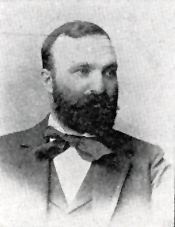
Historical · U.S. House · Illinois · District 4
Julius Goldzier
Former U.S. Representative · Illinois District 4 · 1893–1895 · Democratic
Julius Goldzier represented Illinois's District 4 in the United States House of Representatives (1893–1895) for the Democratic party. The page below collects sourced biographical facts, term history, committee roles, and provenance for Goldzier.
Bioguide ID: G000269
Key facts
- Full name
- Julius Goldzier
- State
- Illinois
- District
- District 4
- Party
- Democratic
- House service
- 1893–1895
- First House term
- 1893
- Status
- Left office
- Current term ends
- —
- Born
- 1854
- Bioguide ID
- G000269
- Committee assignments
- —
- Dataset version
- 1.20260606
Biographical narrative
950 words · sourced from the Wikipedia REST extract
Julius Goldzier was a notable figure in American politics, serving as a U.S. Representative for Illinois' 4th congressional district during the early 1890s. A member of the Democratic Party, Goldzier's political career was marked by his commitment to public service and his role as a pioneering Jewish politician in the United States. His tenure in the House of Representatives was part of a broader civic engagement that included significant contributions to local governance in Chicago. Born in Austria and later immigrating to the United States, Goldzier's life reflects the experiences of many immigrants who sought opportunities in America during the 19th century.
Early life and career
Julius Goldzier was born on January 20, 1854, in Vienna, which was then part of the Austrian Empire. He received his early education in the public schools of Vienna, where he likely developed a foundational understanding of civic responsibility and governance. In 1866, at the age of twelve, Goldzier immigrated to the United States, settling in New York City. This move was part of a larger wave of immigration during this period, as many individuals sought better opportunities and a new life in America.
Goldzier pursued a legal education and eventually studied law, which led to his admission to the bar. His legal career began in earnest when he moved to Chicago in 1872. In Chicago, Goldzier became involved in several high-profile legal cases, notably representing John Hroneck, an anarchist. This case, among others, contributed to his reputation as a skilled attorney in the city. His legal practice not only showcased his abilities but also positioned him as a prominent figure within the German-speaking community of Chicago.
In addition to his legal work, Goldzier was active in various civic organizations. He served as a director of the Chicago German Society, which aimed to support the German immigrant community in the city. Furthermore, he held the position of director and secretary of the Abendpost, a German-language newspaper that played a crucial role in communicating issues relevant to the German-speaking populace. These roles underscored his commitment to serving the needs of his community and highlighted the importance of cultural identity during a time of significant immigration.
Goldzier's political career began to take shape when he was elected as an alderman for Chicago's 22nd ward, serving from 1890 to 1892. His tenure in the city council allowed him to engage directly with local governance and address the concerns of his constituents. This experience in municipal politics likely provided him with valuable insights into the legislative process and the needs of the community, setting the stage for his future role at the federal level.
House tenure
Goldzier's congressional career commenced when he was elected as a Democrat to the Fifty-third Congress, which lasted from March 4, 1893, to March 3, 1895. His election to the U.S. House of Representatives marked a significant milestone in his political journey, as he became one of the first Jewish members of Congress from Illinois. This achievement was particularly noteworthy during a time when Jewish representation in American politics was limited.
During his time in Congress, Goldzier participated in the legislative process, contributing to discussions and decisions that shaped national policy. Although specific details regarding the bills he supported or opposed are not documented, his role as a congressman would have involved addressing a range of issues pertinent to his constituents and the nation at large. His position allowed him to advocate for the interests of his district and engage with fellow lawmakers on various legislative matters.
Despite his efforts and contributions, Goldzier faced challenges in securing re-election. He ran for a second term in the Fifty-fourth Congress but was unsuccessful in his bid. This defeat marked the end of his congressional tenure, concluding his time in the House of Representatives after just one term. Following his congressional service, Goldzier returned to local politics and was re-elected to the Chicago city council in 1899, indicating his continued commitment to public service and community engagement.
Legislative focus and committees
While specific details about Goldzier's legislative focus during his time in Congress are not extensively documented, his background as a lawyer and his involvement in local governance suggest that he may have been particularly interested in issues related to law, civil rights, and community development. As a member of the Democratic Party during the 1890s, he would have been part of a political landscape that was grappling with significant social and economic changes, including the effects of industrialization and urbanization.
Goldzier's participation in various committees would have been an essential aspect of his congressional role, allowing him to influence legislation and advocate for his constituents' needs. However, the specific committees on which he served are not detailed in the available records. It is reasonable to infer that, given his legal background and experience in local government, he may have been involved in committees that addressed legal and civic issues, as well as those that focused on the needs of urban populations.
Throughout his career, Goldzier's contributions to the legislative process and his engagement with his community reflected a broader commitment to public service. His status as Illinois' first Jewish congressman was a significant milestone, representing the increasing diversity of American political life during this era. Goldzier's legacy is one of participation in the democratic process and advocacy for the interests of his constituents, marking him as a notable figure in the history of American politics.
Julius Goldzier passed away on January 20, 1925, in Chicago, coinciding with his 71st birthday. His interment location remains unknown. His life and career exemplify the journey of an immigrant who rose to prominence in American politics, contributing to the rich tapestry of the nation's legislative history.
Notable legislation
Sponsored and co-sponsored legislation for Julius Goldzier is pending operator curation. The biographical narrative above carries the same provenance trail until per-bill rows are written.
Sources
- [1]https://en.wikipedia.org/wiki/Julius_GoldzierWikipedia · retrieved 2026-06-06
Notable quotes
Sourced quotes for Julius Goldzier are pending operator curation. Narrative-scope provenance remains attached below.
Sources
- [1]https://en.wikipedia.org/wiki/Julius_GoldzierWikipedia · retrieved 2026-06-06
Key positions
Curated policy positions for Julius Goldzier are pending operator review. The biographical narrative above carries the same provenance trail until per-topic positions are written.
Sources
- [1]https://en.wikipedia.org/wiki/Julius_GoldzierWikipedia · retrieved 2026-06-06
Terms served
- 1893–1895U.S. House · Term 1 · Democratic
Sources & provenance
Every attributable claim above carries a per-section [N] marker that resolves to the corresponding URL below. Each entry records the upstream provider, the canonical URL, and the timestamp at which the source was retrieved by the ingest pipeline.
Key facts
- https://bioguide.congress.gov/search/bio/G000269bioguide · retrieved 2026-06-06
- https://www.govtrack.us/congress/members/404631govtrack · retrieved 2026-06-06
Biographical narrative
- https://en.wikipedia.org/wiki/Julius_Goldzierwikipedia · retrieved 2026-06-06
Find your representative
Every U.S. state elects representatives by district. Browse Illinois’s delegation, the full former-representative roster, or explore the role and term length.
Related on The Candidate
- Preceded by Walter NewberryEarlier holder of the Illinois District 4 House seat · Democratic.Open
- Succeeded by Charles WoodmanLater holder of the Illinois District 4 House seat · Republican.Open
- Abner TaylorFormer U.S. Representative · Illinois District 1 · RepublicanOpen
- Adam SnyderFormer U.S. Representative · Illinois District 1 · DemocraticOpen
- Arthur MitchellFormer U.S. Representative · Illinois District 1 · DemocraticOpen
- Bennett StewartFormer U.S. Representative · Illinois District 1 · DemocraticOpen