
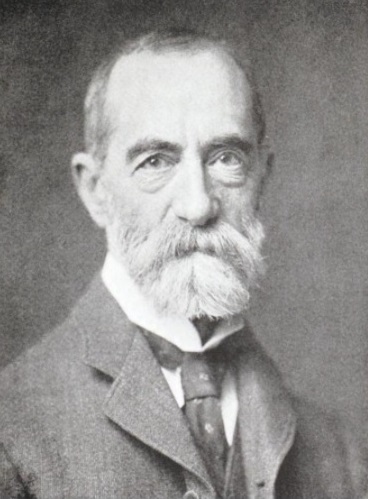
Historical · U.S. House · Illinois · District 4
George Adams
Former U.S. Representative · Illinois District 4 · 1883–1891 · Republican
George Adams represented Illinois's District 4 in the United States House of Representatives (1883–1891) for the Republican party. The page below collects sourced biographical facts, term history, committee roles, and provenance for Adams.
Bioguide ID: A000034
Key facts
- Full name
- George Adams
- State
- Illinois
- District
- District 4
- Party
- Republican
- House service
- 1883–1891
- First House term
- 1883
- Status
- Left office
- Current term ends
- —
- Born
- 1840
- Bioguide ID
- A000034
- Committee assignments
- —
- Dataset version
- 1.20260606
Biographical narrative
920 words · sourced from the Wikipedia REST extract
George Adams was a prominent figure in American politics during the late 19th century, serving as a U.S. Representative from Illinois. A member of the Republican Party, Adams was elected to the House of Representatives for four consecutive terms, contributing to the legislative process from 1883 until 1891. His career was marked by a commitment to public service and a dedication to his community, both as a politician and as a legal practitioner. In addition to his political endeavors, he played a significant role in the cultural landscape of Chicago, being one of the founders of the Chicago Symphony Orchestra.
Early life and career
George Adams was born on June 18, 1840, in Keene, New Hampshire. He was the son of Benjamin F. Adams and Louisa Redington, and his lineage can be traced back to William Adams, an early settler in Ipswich, Massachusetts. This heritage reflects a long-standing connection to American history and the development of the New England region. In 1853, when Adams was just thirteen years old, his family relocated to Chicago, Illinois. This move would set the stage for his future career in law and politics.
Adams received his early education at Phillips Exeter Academy in New Hampshire, a prestigious preparatory school known for its rigorous academic standards. Following his time at Exeter, he attended Harvard University, where he earned a Bachelor of Arts degree in 1860. His education continued at Harvard Law School, where he pursued a degree in law, culminating in his graduation with a Bachelor of Laws in 1865. This academic background provided him with a solid foundation for his future legal career.
During the American Civil War, Adams served in the First Illinois Artillery, contributing to the Union's efforts during this tumultuous period in American history. His military service not only reflected his commitment to his country but also likely influenced his perspectives on governance and public service. After the war, he returned to Chicago, where he was admitted to the bar in 1865 and began practicing law in 1867. His legal career would later complement his political aspirations, as he navigated the complexities of law and governance.
Before entering Congress, Adams served in the Illinois State Senate from 1881 until March 3, 1883. His tenure in the state legislature provided him with valuable experience in public policy and legislative processes, preparing him for his subsequent role in the U.S. House of Representatives. In March 1883, he resigned from the state senate to pursue a seat in Congress, marking the beginning of his federal legislative career.
House tenure
George Adams was elected as a Republican to the Forty-eighth Congress, beginning his first term on March 4, 1883. He continued to serve in the House for four consecutive terms, spanning the Forty-eighth, Forty-ninth, Fiftieth, and Fifty-first Congresses, until his last term ended on March 3, 1891. During his time in Congress, Adams was involved in various legislative initiatives and discussions, contributing to the shaping of policies that affected both his constituents in Illinois and the nation as a whole.
His political career in the House was characterized by a commitment to the principles of the Republican Party during a period of significant change in American society. The late 19th century was marked by industrialization, urbanization, and various social movements, all of which influenced the political landscape. Adams's legislative work would have been conducted against this backdrop, as Congress grappled with issues related to economic development, labor rights, and social reform.
Despite his active participation in Congress, Adams faced challenges in maintaining his political position. He ran for re-election in 1890 but was unsuccessful in his bid for a seat in the Fifty-second Congress. This defeat marked the end of his formal political career, but his contributions to public service and the legal profession continued beyond his time in office.
Legislative focus and committees
While specific details regarding Adams's legislative focus and committee assignments during his time in Congress are not provided, it can be inferred that, as a member of the Republican Party, he likely engaged with issues pertinent to his constituents and the broader national agenda. The late 19th century was a period of significant legislative activity, particularly concerning economic policies, infrastructure development, and social issues. Adams's background in law and his experience in the Illinois State Senate would have equipped him to address these matters effectively.
In addition to his political career, Adams was known for his involvement in cultural initiatives in Chicago. He was one of the founders of the Chicago Symphony Orchestra, playing a crucial role in securing the land for the orchestra's current location in downtown Chicago. This involvement highlights his commitment not only to politics but also to the arts and community development, reflecting a broader understanding of the role of culture in society.
Following his departure from Congress, Adams returned to his legal practice in Chicago, where he continued to contribute to the legal community until his death. He passed away on October 5, 1917, at his summer home in Peterborough, New Hampshire. His remains were interred in Pine Hill Cemetery in Dover, New Hampshire, marking the end of a life dedicated to public service, law, and the arts.
In summary, George Adams's life and career encapsulate the journey of a dedicated public servant who navigated the complexities of law and governance during a transformative period in American history. His contributions to both the political and cultural landscapes of Illinois and the nation remain a testament to his commitment to his community and country.
Notable legislation
Sponsored and co-sponsored legislation for George Adams is pending operator curation. The biographical narrative above carries the same provenance trail until per-bill rows are written.
Sources
- [1]https://en.wikipedia.org/wiki/George_E._AdamsWikipedia · retrieved 2026-06-06
Notable quotes
Sourced quotes for George Adams are pending operator curation. Narrative-scope provenance remains attached below.
Sources
- [1]https://en.wikipedia.org/wiki/George_E._AdamsWikipedia · retrieved 2026-06-06
Key positions
Curated policy positions for George Adams are pending operator review. The biographical narrative above carries the same provenance trail until per-topic positions are written.
Sources
- [1]https://en.wikipedia.org/wiki/George_E._AdamsWikipedia · retrieved 2026-06-06
Terms served
- 1883–1885U.S. House · Term 1 · Republican
- 1885–1887U.S. House · Term 2 · Republican
- 1887–1889U.S. House · Term 3 · Republican
- 1889–1891U.S. House · Term 4 · Republican
Sources & provenance
Every attributable claim above carries a per-section [N] marker that resolves to the corresponding URL below. Each entry records the upstream provider, the canonical URL, and the timestamp at which the source was retrieved by the ingest pipeline.
Key facts
- https://bioguide.congress.gov/search/bio/A000034bioguide · retrieved 2026-06-06
- https://www.govtrack.us/congress/members/400695govtrack · retrieved 2026-06-06
Biographical narrative
- https://en.wikipedia.org/wiki/George_E._Adamswikipedia · retrieved 2026-06-06
Find your representative
Every U.S. state elects representatives by district. Browse Illinois’s delegation, the full former-representative roster, or explore the role and term length.
Related on The Candidate
- Preceded by John SherwinEarlier holder of the Illinois District 4 House seat · Republican.Open
- Succeeded by Walter NewberryLater holder of the Illinois District 4 House seat · Democratic.Open
- Abner TaylorFormer U.S. Representative · Illinois District 1 · RepublicanOpen
- Adam SnyderFormer U.S. Representative · Illinois District 1 · DemocraticOpen
- Arthur MitchellFormer U.S. Representative · Illinois District 1 · DemocraticOpen
- Bennett StewartFormer U.S. Representative · Illinois District 1 · DemocraticOpen