
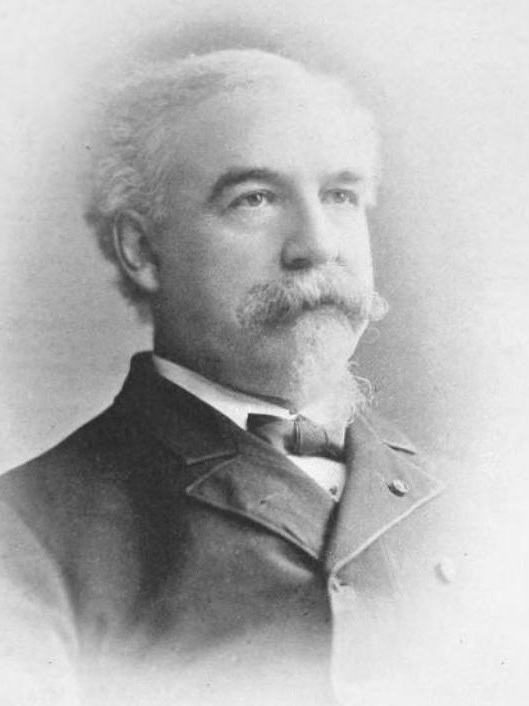
Historical · U.S. House · Illinois · District 4
Walter Newberry
Former U.S. Representative · Illinois District 4 · 1891–1893 · Democratic
Walter Newberry represented Illinois's District 4 in the United States House of Representatives (1891–1893) for the Democratic party. The page below collects sourced biographical facts, term history, committee roles, and provenance for Newberry.
Bioguide ID: N000063
Key facts
- Full name
- Walter Newberry
- State
- Illinois
- District
- District 4
- Party
- Democratic
- House service
- 1891–1893
- First House term
- 1891
- Status
- Left office
- Current term ends
- —
- Born
- 1835
- Bioguide ID
- N000063
- Committee assignments
- —
- Dataset version
- 1.20260606
Biographical narrative
964 words · sourced from the Wikipedia REST extract
Walter Newberry was a U.S. Representative from Illinois, serving in the House of Representatives during the early 1890s. A member of the Democratic Party, Newberry's political career was preceded by a distinguished military service during the American Civil War. His life spanned significant periods of American history, and his contributions in both military and civic capacities reflect the complexities of the era in which he lived. Newberry's tenure in Congress was marked by the political dynamics of the time, and he played a role in the legislative processes of the Fifty-second Congress.
Early life and career
Walter Cass Newberry was born on December 23, 1835, in Waterville, New York. His early life in New York set the stage for a career that would intertwine public service and military duty. During the Civil War, Newberry enlisted in the Union Army, where he began his service as a private in the Eighty-first Regiment, New York Volunteers. His military career was notable for its rapid advancement; he was promoted to lieutenant in 1861, captain in 1862, and by 1863 had risen to the rank of major in the Twenty-fourth Regiment, New York Cavalry. His leadership abilities were recognized as he continued to ascend through the ranks, achieving the positions of lieutenant colonel and colonel in 1864. His service culminated in a brevet promotion to brigadier general on March 31, 1865, a recognition of his contributions and leadership during the war.
After the Civil War, Newberry relocated to Petersburg, Virginia, in 1865, where he continued to engage in public service. His political career began to take shape when he was elected mayor of Petersburg, serving in that capacity for two terms in 1869 and 1870. However, he resigned from the mayoral position in 1870, marking a transition in his career. Following his time in Petersburg, Newberry moved to Richmond, Virginia, where he took on the role of superintendent of public property for the state, a position he held for four years. This role likely involved overseeing state assets and managing public resources, further solidifying his experience in governance and public administration.
In 1876, Newberry made a significant move to Chicago, Illinois, a city that was rapidly growing and becoming a center of commerce and politics. His involvement in the Chicago community included serving as the postmaster from 1888 to 1889, a role that placed him at the heart of communication and logistics in a bustling urban environment. His experiences in Chicago would later inform his political career as he sought to represent the interests of his constituents in Congress.
House tenure
Walter Newberry's political career reached a new height when he was elected to the U.S. House of Representatives as a Democrat, representing Illinois's Fourth Congressional District. His term in the Fifty-second Congress began on March 4, 1891, and concluded on March 3, 1893. During this period, Newberry participated in the legislative processes of the House, contributing to discussions and decisions that would shape national policy. His election came during a time of significant economic and social change in the United States, as the country was grappling with the aftermath of the Civil War and the challenges of industrialization.
Newberry's time in Congress was characterized by the political landscape of the early 1890s, which included issues such as labor rights, economic reform, and the expansion of civil rights. While specific details about his legislative actions and the bills he supported are not provided, it can be inferred that as a member of the Democratic Party, he likely aligned with the party's platform, which often focused on issues such as workers' rights and economic equity.
Despite his active participation in the House, Newberry did not seek renomination in 1892, which marked the end of his congressional career. This decision may have been influenced by various factors, including the political climate of the time, personal considerations, or a desire to pursue other opportunities. His single term in the House reflects the transient nature of political careers during this period, where many representatives served for limited durations.
Legislative focus and committees
While specific details regarding Walter Newberry's committee assignments and legislative focus during his time in Congress are not documented, it is important to understand the context in which he served. The early 1890s were marked by significant political and social challenges, including economic instability and labor unrest. As a member of the Democratic Party, Newberry would have been part of discussions surrounding these pressing issues, which included the rights of workers, economic policies, and the role of government in regulating industry.
The Fifty-second Congress was a time of considerable debate over tariffs, monetary policy, and civil rights, particularly as they pertained to the rights of African Americans in the post-Reconstruction era. Newberry's background in public service and his experiences as a military officer may have influenced his perspectives on these issues, although specific legislative initiatives he championed are not recorded.
Following his departure from Congress, Newberry continued to reside in Chicago, where he remained active in civic affairs. His life after Congress included various engagements that reflected his ongoing commitment to public service. Walter Newberry passed away on July 20, 1912, in Chicago, and was interred in Graceland Cemetery, leaving behind a legacy of service that spanned military, civic, and political realms.
In summary, Walter Newberry's life and career encapsulate the journey of a public servant who navigated the complexities of American society during a transformative period. His military service during the Civil War, followed by his roles in local and national governance, highlight the contributions of individuals who shaped the political landscape of their time. While his congressional tenure was brief, it was set against a backdrop of significant national challenges, and his experiences reflect the broader narrative of American history in the late 19th century.
Notable legislation
Sponsored and co-sponsored legislation for Walter Newberry is pending operator curation. The biographical narrative above carries the same provenance trail until per-bill rows are written.
Sources
- [1]https://en.wikipedia.org/wiki/Walter_C._NewberryWikipedia · retrieved 2026-06-06
Notable quotes
Sourced quotes for Walter Newberry are pending operator curation. Narrative-scope provenance remains attached below.
Sources
- [1]https://en.wikipedia.org/wiki/Walter_C._NewberryWikipedia · retrieved 2026-06-06
Key positions
Curated policy positions for Walter Newberry are pending operator review. The biographical narrative above carries the same provenance trail until per-topic positions are written.
Sources
- [1]https://en.wikipedia.org/wiki/Walter_C._NewberryWikipedia · retrieved 2026-06-06
Terms served
- 1891–1893U.S. House · Term 1 · Democratic
Sources & provenance
Every attributable claim above carries a per-section [N] marker that resolves to the corresponding URL below. Each entry records the upstream provider, the canonical URL, and the timestamp at which the source was retrieved by the ingest pipeline.
Key facts
- https://bioguide.congress.gov/search/bio/N000063bioguide · retrieved 2026-06-06
- https://www.govtrack.us/congress/members/408151govtrack · retrieved 2026-06-06
Biographical narrative
- https://en.wikipedia.org/wiki/Walter_C._Newberrywikipedia · retrieved 2026-06-06
Find your representative
Every U.S. state elects representatives by district. Browse Illinois’s delegation, the full former-representative roster, or explore the role and term length.
Related on The Candidate
- Preceded by George AdamsEarlier holder of the Illinois District 4 House seat · Republican.Open
- Succeeded by Julius GoldzierLater holder of the Illinois District 4 House seat · Democratic.Open
- Abner TaylorFormer U.S. Representative · Illinois District 1 · RepublicanOpen
- Adam SnyderFormer U.S. Representative · Illinois District 1 · DemocraticOpen
- Arthur MitchellFormer U.S. Representative · Illinois District 1 · DemocraticOpen
- Bennett StewartFormer U.S. Representative · Illinois District 1 · DemocraticOpen