
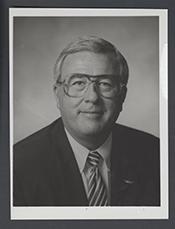
Historical · U.S. House · Illinois · District 4
Jack Davis
Former U.S. Representative · Illinois District 4 · 1987–1989 · Republican
Jack Davis represented Illinois's District 4 in the United States House of Representatives (1987–1989) for the Republican party. The page below collects sourced biographical facts, term history, committee roles, and provenance for Davis.
Bioguide ID: D000106
Key facts
- Full name
- Jack Davis
- State
- Illinois
- District
- District 4
- Party
- Republican
- House service
- 1987–1989
- First House term
- 1987
- Status
- Left office
- Current term ends
- —
- Born
- 1935
- Bioguide ID
- D000106
- Committee assignments
- —
- Dataset version
- 1.20260605
Biographical narrative
915 words · sourced from the Wikipedia REST extract
Jack Davis was a Republican politician who served as a U.S. Representative for Illinois's 4th congressional district from 1987 to 1989. Prior to his tenure in Congress, he was a member of the Illinois House of Representatives from 1976 to 1986. Davis's career in public service was marked by his involvement in local and state politics, as well as his contributions to the Republican Party.
Early life and career
Jack Davis was born on September 6, 1935, in Chicago, Illinois, to Edna Haflei and Russell Bender. His early life was shaped by personal loss, as his biological father passed away when he was young. His mother later remarried Melcher "M.C." Davis, who adopted Jack and became a significant figure in his upbringing. Davis excelled academically, graduating as valedictorian from Woodlawn High School in 1952. He pursued higher education at Southern Illinois University Carbondale, where he earned a Bachelor of Science degree in education in 1956.
Following his graduation, Davis joined the United States Navy, serving as a flying officer and achieving the rank of Lieutenant (junior grade). He was released from active duty in 1959, after which he engaged in graduate studies in psychology. Concurrently, he worked for the State of Illinois as the assistant director of a job training center located in Decatur, Illinois. After a year in this role, Davis transitioned to the steel industry, where he became part-owner of Lexington Steel Corp, a steel processing warehouse he founded in 1969. He sold his interest in the company in 1975 to devote his efforts to a political career.
Davis relocated to Crete, Illinois, during his time in the steel industry and became active in local Republican politics. He served as a precinct committeeman and held the position of village trustee from 1969 to 1973. His political engagement deepened as he married Virginia "Ginny" Griffin from Shelbyville, Illinois, with whom he had three children.
House tenure
Davis's political career at the state level began in 1976 when he was elected to the Illinois House of Representatives. His election came after State Representative George Sangmeister vacated his seat to run for the Illinois Senate, creating an open position in the 42nd district. In the general election, Davis was elected alongside two incumbents, Republican Harry Leinenweber and Democrat LeRoy Van Duyne. The 42nd district encompassed much of Will County, where Davis became known for his opposition to the Equal Rights Amendment.
During his time in the Illinois House, which lasted from 1977 to 1987, Davis was involved in various legislative initiatives and party activities. He sought to elevate his role within the party and ran for House Minority Leader in 1982, although he was not successful in this bid. Following this, he was appointed as an assistant minority leader by Lee A. Daniels at the start of the 83rd Illinois General Assembly. His political career at the state level also included serving as a delegate pledged to Ronald Reagan's presidential campaign in 1980, and he became the chairman of the Will County Republican Party in 1984.
Davis's transition to federal politics occurred in 1986 when he was nominated to fill the vacancy left by incumbent Congressman George M. O'Brien, who withdrew from the race. Davis was selected by a group of precinct and township committeemen from Illinois's 4th congressional district. In the general election, he faced Democratic nominee Shawn Collins, a young attorney and CPA. Davis won the election by a narrow margin, securing 61,583 votes compared to Collins's 57,773 votes. His victory was notable as he was able to win in Cook and Kendall counties, while Collins performed well in Will County.
Davis served one term in the U.S. House of Representatives from 1987 to 1989. During his congressional tenure, he participated in various legislative activities, including voting against the Abandoned Shipwrecks Act of 1987, which aimed to assert U.S. title to certain abandoned shipwrecks and transfer management authority to the states. This legislation was signed into law by President Ronald Reagan in April 1988. Following his single term in Congress, Davis sought reelection in 1988 but was defeated by Democratic candidate George E. Sangmeister.
Legislative focus and committees
Throughout his time in the U.S. House, Davis's legislative focus reflected his background in business and local governance. His experience in the steel industry and state politics informed his perspectives on economic and labor issues. While specific details regarding the committees he served on during his congressional term are not documented, it can be inferred that his background would have influenced his engagement with issues related to industry, labor, and economic development.
Davis's political career extended beyond his time in Congress. After leaving the House, he was appointed as the Assistant Secretary of the Air Force for Manpower, Readiness, and Resources, a position he held from 1990 to 1992. His work in this role earned him the Meritorious Service Medal for his contributions during Operations Desert Shield and Desert Storm in northern Iraq.
In the years following his government service, Davis hosted a radio show titled "Davis and Company" on 970 WMAY in Springfield, Illinois, during the early to mid-2000s. His engagement with the public through this medium allowed him to continue influencing political discourse in Illinois.
Jack Davis passed away on February 4, 2018, at his home in Springfield, Illinois, due to complications from dementia. His life and career reflect a commitment to public service and the Republican Party, with a focus on local governance and economic issues throughout his political journey.
Notable legislation
Sponsored and co-sponsored legislation for Jack Davis is pending operator curation. The biographical narrative above carries the same provenance trail until per-bill rows are written.
Sources
- [1]https://en.wikipedia.org/wiki/Jack_Davis_(Illinois_politician)Wikipedia · retrieved 2026-06-05
Notable quotes
Sourced quotes for Jack Davis are pending operator curation. Narrative-scope provenance remains attached below.
Sources
- [1]https://en.wikipedia.org/wiki/Jack_Davis_(Illinois_politician)Wikipedia · retrieved 2026-06-05
Key positions
Curated policy positions for Jack Davis are pending operator review. The biographical narrative above carries the same provenance trail until per-topic positions are written.
Sources
- [1]https://en.wikipedia.org/wiki/Jack_Davis_(Illinois_politician)Wikipedia · retrieved 2026-06-05
Terms served
- 1987–1989U.S. House · Term 1 · Republican
Sources & provenance
Every attributable claim above carries a per-section [N] marker that resolves to the corresponding URL below. Each entry records the upstream provider, the canonical URL, and the timestamp at which the source was retrieved by the ingest pipeline.
Key facts
- https://bioguide.congress.gov/search/bio/D000106bioguide · retrieved 2026-06-05
- https://www.govtrack.us/congress/members/403242govtrack · retrieved 2026-06-05
Biographical narrative
- https://en.wikipedia.org/wiki/Jack_Davis_(Illinois_politician)wikipedia · retrieved 2026-06-05
Find your representative
Every U.S. state elects representatives by district. Browse Illinois’s delegation, the full former-representative roster, or explore the role and term length.
Related on The Candidate
- Preceded by George O’BrienEarlier holder of the Illinois District 4 House seat · Republican.Open
- Succeeded by Luis GutiérrezLater holder of the Illinois District 4 House seat · Democratic.Open
- Abner TaylorFormer U.S. Representative · Illinois District 1 · RepublicanOpen
- Adam SnyderFormer U.S. Representative · Illinois District 1 · DemocraticOpen
- Arthur MitchellFormer U.S. Representative · Illinois District 1 · DemocraticOpen
- Bennett StewartFormer U.S. Representative · Illinois District 1 · DemocraticOpen