
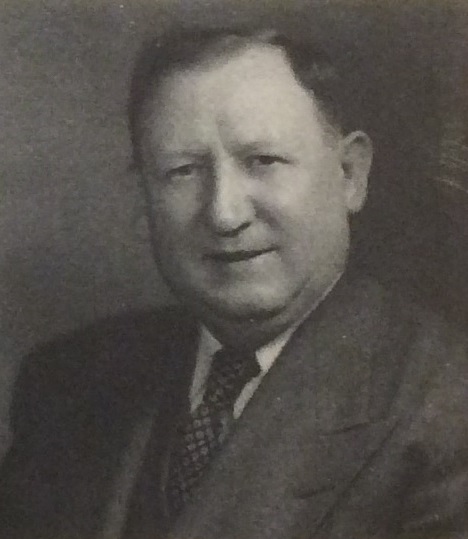
Historical · U.S. House · Illinois · District 5
Martin Gorski
Former U.S. Representative · Illinois District 5 · 1943–1951 · Democratic
Martin Gorski represented Illinois's District 5 in the United States House of Representatives (1943–1951) for the Democratic party. The page below collects sourced biographical facts, term history, committee roles, and provenance for Gorski.
Bioguide ID: G000332
Key facts
- Full name
- Martin Gorski
- State
- Illinois
- District
- District 5
- Party
- Democratic
- House service
- 1943–1951
- First House term
- 1943
- Status
- Left office
- Current term ends
- —
- Born
- 1886
- Bioguide ID
- G000332
- Committee assignments
- —
- Dataset version
- 1.20260605
Biographical narrative
990 words · sourced from the Wikipedia REST extract
Martin Gorski was an American politician who served as a U.S. Representative for Illinois's 5th congressional district from 1943 until his death in 1949. A member of the Democratic Party, Gorski's political career spanned four terms in the House of Representatives, during which he engaged in various legislative activities and represented the interests of his constituents in Chicago and the surrounding areas. His life and career reflect the experiences of many immigrants who sought to contribute to American society and politics.
Early life and career
Martin Gorski was born on October 30, 1886, in Poland. In 1889, at the age of three, he immigrated to the United States with his parents, who settled in Chicago, Illinois. This move marked the beginning of Gorski's journey in a new country, where he would eventually pursue education and a career in law and public service. Gorski attended business college, where he developed skills that would later serve him in his professional life. He furthered his education by enrolling in Chicago Law School, from which he graduated in 1917.
After completing his legal education, Gorski was admitted to the bar in the same year and established a law practice in Chicago. His early career in law was marked by a commitment to public service and the legal profession. From 1918 to 1920, he served as an assistant State's Attorney, where he gained valuable experience in the legal system and honed his skills in prosecution and legal advocacy. Following this role, Gorski took on the position of master in chancery of the Superior Court of Cook County, a role he held from 1929 until 1942. This position allowed him to further engage with the judicial system and contribute to the administration of justice in Cook County, which encompasses Chicago.
Gorski's background as an immigrant and his experiences in the legal field likely shaped his perspectives and priorities as he transitioned into a political career. His legal expertise and understanding of the complexities of the law would later inform his work as a legislator, where he would address various issues affecting his constituents and the broader community.
House tenure
Martin Gorski's political career in the U.S. House of Representatives began when he was elected as a Democrat to the Seventy-eighth Congress, which convened in January 1943. He was subsequently re-elected to serve in the Seventy-ninth, Eightieth, and Eighty-first Congresses, completing a total of four terms in office. Gorski's tenure in Congress lasted until January 3, 1949, when he passed away. During his time in the House, Gorski represented Illinois's 5th congressional district, a region that included parts of Chicago and its surrounding areas.
As a member of Congress, Gorski participated in the legislative process during a pivotal period in American history, which included World War II and the post-war era. His role as a legislator involved not only voting on a wide array of bills and resolutions but also engaging with constituents to understand their needs and concerns. Gorski's background in law likely provided him with insights into the legislative process and the importance of crafting effective legislation that addressed the challenges facing his district.
Throughout his congressional career, Gorski was involved in various legislative initiatives and discussions that reflected the priorities of his constituents. While specific details about the bills he sponsored or supported during his time in office are not provided, it is evident that his role as a representative was to advocate for the interests of those he served. His commitment to public service and the legal profession likely influenced his approach to governance and policymaking.
Gorski's time in Congress came to an end with his death on December 4, 1949. His passing marked the conclusion of a significant chapter in his life, during which he had made contributions to the legislative process and represented the interests of his constituents. Following his death, he was interred in Resurrection Cemetery in Justice, Illinois, a final resting place that reflects his long-standing connection to the Chicago area.
Legislative focus and committees
While specific details regarding Martin Gorski's legislative focus and the committees on which he served are not explicitly outlined in the available information, it can be inferred that his background as a lawyer and his experiences in public service would have influenced his legislative priorities. As a member of the Democratic Party during a time of significant national change, Gorski likely engaged with issues pertinent to the post-war recovery, civil rights, labor relations, and social welfare, which were prominent topics of discussion in Congress during his tenure.
The 1940s were marked by a range of legislative initiatives aimed at addressing the needs of a nation recovering from the impacts of World War II. Gorski's role as a representative would have involved participating in debates and discussions surrounding economic recovery, veterans' affairs, and social programs designed to support those affected by the war. His legal background may have provided him with a unique perspective on the implications of various policies and their effects on the legal and social fabric of society.
In addition to his legislative work, Gorski's position in Congress would have required him to engage with his constituents regularly. This engagement would have involved listening to their concerns, advocating for their needs, and ensuring that their voices were heard in the legislative process. The relationship between a representative and their constituents is a cornerstone of democratic governance, and Gorski's commitment to public service likely guided his interactions with the people he represented.
Overall, Martin Gorski's career in the U.S. House of Representatives was characterized by a dedication to public service and a commitment to addressing the needs of his constituents. His background as an immigrant and legal professional informed his approach to governance and policymaking, and his tenure in Congress reflected the challenges and opportunities of a nation in transition. Gorski's legacy as a public servant continues to be recognized as part of the broader narrative of American political history.
Notable legislation
Sponsored and co-sponsored legislation for Martin Gorski is pending operator curation. The biographical narrative above carries the same provenance trail until per-bill rows are written.
Sources
- [1]https://en.wikipedia.org/wiki/Martin_GorskiWikipedia · retrieved 2026-06-05
Notable quotes
Sourced quotes for Martin Gorski are pending operator curation. Narrative-scope provenance remains attached below.
Sources
- [1]https://en.wikipedia.org/wiki/Martin_GorskiWikipedia · retrieved 2026-06-05
Key positions
Curated policy positions for Martin Gorski are pending operator review. The biographical narrative above carries the same provenance trail until per-topic positions are written.
Sources
- [1]https://en.wikipedia.org/wiki/Martin_GorskiWikipedia · retrieved 2026-06-05
Terms served
- 1943–1945U.S. House · Term 1 · Democratic
- 1945–1947U.S. House · Term 2 · Democratic
- 1947–1949U.S. House · Term 3 · Democratic
- 1949–1951U.S. House · Term 4 · Democratic
Sources & provenance
Every attributable claim above carries a per-section [N] marker that resolves to the corresponding URL below. Each entry records the upstream provider, the canonical URL, and the timestamp at which the source was retrieved by the ingest pipeline.
Key facts
- https://bioguide.congress.gov/search/bio/G000332bioguide · retrieved 2026-06-05
- https://www.govtrack.us/congress/members/404690govtrack · retrieved 2026-06-05
Biographical narrative
- https://en.wikipedia.org/wiki/Martin_Gorskiwikipedia · retrieved 2026-06-05
Find your representative
Every U.S. state elects representatives by district. Browse Illinois’s delegation, the full former-representative roster, or explore the role and term length.
Related on The Candidate
- Preceded by Anthony MichalekEarlier holder of the Illinois District 5 House seat · Republican.Open
- Succeeded by John KluczynskiLater holder of the Illinois District 5 House seat · Democratic.Open
- Abner TaylorFormer U.S. Representative · Illinois District 1 · RepublicanOpen
- Adam SnyderFormer U.S. Representative · Illinois District 1 · DemocraticOpen
- Arthur MitchellFormer U.S. Representative · Illinois District 1 · DemocraticOpen
- Bennett StewartFormer U.S. Representative · Illinois District 1 · DemocraticOpen