
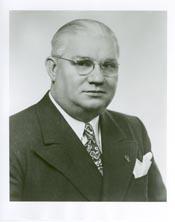
Historical · U.S. House · Illinois · District 5
John Kluczynski
Former U.S. Representative · Illinois District 5 · 1951–1977 · Democratic
John Kluczynski represented Illinois's District 5 in the United States House of Representatives (1951–1977) for the Democratic party. The page below collects sourced biographical facts, term history, committee roles, and provenance for Kluczynski.
Bioguide ID: K000273
Key facts
- Full name
- John Kluczynski
- State
- Illinois
- District
- District 5
- Party
- Democratic
- House service
- 1951–1977
- First House term
- 1951
- Status
- Left office
- Current term ends
- —
- Born
- 1896
- Bioguide ID
- K000273
- Committee assignments
- —
- Dataset version
- 1.20260605
Biographical narrative
822 words · sourced from the Wikipedia REST extract
John C. Kluczynski was a prominent American politician who served as a U.S. Representative for Illinois's 5th congressional district from 1951 until his death in 1975. A member of the Democratic Party, Kluczynski's lengthy congressional career spanned 13 terms, during which he was involved in significant legislative efforts, particularly in the areas of civil rights and public works. His legacy is commemorated by the Kluczynski Federal Building in Chicago, named in his honor after his passing.
Early life and career
John C. Kluczynski was born on February 15, 1896, in Chicago, Illinois, to Thomas and Mary Kluczynski, who were of Polish descent. He received his education through a combination of public and parochial schools in the Chicago area. His early life was marked by the onset of World War I, during which he served as a corporal in the Eighth Field Artillery from 1918 to 1919. This military experience would later influence his public service and commitment to his community.
After returning from military service, Kluczynski entered the catering business, establishing himself in the local economy. His political career began in earnest in 1933 when he was elected to the Illinois House of Representatives, where he served until 1948. During his time in the state legislature, he developed a reputation for his dedication to public service and his ability to connect with constituents.
In 1948, Kluczynski transitioned to the Illinois Senate, where he continued to represent his community until he resigned in December 1949. His resignation was a strategic move as he prepared to run for a seat in the U.S. Congress. This decision marked the beginning of a significant chapter in his political career.
House tenure
Kluczynski was elected to the U.S. House of Representatives as a Democrat during the Eighty-second Congress, beginning his term on January 3, 1951. Over the course of his career, he was reelected to twelve consecutive terms, demonstrating a strong support base within his district. His tenure in Congress lasted until his death on January 26, 1975, in Chicago, where he succumbed to a heart attack.
Throughout his time in the House, Kluczynski was known for his active participation in legislative matters and his commitment to his constituents. He was involved in various key votes and initiatives, including his support for the Civil Rights Act of 1957, which aimed to address racial discrimination and promote civil rights in the United States. His voting record reflected a dedication to social justice and equality, aligning with the broader Democratic Party platform of the time.
In addition to his legislative duties, Kluczynski held a leadership position as the chairman of the Public Works subcommittee on transportation. In this role, he played a crucial part in shaping transportation policy and infrastructure development, which were vital issues for his constituents and the nation as a whole. His work on this subcommittee allowed him to influence significant projects and initiatives that would benefit the public and enhance the quality of life in his district.
Legislative focus and committees
Kluczynski's legislative focus during his time in Congress encompassed a range of issues, with particular emphasis on civil rights, public works, and transportation. His support for civil rights legislation was indicative of his commitment to social justice and equality, reflecting the changing attitudes of American society during the mid-20th century. By voting in favor of the Civil Rights Act of 1957, he aligned himself with the movement toward greater civil liberties and protections for marginalized groups.
As chairman of the Public Works subcommittee on transportation, Kluczynski was instrumental in addressing critical infrastructure needs. His leadership in this area allowed him to advocate for improvements to transportation systems, which were essential for economic growth and community development. His efforts contributed to the modernization of infrastructure, enhancing connectivity and accessibility for residents of his district and beyond.
In addition to his work on transportation, Kluczynski was involved in various other legislative initiatives that aimed to improve the welfare of his constituents. His long tenure in Congress provided him with the experience and knowledge necessary to navigate complex legislative processes, and he utilized this expertise to advocate for policies that would benefit the people he represented.
Kluczynski's contributions to public service extended beyond his legislative work. He was an active member of the Polish National Alliance and the Polish Roman Catholic Union of America, reflecting his commitment to his heritage and community. His involvement in these organizations demonstrated his dedication to fostering community ties and supporting cultural initiatives.
Upon his death, Kluczynski was interred in Resurrection Mausoleum in Justice, Illinois. His legacy continues to be recognized, particularly through the Kluczynski Federal Building in Chicago, which serves as a testament to his long-standing commitment to public service and the impact he had on his community and the nation. Kluczynski's career exemplifies the role of a dedicated public servant who worked tirelessly to represent the interests of his constituents and contribute to the betterment of society.
Notable legislation
Sponsored and co-sponsored legislation for John Kluczynski is pending operator curation. The biographical narrative above carries the same provenance trail until per-bill rows are written.
Sources
- [1]https://en.wikipedia.org/wiki/John_C._KluczynskiWikipedia · retrieved 2026-06-05
Notable quotes
Sourced quotes for John Kluczynski are pending operator curation. Narrative-scope provenance remains attached below.
Sources
- [1]https://en.wikipedia.org/wiki/John_C._KluczynskiWikipedia · retrieved 2026-06-05
Key positions
Curated policy positions for John Kluczynski are pending operator review. The biographical narrative above carries the same provenance trail until per-topic positions are written.
Sources
- [1]https://en.wikipedia.org/wiki/John_C._KluczynskiWikipedia · retrieved 2026-06-05
Terms served
- 1951–1953U.S. House · Term 1 · Democratic
- 1953–1955U.S. House · Term 2 · Democratic
- 1955–1957U.S. House · Term 3 · Democratic
- 1957–1959U.S. House · Term 4 · Democratic
- 1959–1961U.S. House · Term 5 · Democratic
- 1961–1963U.S. House · Term 6 · Democratic
- 1963–1965U.S. House · Term 7 · Democratic
- 1965–1967U.S. House · Term 8 · Democratic
- 1967–1969U.S. House · Term 9 · Democratic
- 1969–1971U.S. House · Term 10 · Democratic
- 1971–1973U.S. House · Term 11 · Democratic
- 1973–1975U.S. House · Term 12 · Democratic
- 1975–1977U.S. House · Term 13 · Democratic
Sources & provenance
Every attributable claim above carries a per-section [N] marker that resolves to the corresponding URL below. Each entry records the upstream provider, the canonical URL, and the timestamp at which the source was retrieved by the ingest pipeline.
Key facts
- https://bioguide.congress.gov/search/bio/K000273bioguide · retrieved 2026-06-05
- https://www.govtrack.us/congress/members/406430govtrack · retrieved 2026-06-05
Biographical narrative
- https://en.wikipedia.org/wiki/John_C._Kluczynskiwikipedia · retrieved 2026-06-05
Find your representative
Every U.S. state elects representatives by district. Browse Illinois’s delegation, the full former-representative roster, or explore the role and term length.
Related on The Candidate
- Preceded by Martin GorskiEarlier holder of the Illinois District 5 House seat · Democratic.Open
- Succeeded by Michael FlanaganLater holder of the Illinois District 5 House seat · Republican.Open
- Abner TaylorFormer U.S. Representative · Illinois District 1 · RepublicanOpen
- Adam SnyderFormer U.S. Representative · Illinois District 1 · DemocraticOpen
- Arthur MitchellFormer U.S. Representative · Illinois District 1 · DemocraticOpen
- Bennett StewartFormer U.S. Representative · Illinois District 1 · DemocraticOpen