
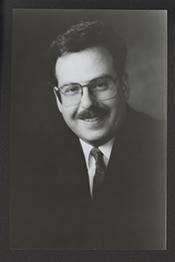
Historical · U.S. House · Illinois · District 5
Michael Flanagan
Former U.S. Representative · Illinois District 5 · 1995–1997 · Republican
Michael Flanagan represented Illinois's District 5 in the United States House of Representatives (1995–1997) for the Republican party. The page below collects sourced biographical facts, term history, committee roles, and provenance for Flanagan.
Bioguide ID: F000187
Key facts
- Full name
- Michael Flanagan
- State
- Illinois
- District
- District 5
- Party
- Republican
- House service
- 1995–1997
- First House term
- 1995
- Status
- Left office
- Current term ends
- —
- Born
- 1962
- Bioguide ID
- F000187
- Committee assignments
- —
- Dataset version
- 1.20260605
Biographical narrative
901 words · sourced from the Wikipedia REST extract
Michael Patrick Flanagan is a former American politician and attorney who served as the U.S. Representative for Illinois's 5th congressional district from 1995 until 1997. A member of the Republican Party, Flanagan is notable for his unexpected victory over long-serving Congressman Dan Rostenkowski in the 1994 midterm elections, a pivotal moment that contributed to the Republican Party's resurgence in Congress during that period. Following his congressional tenure, Flanagan transitioned into consulting and has remained active in civic and political initiatives.
Early life and career
Michael Patrick Flanagan was born on November 9, 1962, in Chicago, Illinois. He was raised in a family of Irish descent, being the second of five sons. Flanagan attended Lane Technical High School, where he completed his secondary education. He furthered his studies at Loyola University, earning a Bachelor of Arts degree in 1984. He continued at Loyola University School of Law, receiving his Juris Doctor in 1988.
Flanagan's professional journey began with his service in the United States Army, where he held the position of field artillery officer. His military service spanned from 1984 to 1988 and again from 1991 to 1992, during which he achieved the rank of captain. His military assignments included time at Fort Sill in Oklahoma and Fort Benning in Georgia, and he served during the Gulf War. Following his military service, Flanagan was admitted to the Illinois State Bar Association in 1991, marking the beginning of his legal career.
House tenure
Flanagan entered the political arena when he ran for the U.S. House of Representatives in 1994, representing Illinois's 5th congressional district. His campaign was marked by a significant upset victory over the incumbent, Dan Rostenkowski, who had served for eighteen terms and was a prominent figure in the Democratic Party. Rostenkowski's legal troubles, including an indictment, played a role in the election dynamics. Flanagan's win was particularly notable as he became the first Republican to represent a substantial portion of Chicago since 1975 and the first to hold this district since 1909.
Flanagan's election was characterized by its unexpected nature; he was relatively unknown and faced challenges such as limited funding and staffing. His victory was seen as a part of a broader Republican wave during the 1994 midterm elections, which resulted in a significant shift in power within the House of Representatives. Flanagan's success earned him various nicknames, including "the accidental congressman" and "the Rosty-slayer," reflecting both the surprise of his win and the stature of his opponent.
During his time in Congress, which lasted from January 1995 until January 1997, Flanagan served on several important committees, including the House Judiciary Committee, the House Government Reform Committee, and the Joint Committee on Telecommunications. His legislative record was characterized by conservative positions, particularly on social issues. Flanagan opposed abortion and gun control measures and supported the death penalty. He was also critical of President Bill Clinton's national healthcare proposal, which he viewed as a government takeover of the healthcare system.
Flanagan sought re-election in 1996, but he faced a challenging political landscape. His opponent, State Representative Rod Blagojevich, was a well-known Democratic figure, and Flanagan was considered a heavy underdog in a district that had historically leaned Democratic. Despite endorsements from local newspapers, Flanagan was unable to secure a second term, losing to Blagojevich in a race that underscored the district's political leanings. After his defeat, Flanagan became the last Republican to represent a significant portion of Chicago in the U.S. House, as subsequent elections have seen Republican candidates struggle to gain traction in the district.
Legislative focus and committees
Throughout his congressional tenure, Flanagan's legislative focus aligned with conservative values, reflecting the priorities of the Republican Party during the mid-1990s. His opposition to abortion and gun control was consistent with the broader Republican platform, which emphasized individual rights and limited government intervention in personal choices. Flanagan's support for the death penalty also resonated with many constituents who favored a tough-on-crime approach.
Flanagan's involvement in key committees allowed him to engage in significant legislative discussions and decisions. As a member of the House Judiciary Committee, he participated in matters related to the judicial system, including issues of law enforcement, civil rights, and constitutional law. His role on the House Government Reform Committee provided him with a platform to address issues of government accountability and efficiency, while his participation in the Joint Committee on Telecommunications placed him at the intersection of technology and public policy, particularly as the internet and telecommunications industries were rapidly evolving during this period.
Despite his relatively brief time in office, Flanagan's election and subsequent service were emblematic of a transformative period in American politics, marked by the Republican Revolution of the 1990s. His victory over a long-time incumbent highlighted the shifting political landscape and the potential for change within established districts. After leaving Congress, Flanagan transitioned to a career in consulting, establishing Flanagan Consulting LLC and continuing to engage in civic activities, including his involvement with Illinois Boys State since 1979. He also worked for the U.S. State Department in Iraq, contributing to efforts aimed at establishing democratic institutions in the country.
Flanagan's political career, though brief, remains a notable chapter in the history of Illinois politics, particularly in relation to the Republican Party's influence in urban areas. His legacy is marked by his unexpected rise to office and the challenges he faced in maintaining a Republican presence in a historically Democratic district.
Notable legislation
Sponsored and co-sponsored legislation for Michael Flanagan is pending operator curation. The biographical narrative above carries the same provenance trail until per-bill rows are written.
Sources
- [1]https://en.wikipedia.org/wiki/Michael_Flanagan_(American_politician)Wikipedia · retrieved 2026-06-05
Notable quotes
Sourced quotes for Michael Flanagan are pending operator curation. Narrative-scope provenance remains attached below.
Sources
- [1]https://en.wikipedia.org/wiki/Michael_Flanagan_(American_politician)Wikipedia · retrieved 2026-06-05
Key positions
Curated policy positions for Michael Flanagan are pending operator review. The biographical narrative above carries the same provenance trail until per-topic positions are written.
Sources
- [1]https://en.wikipedia.org/wiki/Michael_Flanagan_(American_politician)Wikipedia · retrieved 2026-06-05
Terms served
- 1995–1997U.S. House · Term 1 · Republican
Sources & provenance
Every attributable claim above carries a per-section [N] marker that resolves to the corresponding URL below. Each entry records the upstream provider, the canonical URL, and the timestamp at which the source was retrieved by the ingest pipeline.
Key facts
- https://bioguide.congress.gov/search/bio/F000187bioguide · retrieved 2026-06-05
- https://www.govtrack.us/congress/members/404142govtrack · retrieved 2026-06-05
Biographical narrative
- https://en.wikipedia.org/wiki/Michael_Flanagan_(American_politician)wikipedia · retrieved 2026-06-05
Find your representative
Every U.S. state elects representatives by district. Browse Illinois’s delegation, the full former-representative roster, or explore the role and term length.
Related on The Candidate
- Preceded by Daniel RostenkowskiEarlier holder of the Illinois District 5 House seat · Democratic.Open
- Succeeded by Rod BlagojevichLater holder of the Illinois District 5 House seat · Democratic.Open
- Abner TaylorFormer U.S. Representative · Illinois District 1 · RepublicanOpen
- Adam SnyderFormer U.S. Representative · Illinois District 1 · DemocraticOpen
- Arthur MitchellFormer U.S. Representative · Illinois District 1 · DemocraticOpen
- Bennett StewartFormer U.S. Representative · Illinois District 1 · DemocraticOpen