
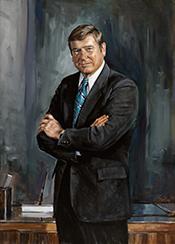
Historical · U.S. House · Illinois · District 5
Daniel Rostenkowski
Former U.S. Representative · Illinois District 5 · 1959–1995 · Democratic
Daniel Rostenkowski represented Illinois's District 5 in the United States House of Representatives (1959–1995) for the Democratic party. The page below collects sourced biographical facts, term history, committee roles, and provenance for Rostenkowski.
Bioguide ID: R000458
Key facts
- Full name
- Daniel Rostenkowski
- State
- Illinois
- District
- District 5
- Party
- Democratic
- House service
- 1959–1995
- First House term
- 1959
- Status
- Left office
- Current term ends
- —
- Born
- 1928
- Bioguide ID
- R000458
- Committee assignments
- —
- Dataset version
- 1.20260605
Biographical narrative
951 words · sourced from the Wikipedia REST extract
Daniel David Rostenkowski was an influential American politician who served as a U.S. Representative for Illinois's 5th congressional district from 1959 until 1995. A member of the Democratic Party, Rostenkowski was known for his significant role in shaping tax policy and legislative reforms during his long tenure in Congress. He rose to prominence as the Chairman of the House Ways and Means Committee, where he played a pivotal role in major tax legislation and other significant policy areas. His political career, however, was marred by legal troubles that culminated in a conviction for corruption, leading to his imprisonment in the late 1990s.
Early life and career
Rostenkowski was born on January 2, 1928, in Chicago, Illinois, into a politically active family. His father, Joseph P. Rostenkowski, known as "Big Joe Rusty," served as an alderman and committeeman of the 32nd Ward in Chicago for 24 years. The Rostenkowski household was a hub for political activity, often hosting precinct captains and other political figures. This environment fostered Rostenkowski's early interest in politics. His family background included Polish immigrant roots, with his grandfather having emigrated from the Tuchola region of Poland.
Rostenkowski's early exposure to politics included attending the inauguration of President Franklin D. Roosevelt in 1941 with his father. He graduated from St. Stanislaus Kostka grammar school and later attended St. John's Military Academy in Wisconsin, where he excelled in various sports. After graduating in 1946, he enlisted in the United States Army and served in Korea for two years. Following his military service, he returned to Chicago after the death of his mother and enrolled at Loyola University.
While still a student at Loyola, Rostenkowski began his political career by winning a seat in the Illinois House of Representatives in 1952 at the age of 24, making him one of the youngest members of the legislature. During his time in the Illinois House, he worked on significant infrastructure projects, including the planning and financing of a major highway connecting downtown Chicago to O'Hare International Airport. In 1954, he was elected to the Illinois Senate, where he continued to advocate for public health initiatives and veterans' benefits, although some of his proposals faced challenges in gaining voter approval.
Rostenkowski's political aspirations were supported by influential figures, including Chicago Mayor Richard J. Daley, who encouraged him to pursue a congressional seat. This support ultimately led Rostenkowski to run for the U.S. House of Representatives in 1958.
House tenure
Rostenkowski was elected to the U.S. House of Representatives in 1959, representing Illinois's 5th congressional district. Over the course of his 36-year career, he served a total of 18 terms in Congress. His tenure was marked by a gradual rise in influence, particularly as he became known for his expertise in taxation and fiscal policy. Rostenkowski's political acumen and ability to navigate complex legislative negotiations earned him a reputation as a formidable lawmaker.
In 1981, Rostenkowski ascended to the position of Chairman of the House Ways and Means Committee, a role that positioned him at the center of national economic policy discussions. As chairman, he played a crucial role in shaping tax legislation during the administration of President Ronald Reagan. Notably, he was instrumental in the passage of the Economic Recovery Tax Act of 1981, which implemented significant tax cuts, and the Tax Reform Act of 1986, which further simplified the tax code by reducing the number of tax brackets.
Rostenkowski's influence extended beyond taxation; he was also involved in trade policy, welfare reform, health care, and Social Security. His ability to broker deals among various stakeholders, including labor leaders, corporate executives, and government officials, contributed to his effectiveness as a legislator. His work helped secure substantial federal funding for infrastructure projects in Chicago and Illinois, solidifying his legacy as a key figure in the region's political landscape.
Throughout his congressional career, Rostenkowski maintained a strong connection to his constituents, often focusing on issues that directly impacted their lives. His long service in the House allowed him to build relationships with a wide range of political figures, both within his party and across the aisle.
Legislative focus and committees
Rostenkowski's legislative focus was primarily centered on taxation and fiscal policy, reflecting his role as Chairman of the House Ways and Means Committee. Under his leadership, the committee was responsible for crafting and overseeing significant legislation that shaped the U.S. tax system. His work on the Economic Recovery Tax Act of 1981 and the Tax Reform Act of 1986 exemplified his commitment to reforming the tax code and promoting economic growth.
In addition to tax policy, Rostenkowski was actively involved in various social and economic issues. He played a role in welfare reform initiatives, health care policy, and Social Security programs, advocating for changes that aimed to improve the lives of American citizens. His comprehensive approach to legislation often involved collaboration with other lawmakers, interest groups, and constituents.
Despite his legislative successes, Rostenkowski's career faced challenges, particularly in the early 1990s. In 1994, he was indicted on corruption charges related to the Congressional Post Office Scandal, which ultimately led to his defeat in the subsequent election. Following his conviction for mail fraud in 1996, he served a prison sentence, marking a significant downturn in his political career.
Rostenkowski's legacy is complex, characterized by both his substantial contributions to American legislative processes and the controversies that ultimately defined the latter part of his career. After serving his sentence, he received a presidential pardon in 2000, allowing him to reintegrate into society following his legal troubles. His long tenure in Congress and his role in shaping key policies have left a lasting impact on American politics, particularly in the areas of taxation and social welfare.
Notable legislation
Sponsored and co-sponsored legislation for Daniel Rostenkowski is pending operator curation. The biographical narrative above carries the same provenance trail until per-bill rows are written.
Sources
- [1]https://en.wikipedia.org/wiki/Dan_RostenkowskiWikipedia · retrieved 2026-06-05
Notable quotes
Sourced quotes for Daniel Rostenkowski are pending operator curation. Narrative-scope provenance remains attached below.
Sources
- [1]https://en.wikipedia.org/wiki/Dan_RostenkowskiWikipedia · retrieved 2026-06-05
Key positions
Curated policy positions for Daniel Rostenkowski are pending operator review. The biographical narrative above carries the same provenance trail until per-topic positions are written.
Sources
- [1]https://en.wikipedia.org/wiki/Dan_RostenkowskiWikipedia · retrieved 2026-06-05
Terms served
- 1959–1961U.S. House · Term 1 · Democratic
- 1961–1963U.S. House · Term 2 · Democratic
- 1963–1965U.S. House · Term 3 · Democratic
- 1965–1967U.S. House · Term 4 · Democratic
- 1967–1969U.S. House · Term 5 · Democratic
- 1969–1971U.S. House · Term 6 · Democratic
- 1971–1973U.S. House · Term 7 · Democratic
- 1973–1975U.S. House · Term 8 · Democratic
- 1975–1977U.S. House · Term 9 · Democratic
- 1977–1979U.S. House · Term 10 · Democratic
- 1979–1981U.S. House · Term 11 · Democratic
- 1981–1983U.S. House · Term 12 · Democratic
- 1983–1985U.S. House · Term 13 · Democratic
- 1985–1987U.S. House · Term 14 · Democratic
- 1987–1989U.S. House · Term 15 · Democratic
- 1989–1991U.S. House · Term 16 · Democratic
- 1991–1993U.S. House · Term 17 · Democratic
- 1993–1995U.S. House · Term 18 · Democratic
Sources & provenance
Every attributable claim above carries a per-section [N] marker that resolves to the corresponding URL below. Each entry records the upstream provider, the canonical URL, and the timestamp at which the source was retrieved by the ingest pipeline.
Key facts
- https://bioguide.congress.gov/search/bio/R000458bioguide · retrieved 2026-06-05
- https://www.govtrack.us/congress/members/409422govtrack · retrieved 2026-06-05
Biographical narrative
- https://en.wikipedia.org/wiki/Dan_Rostenkowskiwikipedia · retrieved 2026-06-05
Find your representative
Every U.S. state elects representatives by district. Browse Illinois’s delegation, the full former-representative roster, or explore the role and term length.
Related on The Candidate
- Preceded by Martin GorskiEarlier holder of the Illinois District 5 House seat · Democratic.Open
- Succeeded by Michael FlanaganLater holder of the Illinois District 5 House seat · Republican.Open
- Abner TaylorFormer U.S. Representative · Illinois District 1 · RepublicanOpen
- Adam SnyderFormer U.S. Representative · Illinois District 1 · DemocraticOpen
- Arthur MitchellFormer U.S. Representative · Illinois District 1 · DemocraticOpen
- Bennett StewartFormer U.S. Representative · Illinois District 1 · DemocraticOpen