
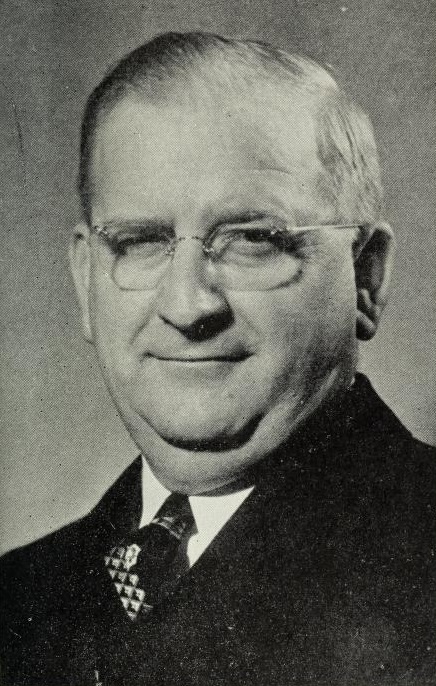
Historical · U.S. House · Illinois · District 6
Anton Maciejewski
Former U.S. Representative · Illinois District 6 · 1939–1943 · Democratic
Anton Maciejewski represented Illinois's District 6 in the United States House of Representatives (1939–1943) for the Democratic party. The page below collects sourced biographical facts, term history, committee roles, and provenance for Maciejewski.
Bioguide ID: M000016
Key facts
- Full name
- Anton Maciejewski
- State
- Illinois
- District
- District 6
- Party
- Democratic
- House service
- 1939–1943
- First House term
- 1939
- Status
- Left office
- Current term ends
- —
- Born
- 1893
- Bioguide ID
- M000016
- Committee assignments
- —
- Dataset version
- 1.20260605
Biographical narrative
940 words · sourced from the Wikipedia REST extract
Anton Maciejewski was an American businessman and politician who served as a U.S. Representative for Illinois's 6th congressional district from 1939 until 1942. A member of the Democratic Party, Maciejewski's political career was marked by his involvement in local governance and his contributions to national politics during a transformative period in American history. His tenure in the House of Representatives coincided with significant events, including the lead-up to World War II, which influenced legislative priorities and national policies.
Early life and career
Anton Frank Maciejewski was born on January 3, 1893, in Anderson, Texas. His early life was characterized by a commitment to education and community involvement. Maciejewski attended public schools in Cicero, Illinois, a suburb of Chicago, where he likely developed an understanding of the local political landscape and the needs of his community. He furthered his education at the Lewis Institute in Chicago, which equipped him with skills that would later serve him in his business and political endeavors.
In 1916, Maciejewski entered the wholesale and retail coal business in Cicero. This venture not only provided him with financial stability but also established him as a prominent figure in the local economy. His experience in the coal industry would later inform his perspectives on labor and economic policies. Maciejewski's business acumen was complemented by his public service; from 1925 to 1928, he served as the assistant agent in charge of relief for Cook County, Illinois. This role involved overseeing assistance programs during a time when many families faced economic hardship, particularly in the wake of the Great Depression.
Maciejewski's political involvement deepened as he became active in the Democratic Party. He served on both the Democratic State and National Committees, contributing to the party's strategies and initiatives at various levels. His political engagement culminated in his role as a delegate to the Democratic National Convention in 1928, where he participated in shaping the party's platform and candidate selection. Additionally, from 1932 to 1939, he held the positions of supervisor and treasurer of Cicero, further solidifying his reputation as a dedicated public servant committed to local governance.
House tenure
Anton Maciejewski's congressional career began when he was elected as a Democrat to the Seventy-sixth Congress, taking office on January 3, 1939. He served in this capacity until his resignation on December 8, 1942. During his time in the House of Representatives, Maciejewski participated in two full terms, reflecting a period of significant national and international change. His tenure coincided with the growing tensions in Europe that would eventually lead to the United States' involvement in World War II.
As a member of Congress, Maciejewski was involved in various legislative discussions and decisions that were crucial to the nation during this tumultuous time. His background in business and local governance likely influenced his approach to economic and labor issues, which were particularly pressing as the country prepared for war. While specific details of his legislative initiatives and voting record are not documented in the provided information, it is clear that his role as a representative would have required him to address the concerns of his constituents in Illinois, as well as broader national issues.
Maciejewski's decision not to seek renomination in 1942 marked the end of his congressional career. His resignation came at a time when the United States was mobilizing for war, and he chose to return to his business pursuits rather than continue in public office. This decision reflects a common trend among politicians of the era, who often faced the challenges of balancing public service with personal and professional commitments.
Legislative focus and committees
During his time in the House of Representatives, Anton Maciejewski's legislative focus likely aligned with the priorities of the Democratic Party and the pressing needs of his constituents. Although specific legislative achievements are not detailed in the available information, it can be inferred that his background in the coal industry and local governance would have informed his perspectives on labor, economic development, and infrastructure.
Maciejewski's experience as a businessman may have led him to advocate for policies that supported economic growth and job creation, particularly in the context of the impending war effort. The late 1930s and early 1940s were characterized by significant government investment in defense and infrastructure, and representatives like Maciejewski would have played a role in shaping these initiatives. His involvement in local government and his understanding of community needs would have been essential as he navigated the complexities of federal legislation.
After resigning from Congress, Maciejewski returned to the wholesale and retail coal business, indicating a continued commitment to the industry that had been a significant part of his career. He also engaged in the construction of defense housing, a critical need during World War II as the government sought to accommodate the influx of workers and military personnel. This work demonstrated his adaptability and willingness to contribute to national efforts during a time of crisis.
In December 1942, shortly after his resignation from Congress, Maciejewski was elected to the board of trustees of the sanitary district of Chicago, where he served until his death. This role allowed him to continue his public service and contribute to the management of essential services in the Chicago area. Maciejewski's commitment to his community and his continued involvement in public affairs reflect a lifelong dedication to service.
Anton Maciejewski passed away on September 25, 1949, in Chicago. He was interred at Resurrection Cemetery in Justice, Illinois. His life and career exemplify the journey of a businessman who transitioned into public service, navigating the challenges of a changing nation while remaining committed to the needs of his constituents and community.
Notable legislation
Sponsored and co-sponsored legislation for Anton Maciejewski is pending operator curation. The biographical narrative above carries the same provenance trail until per-bill rows are written.
Sources
- [1]https://en.wikipedia.org/wiki/A._F._MaciejewskiWikipedia · retrieved 2026-06-05
Notable quotes
Sourced quotes for Anton Maciejewski are pending operator curation. Narrative-scope provenance remains attached below.
Sources
- [1]https://en.wikipedia.org/wiki/A._F._MaciejewskiWikipedia · retrieved 2026-06-05
Key positions
Curated policy positions for Anton Maciejewski are pending operator review. The biographical narrative above carries the same provenance trail until per-topic positions are written.
Sources
- [1]https://en.wikipedia.org/wiki/A._F._MaciejewskiWikipedia · retrieved 2026-06-05
Terms served
- 1939–1941U.S. House · Term 1 · Democratic
- 1941–1943U.S. House · Term 2 · Democratic
Sources & provenance
Every attributable claim above carries a per-section [N] marker that resolves to the corresponding URL below. Each entry records the upstream provider, the canonical URL, and the timestamp at which the source was retrieved by the ingest pipeline.
Key facts
- https://bioguide.congress.gov/search/bio/M000016bioguide · retrieved 2026-06-05
- https://www.govtrack.us/congress/members/407045govtrack · retrieved 2026-06-05
Biographical narrative
- https://en.wikipedia.org/wiki/A._F._Maciejewskiwikipedia · retrieved 2026-06-05
Find your representative
Every U.S. state elects representatives by district. Browse Illinois’s delegation, the full former-representative roster, or explore the role and term length.
Related on The Candidate
- Preceded by James IgoeEarlier holder of the Illinois District 6 House seat · Democratic.Open
- Succeeded by Harold CollierLater holder of the Illinois District 6 House seat · Republican.Open
- Abner TaylorFormer U.S. Representative · Illinois District 1 · RepublicanOpen
- Adam SnyderFormer U.S. Representative · Illinois District 1 · DemocraticOpen
- Arthur MitchellFormer U.S. Representative · Illinois District 1 · DemocraticOpen
- Bennett StewartFormer U.S. Representative · Illinois District 1 · DemocraticOpen