
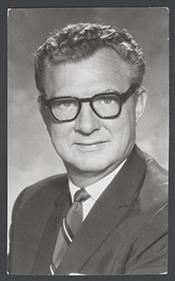
Historical · U.S. House · Illinois · District 6
Harold Collier
Former U.S. Representative · Illinois District 6 · 1957–1975 · Republican
Harold Collier represented Illinois's District 6 in the United States House of Representatives (1957–1975) for the Republican party. The page below collects sourced biographical facts, term history, committee roles, and provenance for Collier.
Bioguide ID: C000629
Key facts
- Full name
- Harold Collier
- State
- Illinois
- District
- District 6
- Party
- Republican
- House service
- 1957–1975
- First House term
- 1957
- Status
- Left office
- Current term ends
- —
- Born
- 1915
- Bioguide ID
- C000629
- Committee assignments
- —
- Dataset version
- 1.20260606
Biographical narrative
1,083 words · sourced from the Wikipedia REST extract
Harold Reginald Collier was a Republican politician who served as a U.S. Representative for Illinois's 6th congressional district. His tenure in the House of Representatives spanned nearly two decades, beginning in 1957 and concluding in 1975. Throughout his political career, Collier was known for his fiscal conservatism and his ability to build bipartisan consensus on various legislative issues. He was a member of the House Ways and Means Committee, where he played a significant role in shaping fiscal policy. Collier's legislative record included votes on key civil rights legislation, reflecting a complex stance on social issues during a transformative period in American history.
Early life and career
Harold Collier was born on December 12, 1915, in Lansing, Michigan. He spent his formative years in this Midwestern city, where he developed an early interest in public service and community engagement. Following his high school education, Collier pursued higher education at Morton College in Cicero, Illinois, where he graduated with a degree that would prepare him for a career in business and public relations.
After completing his education, Collier began his professional journey in the publishing industry. He was employed by a company that produced Life Magazine, where he worked within the editorial department. This experience provided him with valuable insights into communication and media, skills that would later benefit him in his political career.
In 1941, Collier transitioned to a role as a marketing executive with the Match Corporation of America. Over the next decade, he honed his skills in marketing and public relations, which would prove advantageous in his subsequent political endeavors. His career in marketing was complemented by his growing interest in local governance and civic affairs.
Collier's entry into politics began in earnest in 1951 when he was elected to the city council of Berwyn, Illinois. This position allowed him to engage directly with community issues and gain experience in public administration. Concurrently, he took on the role of public relations director for McAlear Manufacturing, further solidifying his reputation as a skilled communicator and advocate for local business interests.
In 1952, Collier sought a higher office by running for Illinois Secretary of State; however, he was not successful in this bid. Undeterred, he continued his public service career and was elected Township Supervisor of Berwyn Township in 1953. These roles laid the groundwork for his future political ambitions and established him as a prominent figure in local Republican politics.
House tenure
Harold Collier's congressional career began when he was elected to the U.S. House of Representatives in 1957, representing Illinois's 6th congressional district. Over the course of nine terms, he became known for his dedication to fiscal responsibility and his commitment to finding common ground on contentious issues. His long tenure in the House allowed him to build relationships across party lines, which contributed to his effectiveness as a legislator.
During his time in Congress, Collier served on the House Ways and Means Committee, a key committee responsible for overseeing taxation and revenue-related legislation. His involvement in this committee underscored his focus on economic issues and his advocacy for a balanced federal budget. Collier's fiscal conservatism was a hallmark of his political identity, and he often emphasized the importance of sound financial management in government.
Throughout his congressional career, Collier participated in significant legislative debates and decisions during a period marked by social change and political upheaval. He voted in favor of several important civil rights measures, including the Civil Rights Acts of 1957, 1960, 1964, and 1968. These votes reflected a commitment to advancing civil rights, although his opposition to the Voting Rights Act of 1965 indicated a more nuanced position on specific aspects of civil rights legislation.
Collier's legislative record also included votes against the Endangered Species Act of 1973, showcasing his alignment with conservative principles regarding government regulation and environmental policy. His decision not to vote on the 24th Amendment to the U.S. Constitution further illustrates the complexities of his legislative priorities and the political landscape of the time.
As his congressional career progressed, Collier became recognized for his ability to broker compromises on various issues. Colleagues from both parties admired his capacity to navigate the often contentious environment of Congress, making him a respected figure among his peers. His approach to governance emphasized collaboration and dialogue, which contributed to his effectiveness as a legislator.
Collier's time in the House concluded on January 3, 1975, when he retired from Congress. His departure marked the end of a significant chapter in his life, during which he had made substantial contributions to the legislative process and the representation of his constituents.
Legislative focus and committees
During his nearly two decades in the House of Representatives, Harold Collier's legislative focus was characterized by a commitment to fiscal conservatism and a pragmatic approach to governance. As a member of the House Ways and Means Committee, he played a crucial role in shaping tax policy and addressing issues related to government spending. His advocacy for a balanced budget was a central theme throughout his congressional career, reflecting his belief in responsible fiscal management.
Collier's legislative priorities extended beyond economic issues. He engaged with various social and civil rights matters, participating in the legislative debates that defined the 1960s and early 1970s. His support for civil rights legislation demonstrated a willingness to address pressing social issues, although his mixed voting record on specific measures highlighted the complexities of his positions.
In addition to his work on the Ways and Means Committee, Collier's ability to find common ground on contentious issues was a defining aspect of his legislative style. He was known for fostering bipartisan cooperation, which allowed him to navigate the challenges of a divided Congress effectively. This skill was particularly valuable during a time when the political landscape was marked by significant ideological divisions.
Collier's tenure in Congress was also marked by his engagement with local and national issues affecting his constituents in Illinois's 6th district. He sought to represent the interests of his constituents while balancing broader national concerns, a challenge that many legislators face. His approach to governance emphasized the importance of listening to the needs of the community and advocating for policies that would benefit the district.
After retiring from Congress, Collier relocated to West Palm Beach, Florida, where he lived until his passing on January 17, 2006. His legacy as a public servant is reflected in his long-standing commitment to his constituents and his contributions to the legislative process during a transformative era in American history.
Notable legislation
Sponsored and co-sponsored legislation for Harold Collier is pending operator curation. The biographical narrative above carries the same provenance trail until per-bill rows are written.
Sources
- [1]https://en.wikipedia.org/wiki/Harold_R._CollierWikipedia · retrieved 2026-06-06
Notable quotes
Sourced quotes for Harold Collier are pending operator curation. Narrative-scope provenance remains attached below.
Sources
- [1]https://en.wikipedia.org/wiki/Harold_R._CollierWikipedia · retrieved 2026-06-06
Key positions
Curated policy positions for Harold Collier are pending operator review. The biographical narrative above carries the same provenance trail until per-topic positions are written.
Sources
- [1]https://en.wikipedia.org/wiki/Harold_R._CollierWikipedia · retrieved 2026-06-06
Terms served
- 1957–1959U.S. House · Term 1 · Republican
- 1959–1961U.S. House · Term 2 · Republican
- 1961–1963U.S. House · Term 3 · Republican
- 1963–1965U.S. House · Term 4 · Republican
- 1965–1967U.S. House · Term 5 · Republican
- 1967–1969U.S. House · Term 6 · Republican
- 1969–1971U.S. House · Term 7 · Republican
- 1971–1973U.S. House · Term 8 · Republican
- 1973–1975U.S. House · Term 9 · Republican
Sources & provenance
Every attributable claim above carries a per-section [N] marker that resolves to the corresponding URL below. Each entry records the upstream provider, the canonical URL, and the timestamp at which the source was retrieved by the ingest pipeline.
Key facts
- https://bioguide.congress.gov/search/bio/C000629bioguide · retrieved 2026-06-06
- https://www.govtrack.us/congress/members/402758govtrack · retrieved 2026-06-06
Biographical narrative
- https://en.wikipedia.org/wiki/Harold_R._Collierwikipedia · retrieved 2026-06-06
Find your representative
Every U.S. state elects representatives by district. Browse Illinois’s delegation, the full former-representative roster, or explore the role and term length.
Related on The Candidate
- Preceded by Anton MaciejewskiEarlier holder of the Illinois District 6 House seat · Democratic.Open
- Succeeded by Henry HydeLater holder of the Illinois District 6 House seat · Republican.Open
- Abner TaylorFormer U.S. Representative · Illinois District 1 · RepublicanOpen
- Adam SnyderFormer U.S. Representative · Illinois District 1 · DemocraticOpen
- Arthur MitchellFormer U.S. Representative · Illinois District 1 · DemocraticOpen
- Bennett StewartFormer U.S. Representative · Illinois District 1 · DemocraticOpen