
Historical · U.S. House · Illinois · District 8
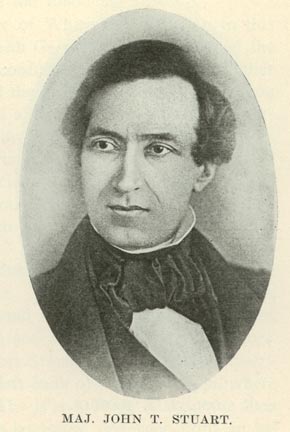
John Stuart
Former U.S. Representative · Illinois District 8 · 1839–1865 · Democratic
John Stuart represented Illinois's District 8 in the United States House of Representatives (1839–1865) for the Democratic party. The page below collects sourced biographical facts, term history, committee roles, and provenance for Stuart.
Bioguide ID: S001035
Key facts
- Full name
- John Stuart
- State
- Illinois
- District
- District 8
- Party
- Democratic
- House service
- 1839–1865
- First House term
- 1839
- Status
- Left office
- Current term ends
- —
- Born
- 1807
- Bioguide ID
- S001035
- Committee assignments
- —
- Dataset version
- 1.20260606
Biographical narrative
823 words · sourced from the Wikipedia REST extract
John Stuart was a prominent lawyer and politician who served as a U.S. Representative from Illinois. A member of the Democratic Party, he held office during a significant period in American history, including the Civil War era. His political career was marked by his association with notable figures, including Abraham Lincoln, and his involvement in various legislative matters. Stuart's tenure in the House of Representatives spanned three terms, during which he contributed to the political landscape of his time.
Early life and career
John Stuart was born on November 10, 1807, near Lexington, Kentucky. He pursued higher education at Centre College in Danville, Kentucky, graduating in 1826. Following his graduation, he studied law and was admitted to the bar in 1828. Stuart began his legal practice in Springfield, Illinois, where he established a reputation as a skilled attorney. His legal career coincided with a period of significant growth and development in the region.
In 1832, during the Black Hawk War, Stuart served as a major, where he first encountered Abraham Lincoln, who was also a member of the same battalion. This meeting would lead to a lasting friendship and professional relationship, as Stuart later encouraged Lincoln to pursue a career in law. Their partnership, which lasted from 1837 to 1841, was influential in shaping Lincoln's legal career and, by extension, his future political path.
Stuart's political career began in earnest when he was elected to the Illinois House of Representatives, serving from 1832 to 1836. His early involvement in state politics laid the groundwork for his later congressional aspirations. Although he ran unsuccessfully for a seat in the U.S. House of Representatives in 1836, he gained recognition and support within the Whig Party, which would ultimately lead to his election to Congress.
House tenure
Stuart's congressional career began when he was elected as a Whig to the Twenty-sixth Congress, serving from March 4, 1839, to March 3, 1843. During this time, he represented Illinois's 8th congressional district, where he was involved in various legislative matters. Notably, he won his seat by defeating Stephen A. Douglas in the 1838 election, a significant political achievement given Douglas's prominence in Illinois politics.
After serving two terms in the House, Stuart chose not to seek renomination in 1842. He returned to his legal practice and continued to engage in state politics, serving in the Illinois Senate from 1848 to 1852. His political ambitions continued, and in 1860, he ran as a Constitutional Union candidate for Governor of Illinois, although he was unsuccessful in that endeavor.
Stuart's return to Congress came when he was elected as a Democrat to the Thirty-eighth Congress, serving from March 4, 1863, to March 3, 1865. His time in office coincided with the presidency of Abraham Lincoln, and he was known to be a frequent visitor at the White House. Despite his close ties to Lincoln and the political climate of the time, Stuart held anti-emancipation views, which were reflected in his voting record, including his opposition to the Thirteenth Amendment.
His congressional career came to an end after he was defeated in the 1864 election by Republican Shelby Moore Cullom, an ally of Lincoln. Following this defeat, Stuart returned to Springfield, where he resumed his legal practice until his death.
Legislative focus and committees
Throughout his time in Congress, Stuart's legislative focus was shaped by the political and social issues of his era, particularly those surrounding the Civil War and its aftermath. His alignment with the Democratic Party during a time of national division often placed him at odds with the prevailing Republican majority, particularly on issues related to emancipation and civil rights.
While specific details regarding the committees on which Stuart served are not provided, it can be inferred that his legal background and experience in state politics would have informed his contributions to legislative discussions and decisions. His role as a congressman during a tumultuous period in American history likely involved engagement with a range of issues, from military affairs to economic policies, as the nation grappled with the consequences of the Civil War.
Stuart's legacy is further reflected in the enduring impact of his legal practice. The law firm he co-founded, originally known as "Stuart and Lincoln," continues to operate today under the name "Brown, Hay, & Stephens," highlighting the lasting influence of his contributions to the legal profession in Illinois. Additionally, in 2007, Centre College honored Stuart's legacy by dedicating a residence hall in his name, recognizing his role in shaping the career of Abraham Lincoln and his contributions to the field of law.
In summary, John Stuart's life and career were marked by significant achievements in both law and politics. His connections with key historical figures and his involvement in legislative matters during a critical period in American history underscore his role in shaping the political landscape of his time. His legacy continues to be remembered through the institutions and practices he helped establish.
Notable legislation
Sponsored and co-sponsored legislation for John Stuart is pending operator curation. The biographical narrative above carries the same provenance trail until per-bill rows are written.
Sources
- [1]https://en.wikipedia.org/wiki/John_T._StuartWikipedia · retrieved 2026-06-06
Notable quotes
Sourced quotes for John Stuart are pending operator curation. Narrative-scope provenance remains attached below.
Sources
- [1]https://en.wikipedia.org/wiki/John_T._StuartWikipedia · retrieved 2026-06-06
Key positions
Curated policy positions for John Stuart are pending operator review. The biographical narrative above carries the same provenance trail until per-topic positions are written.
Sources
- [1]https://en.wikipedia.org/wiki/John_T._StuartWikipedia · retrieved 2026-06-06
Terms served
- 1839–1841U.S. House · Term 1 · Whig
- 1841–1843U.S. House · Term 2 · Whig
- 1863–1865U.S. House · Term 3 · Democratic
Sources & provenance
Every attributable claim above carries a per-section [N] marker that resolves to the corresponding URL below. Each entry records the upstream provider, the canonical URL, and the timestamp at which the source was retrieved by the ingest pipeline.
Key facts
- https://bioguide.congress.gov/search/bio/S001035bioguide · retrieved 2026-06-06
- https://www.govtrack.us/congress/members/410491govtrack · retrieved 2026-06-06
Biographical narrative
- https://en.wikipedia.org/wiki/John_T._Stuartwikipedia · retrieved 2026-06-06
Find your representative
Every U.S. state elects representatives by district. Browse Illinois’s delegation, the full former-representative roster, or explore the role and term length.
Related on The Candidate
- Succeeded by Greenbury FortLater holder of the Illinois District 8 House seat · Republican.Open
- Abner TaylorFormer U.S. Representative · Illinois District 1 · RepublicanOpen
- Adam SnyderFormer U.S. Representative · Illinois District 1 · DemocraticOpen
- Arthur MitchellFormer U.S. Representative · Illinois District 1 · DemocraticOpen
- Bennett StewartFormer U.S. Representative · Illinois District 1 · DemocraticOpen
- Democratic PartyFederal candidates and office holders on the Democratic line.Open