
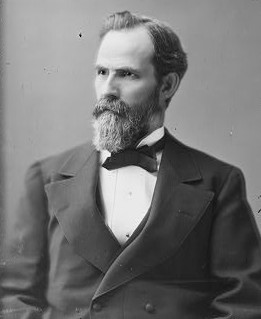
Historical · U.S. House · Illinois · District 8
Greenbury Fort
Former U.S. Representative · Illinois District 8 · 1873–1881 · Republican
Greenbury Fort represented Illinois's District 8 in the United States House of Representatives (1873–1881) for the Republican party. The page below collects sourced biographical facts, term history, committee roles, and provenance for Fort.
Bioguide ID: F000288
Key facts
- Full name
- Greenbury Fort
- State
- Illinois
- District
- District 8
- Party
- Republican
- House service
- 1873–1881
- First House term
- 1873
- Status
- Left office
- Current term ends
- —
- Born
- 1825
- Bioguide ID
- F000288
- Committee assignments
- —
- Dataset version
- 1.20260606
Biographical narrative
1,006 words · sourced from the Wikipedia REST extract
Greenbury Fort was a notable figure in American politics during the late 19th century, serving as a U.S. Representative for Illinois's 8th congressional district. He was a member of the Republican Party and held office for four consecutive terms in the House of Representatives from 1873 until 1881. Fort's career was marked by his involvement in local governance, military service during the Civil War, and his contributions to the legislative process at the federal level. His life and career reflect the complexities of American politics during a transformative period in the nation’s history.
Early life and career
Greenbury Lafayette Fort was born on October 17, 1825, in French Grant, Ohio. His early life was shaped by his family's move to Marshall County, Illinois, in April 1834, where they sought new opportunities in the burgeoning frontier. Fort pursued his education through preparatory studies and attended Rock River Seminary, which laid the groundwork for his future endeavors in law and public service.
After completing his education, Fort studied law and was admitted to the bar in 1847. He began his legal practice in Lacon, Illinois, where he established himself as a competent attorney. His legal career was complemented by his engagement in local governance. In 1850, he was elected sheriff of Marshall County, a position that allowed him to gain valuable experience in law enforcement and public administration. Two years later, in 1852, he served as the clerk of Marshall County, further solidifying his role in local politics.
Fort's political career continued to evolve when he became a county judge in 1857. This position not only underscored his legal expertise but also his commitment to public service. His judicial role would have involved overseeing legal proceedings and ensuring the fair administration of justice within the county.
With the onset of the Civil War, Fort's sense of duty led him to enlist in the military. He was appointed as a second lieutenant in the 11th Illinois Volunteer Infantry Regiment on April 30, 1861. His military service was characterized by a rapid rise through the ranks, where he demonstrated leadership and commitment to his fellow soldiers. Fort was eventually promoted to lieutenant colonel and served as the quartermaster, responsible for the logistical support of his regiment. His service was recognized with brevets to the ranks of major and lieutenant colonel of Volunteers on March 13, 1865, reflecting his dedication and contributions during the conflict.
Following the war, Fort transitioned back into civilian life and continued his public service by entering the Illinois State Senate in 1866. His experience in both the military and local governance provided him with a unique perspective on the challenges facing the state and the nation during the Reconstruction era.
House tenure
Greenbury Fort's congressional career began when he was elected as a Republican to the Forty-third Congress, which commenced on March 4, 1873. He was re-elected to three subsequent Congresses, serving until March 3, 1881. During his time in the House of Representatives, Fort was involved in various legislative activities and contributed to discussions on issues pertinent to his constituents and the nation as a whole.
As a member of the House, Fort represented the interests of Illinois's 8th congressional district, which encompassed a diverse population with varying needs and concerns. His tenure coincided with a period of significant change in American society, including industrialization, urbanization, and the ongoing effects of the Civil War. These factors likely influenced his legislative priorities and the issues he championed during his time in office.
Fort's decision not to seek renomination in 1880 marked the end of his congressional career. After serving four terms, he chose to retire from public life, a decision that may have been influenced by personal considerations or a desire to step back from the political arena. His departure from Congress came at a time when the political landscape was evolving, with new leaders and issues emerging.
Legislative focus and committees
During his time in the House of Representatives, Greenbury Fort's legislative focus reflected the interests and needs of his constituents in Illinois. While specific details regarding the bills he sponsored or supported are not provided, it can be inferred that, as a Republican representative during this period, he likely engaged with issues related to economic development, infrastructure, and the aftermath of the Civil War.
The late 19th century was a time of significant transformation in the United States, with rapid industrial growth and the expansion of railroads. Representatives from Illinois, a state that played a crucial role in these developments, often focused on legislation that promoted economic growth and supported the interests of their constituents. Fort's background as a lawyer and his experience in local governance would have equipped him with the skills necessary to navigate the complexities of federal legislation and advocate for policies that benefited his district.
In addition to his legislative work, Fort's involvement in various committees would have played a significant role in shaping his contributions to Congress. While specific committee assignments are not detailed, it is common for representatives to serve on committees that align with their interests and expertise. These committees are essential for reviewing proposed legislation, conducting hearings, and making recommendations to the full House.
Fort's legislative efforts and committee work would have been influenced by the broader political context of the time, including the challenges of Reconstruction, economic issues, and the push for civil rights. His military service and experience in local government may have informed his perspectives on these matters, allowing him to contribute meaningfully to the discussions and decisions made in Congress.
After concluding his congressional career, Fort returned to Lacon, Illinois, where he lived until his death on January 13, 1883. He was interred in Lacon Cemetery, leaving behind a legacy as a public servant who navigated the complexities of local and national governance during a pivotal era in American history. His family continued to be involved in public service, with his son, Robert Boal Fort, later serving as a state senator, indicating the family's ongoing commitment to civic engagement.
Notable legislation
Sponsored and co-sponsored legislation for Greenbury Fort is pending operator curation. The biographical narrative above carries the same provenance trail until per-bill rows are written.
Sources
- [1]https://en.wikipedia.org/wiki/Greenbury_L._FortWikipedia · retrieved 2026-06-06
Notable quotes
Sourced quotes for Greenbury Fort are pending operator curation. Narrative-scope provenance remains attached below.
Sources
- [1]https://en.wikipedia.org/wiki/Greenbury_L._FortWikipedia · retrieved 2026-06-06
Key positions
Curated policy positions for Greenbury Fort are pending operator review. The biographical narrative above carries the same provenance trail until per-topic positions are written.
Sources
- [1]https://en.wikipedia.org/wiki/Greenbury_L._FortWikipedia · retrieved 2026-06-06
Terms served
- 1873–1875U.S. House · Term 1 · Republican
- 1875–1877U.S. House · Term 2 · Republican
- 1877–1879U.S. House · Term 3 · Republican
- 1879–1881U.S. House · Term 4 · Republican
Sources & provenance
Every attributable claim above carries a per-section [N] marker that resolves to the corresponding URL below. Each entry records the upstream provider, the canonical URL, and the timestamp at which the source was retrieved by the ingest pipeline.
Key facts
- https://bioguide.congress.gov/search/bio/F000288bioguide · retrieved 2026-06-06
- https://www.govtrack.us/congress/members/404238govtrack · retrieved 2026-06-06
Biographical narrative
- https://en.wikipedia.org/wiki/Greenbury_L._Fortwikipedia · retrieved 2026-06-06
Find your representative
Every U.S. state elects representatives by district. Browse Illinois’s delegation, the full former-representative roster, or explore the role and term length.
Related on The Candidate
- Preceded by John StuartEarlier holder of the Illinois District 8 House seat · Democratic.Open
- Succeeded by William CullenLater holder of the Illinois District 8 House seat · Republican.Open
- Abner TaylorFormer U.S. Representative · Illinois District 1 · RepublicanOpen
- Adam SnyderFormer U.S. Representative · Illinois District 1 · DemocraticOpen
- Arthur MitchellFormer U.S. Representative · Illinois District 1 · DemocraticOpen
- Bennett StewartFormer U.S. Representative · Illinois District 1 · DemocraticOpen