
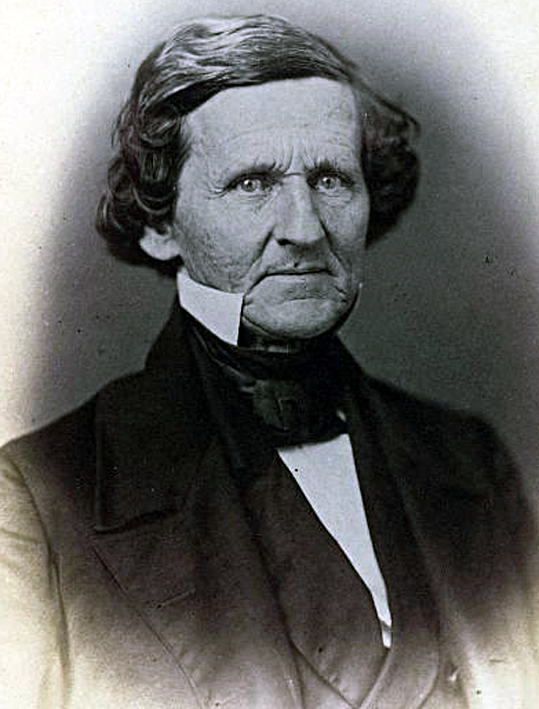
Historical · U.S. House · Illinois · District 8
Robert Smith
Former U.S. Representative · Illinois District 8 · 1843–1859 · Democratic
Robert Smith represented Illinois's District 8 in the United States House of Representatives (1843–1859) for the Democratic party. The page below collects sourced biographical facts, term history, committee roles, and provenance for Smith.
Bioguide ID: S000604
Key facts
- Full name
- Robert Smith
- State
- Illinois
- District
- District 8
- Party
- Democratic
- House service
- 1843–1859
- First House term
- 1843
- Status
- Left office
- Current term ends
- —
- Born
- 1802
- Bioguide ID
- S000604
- Committee assignments
- —
- Dataset version
- 1.20260606
Biographical narrative
949 words · sourced from the Wikipedia REST extract
Robert Smith was a U.S. Representative from Illinois, serving in the House of Representatives during the mid-19th century. A member of the Democratic Party, he held office for four terms, with his congressional career spanning from 1843 to 1859. Smith's early life in New Hampshire and subsequent migration to Illinois shaped his professional pursuits, which included law, mercantile activities, and real estate. His tenure in Congress was marked by his involvement in various committees, particularly those related to infrastructure and congressional operations.
Early life and career
Robert Smith was born on June 12, 1802, in Peterborough, New Hampshire. He received his early education in local public schools and attended New Ipswich Academy, where he laid the groundwork for his future endeavors. After completing his education, Smith began his career in education by teaching school. In 1822, he transitioned into mercantile pursuits, which involved engaging in trade and commerce. This shift marked the beginning of his involvement in business, which would continue to evolve over the years.
In 1823, Smith ventured into the manufacturing sector, specifically focusing on textile goods in Northfield, New Hampshire. His experiences in both teaching and manufacturing provided him with a diverse skill set that would later serve him well in his various business and political endeavors. He also pursued legal studies, eventually gaining admission to the bar and practicing law. This legal background would complement his later political career, as it equipped him with a strong understanding of legislative processes and governance.
In 1832, Smith moved to Illinois, settling in Alton, where he once again engaged in mercantile activities. His relocation to Illinois coincided with a period of growth and development in the region, and he quickly became involved in local affairs. During this time, he also served as a captain in the state militia, reflecting his commitment to civic duty and community service. Smith's extensive land ownership and involvement in real estate further established his presence in the area, allowing him to build a network of influence.
Smith's political career began to take shape when he was elected to the Illinois House of Representatives, serving from 1836 to 1840. His experience in the state legislature provided him with valuable insights into the workings of government and the needs of his constituents. In addition to his legislative role, he was elected as the enrolling and engrossing clerk of the Illinois House of Representatives in both 1840 and 1842, further solidifying his political credentials.
House tenure
Robert Smith's congressional career began when he was elected as a Democrat to the Twenty-eighth Congress, serving from March 4, 1843, to March 3, 1845. He was subsequently re-elected to the Twenty-ninth Congress, where he continued to represent Illinois's 8th congressional district. His tenure in the House was marked by his commitment to infrastructure development, as he served as the chairman of the Committee on Roads and Canals during the Twenty-ninth Congress. This role allowed him to influence legislation related to transportation and public works, which were critical to the growing nation.
In the Thirtieth Congress, Smith was re-elected as an Independent Democrat, serving from March 4, 1847, to March 3, 1849. His ability to navigate the political landscape of the time, including the shifting dynamics within the Democratic Party, demonstrated his adaptability and political acumen. Following a brief hiatus from Congress, Smith returned to the House as a Democrat for the Thirty-fifth Congress, serving from March 4, 1857, to March 3, 1859. During this term, he was appointed chairman of the Committee on Mileage, a role that involved overseeing the reimbursement of members of Congress for travel expenses incurred while performing their legislative duties.
Throughout his time in Congress, Smith was involved in various legislative initiatives and discussions, contributing to the broader political discourse of the era. His participation in significant events, such as attending a gathering in Greenville, Illinois, where prominent figures like Abraham Lincoln and Stephen Douglas spoke, further highlighted his engagement in the political landscape of the time.
Legislative focus and committees
Robert Smith's legislative focus during his time in the House of Representatives primarily revolved around infrastructure and the operational aspects of Congress. As chairman of the Committee on Roads and Canals during the Twenty-ninth Congress, he played a crucial role in shaping policies related to transportation infrastructure, which was essential for the economic development of the United States during the mid-19th century. His efforts in this area reflected the growing importance of transportation networks in facilitating trade and communication across the expanding nation.
In his later congressional term, as chairman of the Committee on Mileage, Smith was responsible for overseeing the reimbursement processes for congressional members, ensuring that representatives were compensated for their travel expenses. This role was significant in maintaining the operational efficiency of the House and addressing the logistical challenges faced by legislators.
Smith's involvement in these committees underscored his commitment to improving the infrastructure of the nation and ensuring that the legislative body operated effectively. His contributions to the House were part of a broader effort to address the needs of a rapidly growing country, as the United States was undergoing significant changes during this period.
After his congressional career, Smith continued to engage in various business ventures, including founding the Minneapolis Milling Company in 1856, which would eventually evolve into General Mills, a major player in the food industry. His entrepreneurial spirit and dedication to public service left a lasting impact on both his local community and the nation.
Robert Smith passed away on December 21, 1867, in Alton, Illinois, where he was interred in Alton City Cemetery. His life and career reflect the complexities of American politics and business during a transformative era in U.S. history.
Notable legislation
Sponsored and co-sponsored legislation for Robert Smith is pending operator curation. The biographical narrative above carries the same provenance trail until per-bill rows are written.
Sources
- [1]https://en.wikipedia.org/wiki/Robert_Smith_(Illinois_politician)Wikipedia · retrieved 2026-06-06
Notable quotes
Sourced quotes for Robert Smith are pending operator curation. Narrative-scope provenance remains attached below.
Sources
- [1]https://en.wikipedia.org/wiki/Robert_Smith_(Illinois_politician)Wikipedia · retrieved 2026-06-06
Key positions
Curated policy positions for Robert Smith are pending operator review. The biographical narrative above carries the same provenance trail until per-topic positions are written.
Sources
- [1]https://en.wikipedia.org/wiki/Robert_Smith_(Illinois_politician)Wikipedia · retrieved 2026-06-06
Terms served
- 1843–1845U.S. House · Term 1 · Democratic
- 1845–1847U.S. House · Term 2 · Democratic
- 1847–1849U.S. House · Term 3 · Ind. Democrat
- 1857–1859U.S. House · Term 4 · Democratic
Sources & provenance
Every attributable claim above carries a per-section [N] marker that resolves to the corresponding URL below. Each entry records the upstream provider, the canonical URL, and the timestamp at which the source was retrieved by the ingest pipeline.
Key facts
- https://bioguide.congress.gov/search/bio/S000604bioguide · retrieved 2026-06-06
- https://www.govtrack.us/congress/members/410082govtrack · retrieved 2026-06-06
Biographical narrative
- https://en.wikipedia.org/wiki/Robert_Smith_(Illinois_politician)wikipedia · retrieved 2026-06-06
Find your representative
Every U.S. state elects representatives by district. Browse Illinois’s delegation, the full former-representative roster, or explore the role and term length.
Related on The Candidate
- Succeeded by Philip FoukeLater holder of the Illinois District 8 House seat · Democratic.Open
- Abner TaylorFormer U.S. Representative · Illinois District 1 · RepublicanOpen
- Adam SnyderFormer U.S. Representative · Illinois District 1 · DemocraticOpen
- Arthur MitchellFormer U.S. Representative · Illinois District 1 · DemocraticOpen
- Bennett StewartFormer U.S. Representative · Illinois District 1 · DemocraticOpen
- Democratic PartyFederal candidates and office holders on the Democratic line.Open