
Historical · U.S. House · Illinois · District 8
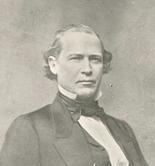
Philip Fouke
Former U.S. Representative · Illinois District 8 · 1859–1863 · Democratic
Philip Fouke represented Illinois's District 8 in the United States House of Representatives (1859–1863) for the Democratic party. The page below collects sourced biographical facts, term history, committee roles, and provenance for Fouke.
Bioguide ID: F000316
Key facts
- Full name
- Philip Fouke
- State
- Illinois
- District
- District 8
- Party
- Democratic
- House service
- 1859–1863
- First House term
- 1859
- Status
- Left office
- Current term ends
- —
- Born
- 1818
- Bioguide ID
- F000316
- Committee assignments
- —
- Dataset version
- 1.20260606
Biographical narrative
1,039 words · sourced from the Wikipedia REST extract
Philip Fouke was a prominent political figure in the mid-19th century, serving as a U.S. Representative from Illinois. A member of the Democratic Party, he held office during a tumultuous period in American history, marked by the Civil War and significant social change. His career spanned various roles, including civil engineering, law, and military service, reflecting a diverse professional background that informed his political endeavors. Fouke's tenure in the U.S. House of Representatives lasted from 1859 to 1863, during which he contributed to legislative discussions and decisions that shaped the nation during a critical time.
Early life and career
Philip Fouke was born on January 23, 1818, in Kaskaskia, Illinois, a town with historical significance as one of the early settlements in the state. Growing up in a region that was rapidly developing, he attended local public schools, where he received a foundational education that would serve him throughout his varied career. His early interest in engineering led him to pursue a profession as a civil engineer, a field that was crucial for the infrastructure development of the growing United States during the 19th century.
In 1841, Fouke took a significant step in his career by establishing the Belleville Advocate, a newspaper that would serve as a platform for local news and public discourse. This venture not only demonstrated his entrepreneurial spirit but also his commitment to community engagement and communication. The publication likely provided him with insights into the political climate of the time, which would later inform his legislative priorities and political strategies.
Fouke's ambition extended beyond journalism; he pursued a legal education and was admitted to the bar in 1845. He began practicing law in Belleville, Illinois, where he built a reputation as a capable attorney. His legal career included serving as the prosecuting attorney for the Kaskaskia district from 1846 to 1850, a role that allowed him to engage directly with the legal system and the community. This experience likely enhanced his understanding of the law and governance, further preparing him for his future political career.
In addition to his legal practice, Fouke's political aspirations led him to serve in the Illinois State House of Representatives in 1851. This position marked his entry into formal politics, where he began to influence local legislation and policy. His involvement in state politics provided him with valuable experience and connections that would be beneficial when he later sought a position in the U.S. Congress.
Despite his early political efforts, Fouke faced challenges in his career. He contested the election of Lyman Trumbull to the Thirty-fourth Congress but was unsuccessful. However, this setback did not deter him from pursuing further political opportunities, and he continued to build his profile within the Democratic Party and the broader political landscape of Illinois.
House tenure
Fouke's political career reached a significant milestone when he was elected to the U.S. House of Representatives, representing Illinois's 8th congressional district. His first term began on March 4, 1859, as a member of the Thirty-sixth Congress. During this period, the United States was grappling with deepening divisions over issues such as slavery and states' rights, which would eventually culminate in the Civil War.
Fouke served in the House during a critical time in American history, where debates over the future of the nation were intense and often contentious. His tenure in the Thirty-sixth Congress lasted until March 3, 1863, encompassing a period of significant legislative activity. As a member of the Democratic Party, he was part of a political faction that often found itself at odds with the emerging Republican majority, particularly on issues related to the war and civil rights.
During his time in Congress, Fouke participated in discussions and decisions that would shape the legislative landscape of the nation. While specific details of his legislative contributions are not provided, it can be inferred that his background in law and civil engineering would have informed his perspectives on infrastructure, public works, and legal matters. His experience as a local politician would have also influenced his understanding of the needs and concerns of his constituents.
Fouke did not seek renomination in 1862, choosing instead to focus on other pursuits. His decision to step away from the House of Representatives came at a time when the nation was deeply embroiled in the Civil War, a conflict that would have significant implications for the future of the country. This choice reflects the complexities of political life during a period of national strife and the personal decisions that politicians must navigate.
Legislative focus and committees
While specific details regarding Fouke's committee assignments and legislative focus during his time in the House are not documented, his background suggests that he may have been involved in issues related to infrastructure, law, and public policy. As a civil engineer and attorney, he would have had a keen interest in legislation that impacted public works, transportation, and legal reform. The context of his service during the Civil War also implies that he may have engaged with legislation pertinent to the war effort, military funding, and the implications of the conflict on civil liberties.
Fouke's dual career in law and politics likely provided him with a unique perspective on the intersection of legal frameworks and legislative action. His experience as a prosecuting attorney would have equipped him with insights into the judicial system, which could have influenced his approach to legislative matters concerning justice and governance.
After his congressional tenure, Fouke continued to practice law, this time in Washington, D.C. His move to the nation's capital allowed him to remain engaged in the political sphere, even as he transitioned away from elected office. His legal career in Washington would have kept him connected to the evolving political landscape of the post-Civil War era, a time of reconstruction and significant change in American society.
Philip Fouke passed away on October 3, 1876, in Washington, D.C. His contributions to Illinois politics and his service in the U.S. House of Representatives remain a part of the historical record of American governance during a pivotal time in the nation's history. He was interred in the Congressional Cemetery, a final resting place that reflects his service to the country and his involvement in the legislative process.
Notable legislation
Sponsored and co-sponsored legislation for Philip Fouke is pending operator curation. The biographical narrative above carries the same provenance trail until per-bill rows are written.
Sources
- [1]https://en.wikipedia.org/wiki/Philip_B._FoukeWikipedia · retrieved 2026-06-06
Notable quotes
Sourced quotes for Philip Fouke are pending operator curation. Narrative-scope provenance remains attached below.
Sources
- [1]https://en.wikipedia.org/wiki/Philip_B._FoukeWikipedia · retrieved 2026-06-06
Key positions
Curated policy positions for Philip Fouke are pending operator review. The biographical narrative above carries the same provenance trail until per-topic positions are written.
Sources
- [1]https://en.wikipedia.org/wiki/Philip_B._FoukeWikipedia · retrieved 2026-06-06
Terms served
- 1859–1861U.S. House · Term 1 · Democratic
- 1861–1863U.S. House · Term 2 · Democratic
Sources & provenance
Every attributable claim above carries a per-section [N] marker that resolves to the corresponding URL below. Each entry records the upstream provider, the canonical URL, and the timestamp at which the source was retrieved by the ingest pipeline.
Key facts
- https://bioguide.congress.gov/search/bio/F000316bioguide · retrieved 2026-06-06
- https://www.govtrack.us/congress/members/404265govtrack · retrieved 2026-06-06
Biographical narrative
- https://en.wikipedia.org/wiki/Philip_B._Foukewikipedia · retrieved 2026-06-06
Find your representative
Every U.S. state elects representatives by district. Browse Illinois’s delegation, the full former-representative roster, or explore the role and term length.
Related on The Candidate
- Preceded by Robert SmithEarlier holder of the Illinois District 8 House seat · Democratic.Open
- Succeeded by Greenbury FortLater holder of the Illinois District 8 House seat · Republican.Open
- Abner TaylorFormer U.S. Representative · Illinois District 1 · RepublicanOpen
- Adam SnyderFormer U.S. Representative · Illinois District 1 · DemocraticOpen
- Arthur MitchellFormer U.S. Representative · Illinois District 1 · DemocraticOpen
- Bennett StewartFormer U.S. Representative · Illinois District 1 · DemocraticOpen