
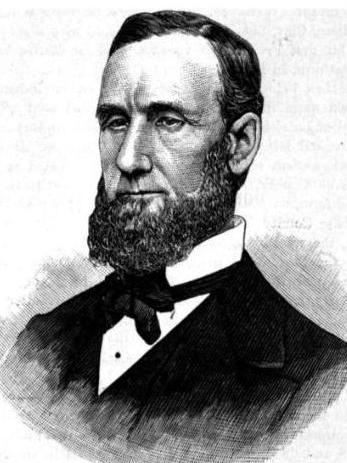
Historical · U.S. House · Illinois · District 8
William Cullen
Former U.S. Representative · Illinois District 8 · 1881–1885 · Republican
William Cullen represented Illinois's District 8 in the United States House of Representatives (1881–1885) for the Republican party. The page below collects sourced biographical facts, term history, committee roles, and provenance for Cullen.
Bioguide ID: C000971
Key facts
- Full name
- William Cullen
- State
- Illinois
- District
- District 8
- Party
- Republican
- House service
- 1881–1885
- First House term
- 1881
- Status
- Left office
- Current term ends
- —
- Born
- 1826
- Bioguide ID
- C000971
- Committee assignments
- —
- Dataset version
- 1.20260606
Biographical narrative
912 words · sourced from the Wikipedia REST extract
William Cullen was a U.S. Representative from Illinois, serving in the House of Representatives during the early 1880s. A member of the Republican Party, Cullen's political career was marked by his two terms in Congress, where he represented the 8th congressional district of Illinois. His life journey began in Ireland, where he was born, and transitioned through various roles in local governance and journalism before his election to Congress. Cullen's contributions to his community and his time in the House reflect a commitment to public service that spanned several decades.
Early life and career
William Cullen was born on March 4, 1826, in County Donegal, Ireland. His early life was shaped by significant historical events, as he immigrated to the United States with his parents in 1832, during a period of substantial Irish emigration. The family settled in Pittsburgh, Pennsylvania, where Cullen received his education in the public school system and attended the Allegheny Academy. This educational background provided him with a foundation that would later support his various professional endeavors.
In 1846, Cullen relocated to Adams Township in LaSalle County, Illinois, where he engaged in agricultural pursuits. This move was part of a broader trend during the mid-19th century, as many individuals sought opportunities in the American Midwest, drawn by the promise of land and the potential for prosperity. Cullen's work in agriculture not only contributed to his personal development but also connected him to the local community, where he would eventually take on more prominent roles.
Cullen's public service began to take shape when he was elected Sheriff of LaSalle County, a position he held from 1864 to 1865. This role involved significant responsibilities, including law enforcement and the maintenance of public order, which would have provided him with valuable experience in governance and community leadership. Following his tenure as sheriff, Cullen moved to Ottawa, Illinois, in 1865, where he continued to build his career.
In Ottawa, Cullen transitioned into journalism, serving as the political editor of the Ottawa Republican from 1871 to 1887. This position allowed him to influence public opinion and engage with the political landscape of the time. His work in journalism likely enhanced his understanding of political issues and the needs of his constituents, preparing him for his future role in Congress.
House tenure
William Cullen was elected to the United States House of Representatives as a member of the Republican Party, beginning his first term on March 4, 1881. He represented Illinois's 8th congressional district during a period of significant political and social change in the United States. His election to the Forty-seventh Congress marked the beginning of his formal legislative career, where he would serve alongside other influential figures of the time.
Cullen's tenure in the House included a second term, which lasted until March 3, 1885, encompassing the Forty-eighth Congress. During these years, he participated in the legislative process, contributing to discussions and decisions that would shape national policy. Although specific details regarding the bills he supported or opposed are not provided, his role as a U.S. Representative would have involved addressing a range of issues pertinent to his constituents and the nation as a whole.
After completing his second term, Cullen sought renomination in 1884 but was unsuccessful. This marked the end of his congressional career, as he did not return to the House for a subsequent term. Following his time in Congress, Cullen returned to Ottawa, Illinois, where he lived in retirement. His post-congressional life allowed him to reflect on his political experiences and contributions to public service.
Legislative focus and committees
While specific details about Cullen's legislative focus and committee assignments during his time in the House are not documented, it is reasonable to infer that, as a Republican representative from Illinois, he would have been involved in issues relevant to his constituents and aligned with the broader goals of his party during the 1880s. The Republican Party at that time was focused on various issues, including economic development, infrastructure, and civil rights, particularly in the context of Reconstruction and the post-Civil War era.
Cullen's background in agriculture and his experience as a local sheriff may have influenced his legislative priorities, potentially leading him to advocate for policies that supported farmers and rural communities. Additionally, his role as a political editor would have provided him with insights into the pressing issues of the day, allowing him to engage with legislative matters effectively.
The political landscape of the 1880s was characterized by significant changes, including debates over tariffs, railroad regulation, and labor rights. Cullen's contributions to these discussions, while not explicitly detailed, would have been informed by his experiences in local governance and journalism. His dual roles as a public servant and a journalist likely equipped him with a unique perspective on the needs and concerns of his constituents.
After concluding his congressional service, Cullen remained in Ottawa, Illinois, where he continued to be a part of the community until his death on January 17, 1914. His burial in Ottawa Avenue Cemetery marked the end of a life dedicated to public service and community engagement. Cullen's legacy as a U.S. Representative reflects the experiences of many individuals of his time who sought to contribute to the governance and development of their communities and the nation as a whole. His journey from Ireland to the halls of Congress illustrates the opportunities available in the United States during the 19th century and the impact of immigrant contributions to American society.
Notable legislation
Sponsored and co-sponsored legislation for William Cullen is pending operator curation. The biographical narrative above carries the same provenance trail until per-bill rows are written.
Sources
- [1]https://en.wikipedia.org/wiki/William_Cullen_(representative)Wikipedia · retrieved 2026-06-06
Notable quotes
Sourced quotes for William Cullen are pending operator curation. Narrative-scope provenance remains attached below.
Sources
- [1]https://en.wikipedia.org/wiki/William_Cullen_(representative)Wikipedia · retrieved 2026-06-06
Key positions
Curated policy positions for William Cullen are pending operator review. The biographical narrative above carries the same provenance trail until per-topic positions are written.
Sources
- [1]https://en.wikipedia.org/wiki/William_Cullen_(representative)Wikipedia · retrieved 2026-06-06
Terms served
- 1881–1883U.S. House · Term 1 · Republican
- 1883–1885U.S. House · Term 2 · Republican
Sources & provenance
Every attributable claim above carries a per-section [N] marker that resolves to the corresponding URL below. Each entry records the upstream provider, the canonical URL, and the timestamp at which the source was retrieved by the ingest pipeline.
Key facts
- https://bioguide.congress.gov/search/bio/C000971bioguide · retrieved 2026-06-06
- https://www.govtrack.us/congress/members/403082govtrack · retrieved 2026-06-06
Biographical narrative
- https://en.wikipedia.org/wiki/William_Cullen_(representative)wikipedia · retrieved 2026-06-06
Find your representative
Every U.S. state elects representatives by district. Browse Illinois’s delegation, the full former-representative roster, or explore the role and term length.
Related on The Candidate
- Preceded by Greenbury FortEarlier holder of the Illinois District 8 House seat · Republican.Open
- Succeeded by Ralph PlumbLater holder of the Illinois District 8 House seat · Republican.Open
- Abner TaylorFormer U.S. Representative · Illinois District 1 · RepublicanOpen
- Adam SnyderFormer U.S. Representative · Illinois District 1 · DemocraticOpen
- Arthur MitchellFormer U.S. Representative · Illinois District 1 · DemocraticOpen
- Bennett StewartFormer U.S. Representative · Illinois District 1 · DemocraticOpen