
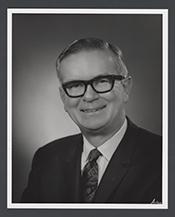
Historical · U.S. House · Indiana · District 2
Earl Landgrebe
Former U.S. Representative · Indiana District 2 · 1969–1975 · Republican
Earl Landgrebe represented Indiana's District 2 in the United States House of Representatives (1969–1975) for the Republican party. The page below collects sourced biographical facts, term history, committee roles, and provenance for Landgrebe.
Bioguide ID: L000049
Key facts
- Full name
- Earl Landgrebe
- State
- Indiana
- District
- District 2
- Party
- Republican
- House service
- 1969–1975
- First House term
- 1969
- Status
- Left office
- Current term ends
- —
- Born
- 1916
- Bioguide ID
- L000049
- Committee assignments
- —
- Dataset version
- 1.20260605
Biographical narrative
837 words · sourced from the Wikipedia REST extract
Earl F. Landgrebe was an American politician and businessman who served as a Republican member of the United States House of Representatives for Indiana's 2nd congressional district from 1969 until 1975. Prior to his tenure in Congress, he was a member of the Indiana State Senate, where he was involved in various legislative initiatives. Landgrebe's political career was marked by his defense of President Richard Nixon during the Watergate scandal, which ultimately contributed to his electoral defeat in 1974. Throughout his time in office, he faced criticism for his voting record and attendance, which were points of contention among his opponents.
Early life and career
Earl Fredrick Landgrebe was born on January 21, 1916, in Valparaiso, Indiana, to Benna Marie Broderman and Edward William Landgrebe. His father was a grocery store owner who later served as the assessor for Porter County. Landgrebe completed his secondary education at Wheeler High School, located near Valparaiso. In 1936, he married Helen Lucille Field, with whom he had two sons.
In 1943, Landgrebe founded Landgrebe Motor Transport, a transportation business that began with a single truck and $31,028 in savings. Over time, he expanded the company to employ around one hundred individuals. His business acumen was recognized when he was elected president of the Valparaiso Chamber of Commerce in 1957, a position he held until he transitioned to a political career by winning a seat in the Indiana State Senate in 1958.
House tenure
Landgrebe's political career in the Indiana State Senate began when he filed to run for the Republican primary on March 21, 1958. He successfully defeated incumbent John Wilson Van Ness and subsequently won the general election against Democratic nominee Maurice Mason. During his time in the state senate, he served on several committees, including those focused on elections, financial institutions, transportation, and benevolent and penal institutions. Notably, he introduced legislation to create the Indiana Port Authority, aimed at overseeing the establishment of seaports along Lake Michigan.
In 1968, Landgrebe transitioned to federal politics by winning election to the United States House of Representatives. He announced his candidacy for the Republican nomination for Indiana's 2nd congressional district on March 1, 1968, succeeding retiring Congressman Charles A. Halleck. After a competitive primary, Landgrebe secured the nomination with a plurality of votes. He served in the House during the 91st, 92nd, and 93rd Congresses.
Throughout his tenure in the House, Landgrebe was a member of the Education and Labor Committee and served as the ranking minority member on the Subcommittee on Government Operations and the Subcommittee on Agricultural Labor. His time in Congress was characterized by a mix of support and criticism from various factions within the Republican Party, particularly regarding his voting record and attendance.
In the 1970 primary election, Landgrebe faced challenges from fellow Republicans Albert Harrigan and Donald W. Blue, who criticized him for his perceived lack of support for President Nixon and for missing votes. Despite these challenges, he received a significant portion of the vote, securing 56.48% in the primary. However, the political landscape shifted in the 1970 general election, where Landgrebe narrowly retained his seat against Democratic candidate Phillip Sprague by a margin of just over 1,200 votes.
Landgrebe's voting record came under scrutiny during his time in office. He was noted for his absence during key votes, including the vote on the proposed Twenty-sixth Amendment, which aimed to lower the voting age from twenty-one to eighteen. While he did not participate in the vote, he had previously expressed opposition to the amendment, arguing that it would dilute the voting power of older citizens.
Legislative focus and committees
During his time in the House of Representatives, Landgrebe's legislative focus included education, labor, and agricultural issues, reflecting his committee assignments and the interests of his constituents in Indiana's 2nd congressional district. His role on the Education and Labor Committee allowed him to engage with various educational policies and labor-related legislation, while his position on the Subcommittee on Government Operations provided him with insight into the functioning of federal agencies and operations.
Despite his involvement in these committees, Landgrebe's tenure was not without controversy. His defense of President Nixon during the Watergate scandal drew significant criticism and became a focal point in his 1974 re-election campaign. Critics argued that his support for Nixon was at odds with the sentiments of many voters, particularly as the scandal unfolded and public trust in the administration waned.
In the 1974 election, Landgrebe faced a challenging political environment, exacerbated by the fallout from Watergate. His defense of Nixon, coupled with criticism regarding his voting attendance and alignment with party leadership, contributed to his electoral defeat. After serving three terms in the House, Landgrebe's congressional career concluded on January 3, 1975.
Following his departure from Congress, Landgrebe remained active in various business ventures and community engagements until his passing on June 29, 1986. His political career, marked by both achievements and challenges, reflects the complexities of serving in a rapidly changing political landscape during the late 20th century.
Notable legislation
Sponsored and co-sponsored legislation for Earl Landgrebe is pending operator curation. The biographical narrative above carries the same provenance trail until per-bill rows are written.
Sources
- [1]https://en.wikipedia.org/wiki/Earl_LandgrebeWikipedia · retrieved 2026-06-05
Notable quotes
Sourced quotes for Earl Landgrebe are pending operator curation. Narrative-scope provenance remains attached below.
Sources
- [1]https://en.wikipedia.org/wiki/Earl_LandgrebeWikipedia · retrieved 2026-06-05
Key positions
Curated policy positions for Earl Landgrebe are pending operator review. The biographical narrative above carries the same provenance trail until per-topic positions are written.
Sources
- [1]https://en.wikipedia.org/wiki/Earl_LandgrebeWikipedia · retrieved 2026-06-05
Terms served
- 1969–1971U.S. House · Term 1 · Republican
- 1971–1973U.S. House · Term 2 · Republican
- 1973–1975U.S. House · Term 3 · Republican
Sources & provenance
Every attributable claim above carries a per-section [N] marker that resolves to the corresponding URL below. Each entry records the upstream provider, the canonical URL, and the timestamp at which the source was retrieved by the ingest pipeline.
Key facts
- https://bioguide.congress.gov/search/bio/L000049bioguide · retrieved 2026-06-05
- https://www.govtrack.us/congress/members/406558govtrack · retrieved 2026-06-05
Biographical narrative
- https://en.wikipedia.org/wiki/Earl_Landgrebewikipedia · retrieved 2026-06-05
Find your representative
Every U.S. state elects representatives by district. Browse Indiana’s delegation, the full former-representative roster, or explore the role and term length.
Related on The Candidate
- Preceded by Charles HalleckEarlier holder of the Indiana District 2 House seat · Republican.Open
- Succeeded by Floyd FithianLater holder of the Indiana District 2 House seat · Democratic.Open
- Adam Benjamin Jr.Former U.S. Representative · Indiana District 1 · DemocraticOpen
- Alvin HoveyFormer U.S. Representative · Indiana District 1 · RepublicanOpen
- Arthur TaylorFormer U.S. Representative · Indiana District 1 · DemocraticOpen
- Benoni FullerFormer U.S. Representative · Indiana District 1 · DemocraticOpen