
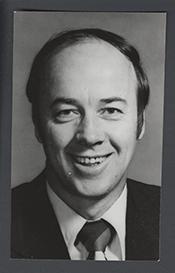
Historical · U.S. House · Indiana · District 2
Floyd Fithian
Former U.S. Representative · Indiana District 2 · 1975–1983 · Democratic
Floyd Fithian represented Indiana's District 2 in the United States House of Representatives (1975–1983) for the Democratic party. The page below collects sourced biographical facts, term history, committee roles, and provenance for Fithian.
Bioguide ID: F000161
Key facts
- Full name
- Floyd Fithian
- State
- Indiana
- District
- District 2
- Party
- Democratic
- House service
- 1975–1983
- First House term
- 1975
- Status
- Left office
- Current term ends
- —
- Born
- 1928
- Bioguide ID
- F000161
- Committee assignments
- —
- Dataset version
- 1.20260605
Biographical narrative
1,042 words · sourced from the Wikipedia REST extract
Floyd J. Fithian was an American educator and politician who served as a Democratic U.S. Representative for Indiana's Second Congressional District from 1975 until 1983. He was part of a cohort known as the "Watergate Babies," a group of newly elected representatives who came to power in the wake of the Watergate scandal, which significantly shifted the political landscape in the United States. Fithian's political career was marked by his commitment to various legislative issues, including civil rights and foreign affairs, as well as his involvement in significant congressional committees.
Early life and career
Floyd James Fithian was born on November 3, 1928, in Vesta, Nebraska. He completed his secondary education at Vesta High School, graduating in 1947. Following high school, he attended Peru State College in Nebraska, where he earned a Bachelor of Arts degree in 1951, becoming the first member of his family to graduate from college. That same year, he enlisted in the United States Navy, where he served until 1955, achieving the rank of lieutenant. Fithian continued his military service in the Navy Reserve, ultimately retiring as a commander in 1971.
While serving in the Navy, Fithian pursued further education at the University of Nebraska, obtaining a Master of Arts degree in 1955. He later earned a Ph.D. in American history from the same institution in 1964. His academic career began with a brief teaching stint at Nebraska Wesleyan University before he moved to Lafayette, Indiana, in 1964 to become an associate professor of history at Purdue University. In addition to his academic responsibilities, he managed a small farm in Tippecanoe County, Indiana.
Fithian's political involvement began in earnest during the 1968 presidential election, when he served as an associate coordinator for Robert Kennedy's campaign in Tippecanoe County. He continued his political engagement by coordinating Birch Bayh's reelection campaign for the U.S. Senate in Indiana. In the 1970 midterm elections, he played a significant role in Philip A. Sprague's campaign against incumbent Republican Earl Landgrebe, serving as the Tippecanoe County coordinator. Although Sprague lost the election, Fithian's efforts marked a notable shift in local Democratic politics, as he became the first Democratic congressional nominee to win Tippecanoe County since the 1930s.
House tenure
Fithian's first successful bid for the U.S. House of Representatives came during the 1974 elections, a period characterized by widespread voter discontent following the Watergate scandal. He ran against Earl Landgrebe, who had been a staunch supporter of President Richard Nixon during the scandal. Fithian capitalized on the backlash against Landgrebe's defense of Nixon, winning the election decisively. His victory marked a significant political shift, as he became the first Democrat to represent Indiana's Second Congressional District since 1932.
During his time in Congress, Fithian was re-elected multiple times, navigating a challenging political landscape. In the 1976 elections, he faced a strong challenge from Republican William Erwin, but managed to secure re-election with a majority of the votes. The following election cycle in 1978 saw Fithian achieving his second-largest margin of victory, aided by the political fallout from the Watergate scandal, which continued to affect Republican candidates. In 1980, despite a national trend favoring Republicans, Fithian successfully retained his seat with an 8% margin of victory.
Throughout his congressional career, Fithian was known for his legislative initiatives and positions on various issues. He introduced a balanced budget constitutional amendment in 1975, although it did not gain significant traction. He also supported the Torrijos–Carter Treaties in 1977, which aimed to transfer control of the Panama Canal to Panama, despite opposition from many constituents in his district. In 1982, he reintroduced the Equal Rights Amendment, which had previously failed to achieve ratification, but this effort also did not succeed.
Fithian's tenure in the House was marked by his involvement in several key committees. He served on the House Small Business Committee, the House Committee on Foreign Affairs, the House Committee on Agriculture, and the House Committee on Government Operations. Notably, he was a member of the House Select Committee on Assassinations, which investigated the assassinations of prominent figures, including Martin Luther King Jr. This role reflected his engagement with significant national issues during a tumultuous period in American history.
Legislative focus and committees
Floyd Fithian's legislative focus during his time in Congress encompassed a range of issues, reflecting both his academic background and his constituents' concerns. His work on the House Small Business Committee underscored his interest in supporting local economies and small business initiatives, which were vital to the constituents of Indiana's Second Congressional District. Fithian's commitment to small businesses was part of a broader Democratic agenda aimed at fostering economic growth and providing support to entrepreneurs.
His involvement in the House Committee on Foreign Affairs highlighted his engagement with international issues, particularly during a time of significant geopolitical change. Fithian's support for the Torrijos–Carter Treaties demonstrated his willingness to take controversial stances, advocating for a diplomatic resolution to the management of the Panama Canal, despite local opposition. This position illustrated his belief in the importance of international cooperation and the need for the United States to adapt its foreign policy in response to changing global dynamics.
Fithian's participation in the House Committee on Agriculture was particularly relevant to his constituents, many of whom were involved in farming and agricultural industries. His work on this committee allowed him to advocate for policies that would benefit local farmers and address the challenges facing the agricultural sector.
Additionally, Fithian's role on the House Committee on Government Operations provided him with a platform to address issues related to government efficiency and accountability. His involvement in the House Select Committee on Assassinations reflected his commitment to investigating significant historical events and ensuring that the truth behind such events was brought to light.
Floyd J. Fithian's congressional career was characterized by his dedication to public service, his engagement with critical legislative issues, and his efforts to represent the interests of his constituents in Indiana. After serving four terms in the House, Fithian's tenure concluded on January 3, 1983, following a period of significant political change and realignment in the United States. His legacy includes his contributions to various legislative initiatives and his role in shaping the political landscape of his district during a transformative era in American history.
Notable legislation
Sponsored and co-sponsored legislation for Floyd Fithian is pending operator curation. The biographical narrative above carries the same provenance trail until per-bill rows are written.
Sources
- [1]https://en.wikipedia.org/wiki/Floyd_FithianWikipedia · retrieved 2026-06-05
Notable quotes
Sourced quotes for Floyd Fithian are pending operator curation. Narrative-scope provenance remains attached below.
Sources
- [1]https://en.wikipedia.org/wiki/Floyd_FithianWikipedia · retrieved 2026-06-05
Key positions
Curated policy positions for Floyd Fithian are pending operator review. The biographical narrative above carries the same provenance trail until per-topic positions are written.
Sources
- [1]https://en.wikipedia.org/wiki/Floyd_FithianWikipedia · retrieved 2026-06-05
Terms served
- 1975–1977U.S. House · Term 1 · Democratic
- 1977–1979U.S. House · Term 2 · Democratic
- 1979–1981U.S. House · Term 3 · Democratic
- 1981–1983U.S. House · Term 4 · Democratic
Sources & provenance
Every attributable claim above carries a per-section [N] marker that resolves to the corresponding URL below. Each entry records the upstream provider, the canonical URL, and the timestamp at which the source was retrieved by the ingest pipeline.
Key facts
- https://bioguide.congress.gov/search/bio/F000161bioguide · retrieved 2026-06-05
- https://www.govtrack.us/congress/members/404116govtrack · retrieved 2026-06-05
Biographical narrative
- https://en.wikipedia.org/wiki/Floyd_Fithianwikipedia · retrieved 2026-06-05
Find your representative
Every U.S. state elects representatives by district. Browse Indiana’s delegation, the full former-representative roster, or explore the role and term length.
Related on The Candidate
- Preceded by Earl LandgrebeEarlier holder of the Indiana District 2 House seat · Republican.Open
- Succeeded by David McIntoshLater holder of the Indiana District 2 House seat · Republican.Open
- Adam Benjamin Jr.Former U.S. Representative · Indiana District 1 · DemocraticOpen
- Alvin HoveyFormer U.S. Representative · Indiana District 1 · RepublicanOpen
- Arthur TaylorFormer U.S. Representative · Indiana District 1 · DemocraticOpen
- Benoni FullerFormer U.S. Representative · Indiana District 1 · DemocraticOpen