
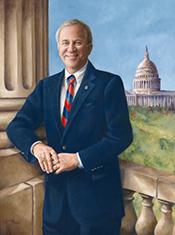
Historical · U.S. House · Indiana · District 4
Steve Buyer
Former U.S. Representative · Indiana District 4 · 1993–2011 · Republican
Steve Buyer represented Indiana's District 4 in the United States House of Representatives (1993–2011) for the Republican party. The page below collects sourced biographical facts, term history, committee roles, and provenance for Buyer.
Bioguide ID: B001203
Key facts
- Full name
- Steve Buyer
- State
- Indiana
- District
- District 4
- Party
- Republican
- House service
- 1993–2011
- First House term
- 1993
- Status
- Left office
- Current term ends
- —
- Born
- 1958
- Bioguide ID
- B001203
- Committee assignments
- —
- Dataset version
- 1.20260605
Biographical narrative
949 words · sourced from the Wikipedia REST extract
Stephen Earle Buyer is a former U.S. Representative who served Indiana's 4th congressional district as a member of the Republican Party from 1993 until 2011. Throughout his congressional career, Buyer was involved in various legislative efforts and held significant positions within the House, including chairing the House Committee on Veterans' Affairs. His political career was marked by a notable involvement in the impeachment trial of President Bill Clinton and a focus on issues related to veterans and military personnel. Following his departure from Congress, Buyer faced legal challenges, including a conviction for insider trading.
Early life and career
Buyer was born on November 26, 1958, in Rensselaer, Indiana. He completed his secondary education at North White High School, where he served as class president before graduating in 1976. He pursued higher education at The Citadel, The Military College of South Carolina, earning a Bachelor of Science degree in business administration and management in 1980. Subsequently, he attended Valparaiso University School of Law, where he received his Juris Doctor in 1984.
Following his legal education, Buyer joined the U.S. Army, serving as an active-duty officer in the Judge Advocate General's (JAG) Corps from 1984 to 1987. During this period, he was involved in legal matters related to military operations, including providing counsel during the Gulf War, where he spent five months on active duty. After his military service, Buyer transitioned to a civilian role as the Indiana state deputy attorney general from 1987 until 1998. He then established his own private law practice before entering politics.
Buyer's political career began in earnest when he was elected to the U.S. House of Representatives in November 1992, representing the 5th congressional district of Indiana. At the time of his election, he was 33 years old and succeeded a three-term Democratic incumbent, Jim Jontz, in a competitive race that saw Buyer win by a narrow margin. His initial victory laid the groundwork for a lengthy congressional career.
House tenure
Steve Buyer served a total of nine terms in the U.S. House of Representatives, with his first term commencing in 1993. His tenure in Congress was characterized by his involvement in various committees and legislative initiatives. He was a member of the House Committee on Veterans' Affairs from the beginning of his congressional career until 2010, eventually becoming the chairman of this committee during the 109th Congress from 2005 to 2007. In this capacity, he played a crucial role in shaping policies and legislation related to veterans' issues.
In addition to his work on veterans' affairs, Buyer served on the House Committee on Energy and Commerce from 2001 to 2010, where he participated in subcommittees focused on communications, technology, and health. He was also a member of the House Armed Services Committee from 1993 to 2001, where he chaired the Subcommittee on Military Personnel during the 105th and 106th Congresses. His committee assignments reflected his commitment to both military and veteran-related issues, as well as broader concerns related to energy and commerce.
Throughout his congressional career, Buyer was involved in various caucuses, including co-founding the National Guard and Reserve Components Caucus. He also participated in the Congressional Automotive Caucus and the Congressional Steel Caucus. Notably, in 1999, he served as one of the House managers during the impeachment trial of President Bill Clinton, a significant event in U.S. political history.
In January 2010, Buyer announced that he would not seek a tenth term in Congress, citing the need to spend more time with his wife, who was suffering from an incurable autoimmune disease. His decision to step away from politics marked the end of a nearly two-decade-long career in the House of Representatives.
Legislative focus and committees
During his time in Congress, Steve Buyer focused on a range of legislative issues, particularly those affecting veterans and military personnel. His leadership as chairman of the House Committee on Veterans' Affairs allowed him to advocate for policies aimed at improving the lives of veterans, addressing their healthcare needs, and ensuring they received the benefits they deserved. His experience as a former military officer informed his understanding of the challenges faced by service members and veterans.
Buyer's legislative record also included a notable stance on term limits, as he supported bringing a Congressional amendment for term limits to a vote during his 1992 campaign. Although the measure received a majority of votes, it did not achieve the two-thirds majority required for passage.
In matters of national security and human rights, Buyer took a controversial position regarding the treatment of detainees. He voted against the Detainee Treatment Act of 2005, which included a no torture amendment proposed by Senator John McCain, arguing that torture was already illegal and that the debate surrounding the amendment was largely performative.
His views on smoking and tobacco regulation also drew attention. In 2009, he made headlines for his comments comparing the health effects of smoking tobacco to smoking dried grass or lettuce, arguing against the Family Smoking Prevention and Tobacco Control Act. This statement highlighted his controversial stance on tobacco regulation and public health.
After leaving Congress, Buyer faced legal challenges, including charges of insider trading related to stock purchases made prior to the acquisition of companies he had knowledge of before the information was public. In 2022, he was arrested and later found guilty in 2023, resulting in a sentence of 22 months in prison. Following his congressional career, he also took on a role with R.J. Reynolds, promoting the use of smokeless tobacco products.
Overall, Steve Buyer's congressional career was marked by significant involvement in veterans' affairs, military issues, and various legislative initiatives, alongside a notable legal and ethical controversy that emerged after his time in office.
Notable legislation
Sponsored and co-sponsored legislation for Steve Buyer is pending operator curation. The biographical narrative above carries the same provenance trail until per-bill rows are written.
Sources
- [1]https://en.wikipedia.org/wiki/Steve_BuyerWikipedia · retrieved 2026-06-05
Notable quotes
Sourced quotes for Steve Buyer are pending operator curation. Narrative-scope provenance remains attached below.
Sources
- [1]https://en.wikipedia.org/wiki/Steve_BuyerWikipedia · retrieved 2026-06-05
Key positions
Curated policy positions for Steve Buyer are pending operator review. The biographical narrative above carries the same provenance trail until per-topic positions are written.
Sources
- [1]https://en.wikipedia.org/wiki/Steve_BuyerWikipedia · retrieved 2026-06-05
Terms served
- 1993–1995U.S. House · Term 1 · Republican
- 1995–1997U.S. House · Term 2 · Republican
- 1997–1999U.S. House · Term 3 · Republican
- 1999–2001U.S. House · Term 4 · Republican
- 2001–2003U.S. House · Term 5 · Republican
- 2003–2005U.S. House · Term 6 · Republican
- 2005–2007U.S. House · Term 7 · Republican
- 2007–2009U.S. House · Term 8 · Republican
- 2009–2011U.S. House · Term 9 · Republican
Sources & provenance
Every attributable claim above carries a per-section [N] marker that resolves to the corresponding URL below. Each entry records the upstream provider, the canonical URL, and the timestamp at which the source was retrieved by the ingest pipeline.
Key facts
- https://bioguide.congress.gov/search/bio/B001203bioguide · retrieved 2026-06-05
- http://stevebuyer.house.govhouse.gov · retrieved 2026-06-05
Biographical narrative
- https://en.wikipedia.org/wiki/Steve_Buyerwikipedia · retrieved 2026-06-05
Find your representative
Every U.S. state elects representatives by district. Browse Indiana’s delegation, the full former-representative roster, or explore the role and term length.
Related on The Candidate
- Preceded by John RoushEarlier holder of the Indiana District 4 House seat · Democratic.Open
- Succeeded by Todd RokitaLater holder of the Indiana District 4 House seat · Republican.Open
- Adam Benjamin Jr.Former U.S. Representative · Indiana District 1 · DemocraticOpen
- Alvin HoveyFormer U.S. Representative · Indiana District 1 · RepublicanOpen
- Arthur TaylorFormer U.S. Representative · Indiana District 1 · DemocraticOpen
- Benoni FullerFormer U.S. Representative · Indiana District 1 · DemocraticOpen