
Historical · U.S. House · Indiana · District 5
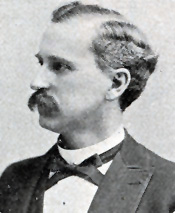
George Faris
Former U.S. Representative · Indiana District 5 · 1895–1901 · Republican
George Faris represented Indiana's District 5 in the United States House of Representatives (1895–1901) for the Republican party. The page below collects sourced biographical facts, term history, committee roles, and provenance for Faris.
Bioguide ID: F000016
Key facts
- Full name
- George Faris
- State
- Indiana
- District
- District 5
- Party
- Republican
- House service
- 1895–1901
- First House term
- 1895
- Status
- Left office
- Current term ends
- —
- Born
- 1854
- Bioguide ID
- F000016
- Committee assignments
- —
- Dataset version
- 1.20260606
Biographical narrative
936 words · sourced from the Wikipedia REST extract
George Faris was an American lawyer and politician who served as a U.S. Representative for Indiana's 5th congressional district from 1895 to 1901. A member of the Republican Party, Faris was elected to three consecutive terms in the House of Representatives, where he held significant roles, including chairmanship of the Committee on Manufactures. After leaving Congress, he returned to his legal practice and continued to be active in the field until his death in 1914.
Early life and career
George Washington Faris was born on June 9, 1854, near Rensselaer, Indiana, to parents James and Margaret Faris. His early education took place in the public school system, which laid the foundation for his future academic pursuits. Faris demonstrated a commitment to education and personal development, culminating in his graduation from Asbury University, located in Greencastle, Indiana, in 1877. This institution, known for its rigorous academic standards, provided Faris with a solid grounding in the liberal arts, which would serve him well in his later career.
Following his graduation, Faris pursued a career in law. He studied the legal profession and was admitted to the bar in the same year he graduated, 1877. This achievement marked the beginning of his legal career, which commenced in Indianapolis, Indiana. Faris's early years as a practicing attorney were characterized by a dedication to his clients and a growing reputation in the legal community. In 1880, he relocated to Terre Haute, Indiana, where he continued to practice law. His move to Terre Haute allowed him to establish deeper roots in the community and expand his professional network.
In addition to his legal work, Faris ventured into politics. In 1884, he ran as a Republican candidate for the position of judge of the circuit court. Although he was not successful in this bid, the experience likely provided him with valuable insights into the political landscape of Indiana and helped him build connections that would later aid his congressional career.
House tenure
George Faris's political career took a significant turn when he was elected to the U.S. House of Representatives. He began his first term on March 4, 1895, as a member of the Fifty-fourth Congress. His election marked the beginning of a notable tenure in the House, during which he served three consecutive terms, concluding with the Fifty-sixth Congress on March 3, 1901. Throughout his time in office, Faris was a member of the Republican Party, which was a dominant political force in Indiana during this period.
During his tenure in Congress, Faris was appointed as the chairman of the Committee on Manufactures for both the Fifty-fifth and Fifty-sixth Congresses. This role placed him at the forefront of legislative discussions related to manufacturing and industry, sectors that were crucial to the economic development of the United States at the time. As chairman, he would have been responsible for overseeing the committee's activities, guiding discussions on relevant legislation, and advocating for policies that supported the manufacturing sector. His leadership in this capacity underscored his commitment to addressing the needs and concerns of his constituents, particularly those involved in manufacturing industries.
Despite his active role in Congress, Faris chose not to seek renomination for a fourth term in 1900. This decision marked the end of his congressional career, as he did not pursue further political office after his final term concluded in March 1901. The reasons behind his decision to step away from the political arena are not detailed in the available records, but it is not uncommon for politicians to transition to other pursuits after serving in elected office.
Legislative focus and committees
Throughout his time in the House of Representatives, George Faris's legislative focus was primarily on issues related to manufacturing and industry. As chairman of the Committee on Manufactures, he played a pivotal role in shaping policies that affected the manufacturing sector, which was a vital component of the American economy during the late 19th and early 20th centuries. The industrial revolution had transformed the landscape of American business, and Faris's work would have involved addressing the challenges and opportunities that arose from this transformation.
In addition to his focus on manufacturing, Faris's legislative activities would have encompassed a range of issues pertinent to his constituents in Indiana's 5th congressional district. While specific details of the legislation he supported or opposed are not provided, it can be inferred that his work would have reflected the interests and needs of his district, which included urban and rural constituents engaged in various sectors of the economy.
Faris's experience as a lawyer likely informed his approach to legislative matters, as he would have been well-versed in legal principles and the intricacies of policy-making. His background in law would have equipped him with the skills necessary to navigate complex legislative processes and advocate effectively for the interests of his constituents.
After concluding his congressional service, Faris returned to his legal practice in Terre Haute, where he continued to engage with the community and contribute to the legal profession. Shortly thereafter, he moved to Washington, D.C., where he maintained his law practice until his death on April 17, 1914. His passing marked the end of a career that had spanned both the legal and political arenas, reflecting a life dedicated to public service and advocacy.
George Faris was interred in Highland Lawn Cemetery in Terre Haute, Indiana, where he is remembered for his contributions to both the legal field and his time in the U.S. House of Representatives. His legacy as a public servant and lawyer continues to be recognized in the historical context of Indiana's political landscape during the late 19th century.
Notable legislation
Sponsored and co-sponsored legislation for George Faris is pending operator curation. The biographical narrative above carries the same provenance trail until per-bill rows are written.
Sources
- [1]https://en.wikipedia.org/wiki/George_W._FarisWikipedia · retrieved 2026-06-06
Notable quotes
Sourced quotes for George Faris are pending operator curation. Narrative-scope provenance remains attached below.
Sources
- [1]https://en.wikipedia.org/wiki/George_W._FarisWikipedia · retrieved 2026-06-06
Key positions
Curated policy positions for George Faris are pending operator review. The biographical narrative above carries the same provenance trail until per-topic positions are written.
Sources
- [1]https://en.wikipedia.org/wiki/George_W._FarisWikipedia · retrieved 2026-06-06
Terms served
- 1895–1897U.S. House · Term 1 · Republican
- 1897–1899U.S. House · Term 2 · Republican
- 1899–1901U.S. House · Term 3 · Republican
Sources & provenance
Every attributable claim above carries a per-section [N] marker that resolves to the corresponding URL below. Each entry records the upstream provider, the canonical URL, and the timestamp at which the source was retrieved by the ingest pipeline.
Key facts
- https://bioguide.congress.gov/search/bio/F000016bioguide · retrieved 2026-06-06
- https://www.govtrack.us/congress/members/403978govtrack · retrieved 2026-06-06
Biographical narrative
- https://en.wikipedia.org/wiki/George_W._Fariswikipedia · retrieved 2026-06-06
Find your representative
Every U.S. state elects representatives by district. Browse Indiana’s delegation, the full former-representative roster, or explore the role and term length.
Related on The Candidate
- Preceded by George CooperEarlier holder of the Indiana District 5 House seat · Democratic.Open
- Succeeded by Elias HollidayLater holder of the Indiana District 5 House seat · Republican.Open
- Adam Benjamin Jr.Former U.S. Representative · Indiana District 1 · DemocraticOpen
- Alvin HoveyFormer U.S. Representative · Indiana District 1 · RepublicanOpen
- Arthur TaylorFormer U.S. Representative · Indiana District 1 · DemocraticOpen
- Benoni FullerFormer U.S. Representative · Indiana District 1 · DemocraticOpen