
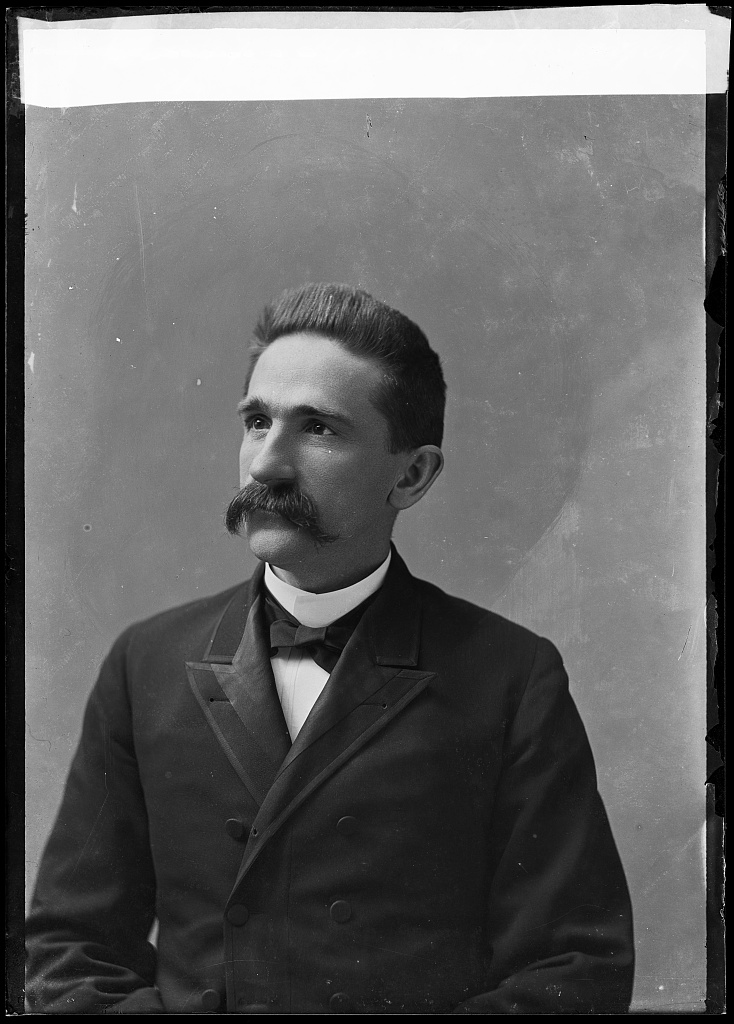
Historical · U.S. House · Indiana · District 5
George Cooper
Former U.S. Representative · Indiana District 5 · 1889–1895 · Democratic
George Cooper represented Indiana's District 5 in the United States House of Representatives (1889–1895) for the Democratic party. The page below collects sourced biographical facts, term history, committee roles, and provenance for Cooper.
Bioguide ID: C000750
Key facts
- Full name
- George Cooper
- State
- Indiana
- District
- District 5
- Party
- Democratic
- House service
- 1889–1895
- First House term
- 1889
- Status
- Left office
- Current term ends
- —
- Born
- 1851
- Bioguide ID
- C000750
- Committee assignments
- —
- Dataset version
- 1.20260606
Biographical narrative
971 words · sourced from the Wikipedia REST extract
George Cooper was an American lawyer and politician who served as a U.S. Representative from Indiana during the late 19th century. A member of the Democratic Party, he held office for three terms in the House of Representatives from 1889 until 1895. His political career was marked by his involvement in local governance and his subsequent election to Congress, where he focused on issues pertinent to his constituents and the broader national landscape of the time.
Early life and career
George William Cooper was born on May 21, 1851, near Columbus, Indiana. His early education took place in local country schools, where he laid the groundwork for his future academic pursuits. Demonstrating a commitment to his education, Cooper attended Indiana University at Bloomington, where he completed both academic and law courses, graduating in 1872. This educational background equipped him with the knowledge and skills necessary for a career in law and public service.
Following his graduation, Cooper was admitted to the bar and began practicing law in Columbus, Indiana. His legal career commenced in a community that would later become central to his political life. In 1872, shortly after beginning his practice, he was appointed as the prosecuting attorney for Columbus, marking the beginning of his public service career. This role allowed him to gain valuable experience in the legal system and establish a reputation within the community.
Cooper's political ambitions grew, and in 1877, he was elected as the mayor of Columbus. His tenure as mayor allowed him to further engage with the issues facing his constituents and to implement policies that would benefit the local population. Following his time as mayor, he served as the city attorney from 1879 to 1883, continuing his involvement in local governance. These positions provided him with a solid foundation in public administration and a deeper understanding of the needs and concerns of the citizens of Columbus.
House tenure
Cooper's political career took a significant turn when he was elected to the United States House of Representatives. He served three consecutive terms, beginning with the Fifty-first Congress, which commenced on March 4, 1889, and concluding with the Fifty-third Congress, which ended on March 3, 1895. As a member of the Democratic Party, Cooper represented Indiana's 5th congressional district during a time of considerable political and social change in the United States.
During his time in Congress, Cooper was involved in various legislative activities and served on several committees. Notably, he was appointed as the chairman of the Committee on Irrigation of Arid Lands during the Fifty-third Congress. This committee was responsible for addressing issues related to water management and irrigation, particularly in the arid regions of the western United States, which were becoming increasingly important as the nation expanded westward. His role as chairman allowed him to influence policy discussions and contribute to legislative efforts aimed at improving agricultural practices and land use in these regions.
Despite his contributions to Congress, Cooper faced challenges in his political career. He sought reelection in 1894 but was unsuccessful in his bid for a fourth term in the Fifty-fourth Congress. This defeat marked the end of his congressional tenure, and he subsequently returned to his legal practice in Columbus, Indiana. His time in Congress, while relatively brief, was characterized by his commitment to addressing the needs of his constituents and contributing to national discussions on important issues.
Legislative focus and committees
Throughout his congressional career, George Cooper's legislative focus was shaped by the pressing issues of his time, particularly those affecting his home state of Indiana and the broader national landscape. As a member of the Democratic Party, he aligned himself with the party's platform, which often emphasized the importance of agrarian interests, economic development, and social reform.
One of Cooper's most notable contributions during his time in Congress was his leadership as chairman of the Committee on Irrigation of Arid Lands. This committee was tasked with examining the challenges associated with water scarcity and irrigation in the western United States. As the nation experienced significant westward expansion, the need for effective water management became increasingly critical for agricultural development and settlement in arid regions. Cooper's role in this committee allowed him to advocate for policies that would facilitate irrigation projects and improve water access for farmers and communities in need.
In addition to his work on irrigation, Cooper's legislative activities likely encompassed a range of issues relevant to his constituents. While specific details about the bills he supported or sponsored are not provided, it can be inferred that his legal background and experience in local governance informed his approach to legislative matters. He would have been attuned to the needs of his constituents, advocating for policies that aligned with their interests and addressing the challenges they faced.
Cooper's tenure in Congress coincided with a period of significant transformation in American society, including industrialization, urbanization, and changes in agricultural practices. As a representative from Indiana, a state with a strong agricultural base, he would have been particularly focused on issues related to farming, land use, and economic development. His efforts in Congress reflected a broader commitment to addressing the needs of his constituents and contributing to the national dialogue on important issues of the day.
After concluding his congressional service in 1895, Cooper returned to his legal practice in Columbus, Indiana. He continued to engage with the community and remained active in local affairs. Cooper's legacy includes his contributions to both local governance and national legislative efforts, as well as his role in shaping policies that impacted the lives of many in his district.
George Cooper passed away on November 27, 1899, in Chicago, Illinois. He was interred in Garland Brook Cemetery in Columbus, Indiana. His life and career illustrate the interconnectedness of local and national politics during a transformative era in American history.
Notable legislation
Sponsored and co-sponsored legislation for George Cooper is pending operator curation. The biographical narrative above carries the same provenance trail until per-bill rows are written.
Sources
- [1]https://en.wikipedia.org/wiki/George_W._CooperWikipedia · retrieved 2026-06-06
Notable quotes
Sourced quotes for George Cooper are pending operator curation. Narrative-scope provenance remains attached below.
Sources
- [1]https://en.wikipedia.org/wiki/George_W._CooperWikipedia · retrieved 2026-06-06
Key positions
Curated policy positions for George Cooper are pending operator review. The biographical narrative above carries the same provenance trail until per-topic positions are written.
Sources
- [1]https://en.wikipedia.org/wiki/George_W._CooperWikipedia · retrieved 2026-06-06
Terms served
- 1889–1891U.S. House · Term 1 · Democratic
- 1891–1893U.S. House · Term 2 · Democratic
- 1893–1895U.S. House · Term 3 · Democratic
Sources & provenance
Every attributable claim above carries a per-section [N] marker that resolves to the corresponding URL below. Each entry records the upstream provider, the canonical URL, and the timestamp at which the source was retrieved by the ingest pipeline.
Key facts
- https://bioguide.congress.gov/search/bio/C000750bioguide · retrieved 2026-06-06
- https://www.govtrack.us/congress/members/402871govtrack · retrieved 2026-06-06
Biographical narrative
- https://en.wikipedia.org/wiki/George_W._Cooperwikipedia · retrieved 2026-06-06
Find your representative
Every U.S. state elects representatives by district. Browse Indiana’s delegation, the full former-representative roster, or explore the role and term length.
Related on The Candidate
- Preceded by Courtland MatsonEarlier holder of the Indiana District 5 House seat · Democratic.Open
- Succeeded by George FarisLater holder of the Indiana District 5 House seat · Republican.Open
- Adam Benjamin Jr.Former U.S. Representative · Indiana District 1 · DemocraticOpen
- Alvin HoveyFormer U.S. Representative · Indiana District 1 · RepublicanOpen
- Arthur TaylorFormer U.S. Representative · Indiana District 1 · DemocraticOpen
- Benoni FullerFormer U.S. Representative · Indiana District 1 · DemocraticOpen