
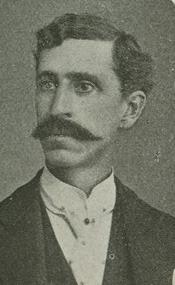
Historical · U.S. House · Indiana · District 6
Henry Johnson
Former U.S. Representative · Indiana District 6 · 1891–1899 · Republican
Henry Johnson represented Indiana's District 6 in the United States House of Representatives (1891–1899) for the Republican party. The page below collects sourced biographical facts, term history, committee roles, and provenance for Johnson.
Bioguide ID: J000138
Key facts
- Full name
- Henry Johnson
- State
- Indiana
- District
- District 6
- Party
- Republican
- House service
- 1891–1899
- First House term
- 1891
- Status
- Left office
- Current term ends
- —
- Born
- 1850
- Bioguide ID
- J000138
- Committee assignments
- —
- Dataset version
- 1.20260606
Biographical narrative
906 words · sourced from the Wikipedia REST extract
Henry Johnson was an American lawyer and politician who served as a U.S. Representative for Indiana's 6th congressional district from 1891 to 1899. A member of the Republican Party during his time in Congress, Johnson's political career spanned four terms, during which he engaged in significant legislative activities and held key committee positions. After concluding his congressional service, he returned to his legal practice and remained active in the field until his later years.
Early life and career
Henry Johnson was born on October 28, 1850, in Cambridge City, Indiana. His early education took place at the Centerville Collegiate Institute, followed by attendance at Earlham College in Richmond, Indiana. These institutions provided him with a foundational education that would later support his career in law and politics. After completing his studies, Johnson pursued a legal career, which began in earnest when he was admitted to the bar in 1872. He commenced his law practice in Centerville, Indiana, where he began to establish his reputation in the legal community.
In 1876, Johnson relocated to Richmond, Indiana, where he continued to practice law. His legal career was marked by a commitment to public service, as he took on the role of prosecuting attorney for Wayne County from 1876 to 1880. This position allowed him to gain valuable experience in the legal system and to engage with the local community on various legal matters. Following his tenure as prosecuting attorney, Johnson's political aspirations led him to serve in the Indiana State Senate from 1887 to 1889. His time in the state legislature provided him with further insights into governance and legislative processes, setting the stage for his future role in the U.S. Congress.
House tenure
Henry Johnson was elected to the U.S. House of Representatives as a Republican in 1891, marking the beginning of his congressional career. He served in the Fifty-second Congress and was subsequently re-elected to three additional terms, concluding his service on March 3, 1899. Throughout his time in Congress, Johnson was involved in various legislative initiatives and discussions that shaped the political landscape of the era.
During his tenure, Johnson was appointed as the chairman of the Committee on Elections No. 2 in both the Fifty-fourth and Fifty-fifth Congresses. This role placed him at the forefront of discussions regarding electoral processes and the integrity of elections, which were critical issues during a period of significant political change in the United States. His leadership in this committee underscored his commitment to ensuring fair electoral practices and addressing any challenges that arose within the electoral system.
One notable moment during Johnson's congressional career occurred in April 1898 when he was one of only six representatives who voted against declaring war on Spain. This decision reflected his stance on foreign policy and the implications of military engagement, highlighting the complexities of political decision-making in the context of international relations. Johnson's vote against the war was significant, as it demonstrated a willingness to diverge from the prevailing sentiments of his colleagues and the public at large.
Despite his active involvement in Congress, Johnson did not seek re-nomination in 1898, marking the end of his congressional career. After completing his four terms, he transitioned away from the political arena, returning to his legal practice and focusing on his professional endeavors.
Legislative focus and committees
Throughout his time in the House of Representatives, Henry Johnson's legislative focus encompassed a range of issues pertinent to his constituents and the nation. As a member of the Republican Party, he aligned with the party's platform, which during the late 19th century included support for economic growth, infrastructure development, and the promotion of American industry. His background as a lawyer likely influenced his perspectives on legal and regulatory matters, shaping his contributions to legislative discussions.
Johnson's role as chairman of the Committee on Elections No. 2 was particularly significant, as it allowed him to influence policies related to electoral integrity and the administration of elections. This committee was responsible for examining election-related issues, including the conduct of elections and the qualifications of candidates. Johnson's leadership in this capacity demonstrated his commitment to upholding democratic principles and ensuring that the electoral process was conducted fairly and transparently.
In addition to his work on the Committee on Elections, Johnson's voting record and participation in debates reflected his positions on various national issues of the time. His opposition to the declaration of war against Spain indicated a cautious approach to foreign intervention, a perspective that resonated with certain segments of the American populace who were wary of military entanglements. This stance also highlighted the diversity of opinions within Congress regarding the United States' role on the global stage.
After concluding his congressional service, Johnson returned to St. Louis, Missouri, in 1899, where he continued to practice law until 1900. He then moved back to Richmond, Indiana, to resume his legal career. Johnson remained active in the legal field for many years, contributing to the profession and engaging with the community until his later years.
Henry Johnson passed away on June 4, 1939, in Richmond, Indiana. His contributions to both the legal profession and public service are remembered as part of his legacy. He was interred in Earlham Cemetery, where he rests alongside other notable figures from the region. Johnson's life and career exemplify the journey of a dedicated public servant who navigated the complexities of law and politics during a transformative period in American history.
Notable legislation
Sponsored and co-sponsored legislation for Henry Johnson is pending operator curation. The biographical narrative above carries the same provenance trail until per-bill rows are written.
Sources
- [1]https://en.wikipedia.org/wiki/Henry_U._JohnsonWikipedia · retrieved 2026-06-06
Notable quotes
Sourced quotes for Henry Johnson are pending operator curation. Narrative-scope provenance remains attached below.
Sources
- [1]https://en.wikipedia.org/wiki/Henry_U._JohnsonWikipedia · retrieved 2026-06-06
Key positions
Curated policy positions for Henry Johnson are pending operator review. The biographical narrative above carries the same provenance trail until per-topic positions are written.
Sources
- [1]https://en.wikipedia.org/wiki/Henry_U._JohnsonWikipedia · retrieved 2026-06-06
Terms served
- 1891–1893U.S. House · Term 1 · Republican
- 1893–1895U.S. House · Term 2 · Republican
- 1895–1897U.S. House · Term 3 · Republican
- 1897–1899U.S. House · Term 4 · Republican
Sources & provenance
Every attributable claim above carries a per-section [N] marker that resolves to the corresponding URL below. Each entry records the upstream provider, the canonical URL, and the timestamp at which the source was retrieved by the ingest pipeline.
Key facts
- https://bioguide.congress.gov/search/bio/J000138bioguide · retrieved 2026-06-06
- https://www.govtrack.us/congress/members/406037govtrack · retrieved 2026-06-06
Biographical narrative
- https://en.wikipedia.org/wiki/Henry_U._Johnsonwikipedia · retrieved 2026-06-06
Find your representative
Every U.S. state elects representatives by district. Browse Indiana’s delegation, the full former-representative roster, or explore the role and term length.
Related on The Candidate
- Preceded by Thomas BrowneEarlier holder of the Indiana District 6 House seat · Republican.Open
- Succeeded by William BarnardLater holder of the Indiana District 6 House seat · Republican.Open
- Adam Benjamin Jr.Former U.S. Representative · Indiana District 1 · DemocraticOpen
- Alvin HoveyFormer U.S. Representative · Indiana District 1 · RepublicanOpen
- Arthur TaylorFormer U.S. Representative · Indiana District 1 · DemocraticOpen
- Benoni FullerFormer U.S. Representative · Indiana District 1 · DemocraticOpen