
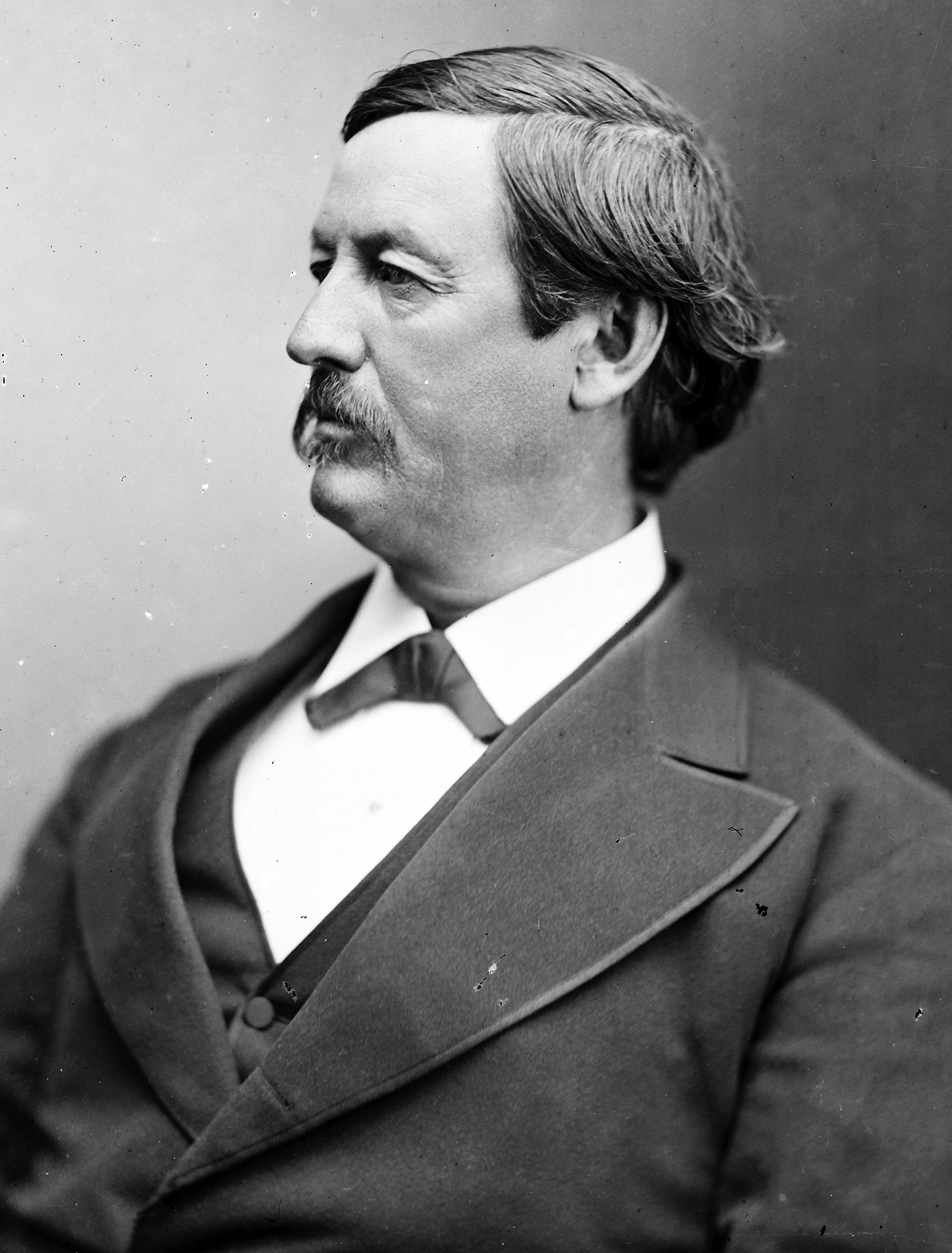
Historical · U.S. House · Indiana · District 6
Thomas Browne
Former U.S. Representative · Indiana District 6 · 1877–1891 · Republican
Thomas Browne represented Indiana's District 6 in the United States House of Representatives (1877–1891) for the Republican party. The page below collects sourced biographical facts, term history, committee roles, and provenance for Browne.
Bioguide ID: B000958
Key facts
- Full name
- Thomas Browne
- State
- Indiana
- District
- District 6
- Party
- Republican
- House service
- 1877–1891
- First House term
- 1877
- Status
- Left office
- Current term ends
- —
- Born
- 1829
- Bioguide ID
- B000958
- Committee assignments
- —
- Dataset version
- 1.20260606
Biographical narrative
998 words · sourced from the Wikipedia REST extract
Thomas Browne was an American attorney, Civil War veteran, and politician who served as a U.S. Representative for Indiana's 5th and 6th congressional districts from 1877 until 1891. A member of the Republican Party, Browne was elected to Congress seven times during his political career, which spanned the late 19th century. His contributions included leadership roles on various congressional committees, particularly those focused on veterans' affairs and legislative revisions.
Early life and career
Thomas Browne was born on April 19, 1829, in New Paris, Ohio. He faced personal tragedy early in life with the death of his mother in 1843. Following this loss, he moved to Indiana in January 1844, where he pursued his education in common schools. His early career began with an apprenticeship under Ralph M. Pomeroy in Spartanburg, which laid the groundwork for his future legal career. In 1848, he relocated to Winchester, Indiana, to further his studies in law.
Browne was admitted to the bar in 1849 and began practicing law in Winchester. His legal career quickly progressed, and in 1855, he was elected as the prosecuting attorney for the thirteenth judicial circuit. He was successful in securing reelection in 1857 and again in 1859, demonstrating his growing influence within the legal and political communities. In 1861, he was appointed secretary of the Indiana Senate, a role he held until 1863 when he became a member of the Senate.
Browne's life took a significant turn during the Civil War. He played a crucial role in organizing the 7th Indiana Cavalry Regiment for the Union Army, where he served as captain of Company B starting on August 28, 1863. His military career advanced rapidly; he was commissioned as a lieutenant colonel on October 1, 1863, and later promoted to colonel on October 10, 1865. He was also brevetted a brigadier general effective March 13, 1865, in recognition of his service. After the war, Browne mustered out of the Army on February 18, 1866, returning to civilian life with a distinguished military record.
Following his military service, Browne continued his legal and political career. He was appointed as the United States Attorney for the District of Indiana in April 1869, a position he held until his resignation in August 1872. In the same year, he sought the Republican nomination for governor of Indiana, competing against Benjamin Harrison. Although he secured the nomination, he was ultimately defeated in the general election by the Democratic candidate, Thomas A. Hendricks. Browne remained active in the Republican Party, serving as a delegate to the 1876 Republican National Convention.
House tenure
Browne's congressional career began when he was elected as a Republican to the U.S. House of Representatives, where he served from March 4, 1877, until March 3, 1891. Throughout his tenure, he represented Indiana's 5th and 6th congressional districts, reflecting the changing political landscape of the state during that period. Over the course of his seven terms in office, Browne became known for his commitment to various legislative issues, particularly those affecting veterans and legal matters.
During his time in Congress, Browne held significant leadership roles, including serving as the chairman of the Committee on Invalid Pensions during the Forty-seventh Congress. This committee was responsible for overseeing legislation related to pensions for veterans, a critical issue following the Civil War. Browne's leadership in this area underscored his dedication to supporting those who had served in the military.
In addition to his work on veterans' issues, Browne also chaired the Committee on Revision of the Laws during the Fifty-first Congress. This committee's responsibilities included reviewing and revising existing laws to ensure they were up-to-date and effective. Browne's involvement in these committees highlighted his focus on legal reform and the welfare of veterans, which were significant concerns during his time in office.
Browne's political career in the House concluded when he chose not to seek renomination in 1890. His decision marked the end of a lengthy and impactful tenure in Congress, during which he contributed to various legislative initiatives and represented the interests of his constituents in Indiana.
Legislative focus and committees
Throughout his time in the U.S. House of Representatives, Thomas Browne's legislative focus was primarily on issues related to veterans and legal reform. His role as chairman of the Committee on Invalid Pensions allowed him to advocate for the rights and benefits of veterans, a pressing concern in the aftermath of the Civil War. This committee was instrumental in shaping policies that provided financial support and assistance to those who had served in the military, reflecting Browne's commitment to their welfare.
In addition to his work on veterans' affairs, Browne's chairmanship of the Committee on Revision of the Laws demonstrated his interest in ensuring that the legal framework governing the nation was both effective and relevant. This committee's work involved scrutinizing existing laws and proposing necessary revisions, a task that required a deep understanding of legal principles and legislative processes. Browne's contributions in this area were significant, as they aimed to enhance the efficiency and clarity of the legal system.
Browne's legislative efforts were characterized by a focus on practical solutions to the challenges faced by his constituents and the nation as a whole. His background as an attorney and his experience in public service provided him with the expertise needed to navigate complex legal and political issues. His involvement in key committees allowed him to influence legislation that had lasting impacts on veterans and the legal landscape of the United States.
After serving seven terms in Congress, Browne's political career came to a close when he chose not to run for reelection in 1890. He returned to Indiana, where he continued to be involved in his community until his death on July 17, 1891. His legacy as a public servant, military leader, and advocate for veterans remains a part of Indiana's historical narrative. Browne was interred in Fountain Park Cemetery in Winchester, Indiana, marking the end of a life dedicated to public service and legal advocacy.
Notable legislation
Sponsored and co-sponsored legislation for Thomas Browne is pending operator curation. The biographical narrative above carries the same provenance trail until per-bill rows are written.
Sources
- [1]https://en.wikipedia.org/wiki/Thomas_M._BrowneWikipedia · retrieved 2026-06-06
Notable quotes
Sourced quotes for Thomas Browne are pending operator curation. Narrative-scope provenance remains attached below.
Sources
- [1]https://en.wikipedia.org/wiki/Thomas_M._BrowneWikipedia · retrieved 2026-06-06
Key positions
Curated policy positions for Thomas Browne are pending operator review. The biographical narrative above carries the same provenance trail until per-topic positions are written.
Sources
- [1]https://en.wikipedia.org/wiki/Thomas_M._BrowneWikipedia · retrieved 2026-06-06
Terms served
- 1877–1879U.S. House · Term 1 · Republican
- 1879–1881U.S. House · Term 2 · Republican
- 1881–1883U.S. House · Term 3 · Republican
- 1883–1885U.S. House · Term 4 · Republican
- 1885–1887U.S. House · Term 5 · Republican
- 1887–1889U.S. House · Term 6 · Republican
- 1889–1891U.S. House · Term 7 · Republican
Sources & provenance
Every attributable claim above carries a per-section [N] marker that resolves to the corresponding URL below. Each entry records the upstream provider, the canonical URL, and the timestamp at which the source was retrieved by the ingest pipeline.
Key facts
- https://bioguide.congress.gov/search/bio/B000958bioguide · retrieved 2026-06-06
- https://www.govtrack.us/congress/members/401910govtrack · retrieved 2026-06-06
Biographical narrative
- https://en.wikipedia.org/wiki/Thomas_M._Brownewikipedia · retrieved 2026-06-06
Find your representative
Every U.S. state elects representatives by district. Browse Indiana’s delegation, the full former-representative roster, or explore the role and term length.
Related on The Candidate
- Preceded by Ebenezer DumontEarlier holder of the Indiana District 6 House seat · Republican.Open
- Succeeded by Henry JohnsonLater holder of the Indiana District 6 House seat · Republican.Open
- Adam Benjamin Jr.Former U.S. Representative · Indiana District 1 · DemocraticOpen
- Alvin HoveyFormer U.S. Representative · Indiana District 1 · RepublicanOpen
- Arthur TaylorFormer U.S. Representative · Indiana District 1 · DemocraticOpen
- Benoni FullerFormer U.S. Representative · Indiana District 1 · DemocraticOpen