
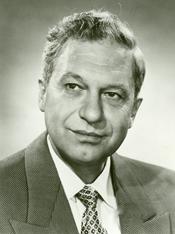
Historical · U.S. House · Indiana · District 6
William Bray
Former U.S. Representative · Indiana District 6 · 1951–1975 · Republican
William Bray represented Indiana's District 6 in the United States House of Representatives (1951–1975) for the Republican party. The page below collects sourced biographical facts, term history, committee roles, and provenance for Bray.
Bioguide ID: B000778
Key facts
- Full name
- William Bray
- State
- Indiana
- District
- District 6
- Party
- Republican
- House service
- 1951–1975
- First House term
- 1951
- Status
- Left office
- Current term ends
- —
- Born
- 1903
- Bioguide ID
- B000778
- Committee assignments
- —
- Dataset version
- 1.20260605
Biographical narrative
924 words · sourced from the Wikipedia REST extract
William G. Bray was an American lawyer and politician who served as a Republican member of the United States House of Representatives from Indiana for twelve consecutive terms, spanning from 1951 until 1975. A veteran of World War II, Bray was known for his strong advocacy of national defense and fiscal conservatism during his time in Congress. His political career was marked by a commitment to veterans' issues and a staunch opposition to communism, reflecting the broader sentiments of the Cold War era.
Early life and career
William Gilmer Bray was born on June 17, 1903, in Mooresville, Indiana. He grew up in a working-class family, with his father employed by the railroad. This upbringing instilled in him values of discipline and perseverance, which would later influence his professional and political endeavors. Bray attended Mooresville High School, where he distinguished himself academically and athletically, particularly in basketball.
Following high school, Bray pursued higher education at Indiana University. He financed his studies through various part-time jobs, including janitorial work. He earned a bachelor's degree and subsequently obtained his Juris Doctor (J.D.) from the Indiana University School of Law in 1927. After completing his education, Bray returned to Mooresville to establish a law practice. His legal acumen and growing reputation in the community led to his election as the prosecutor for Morgan County, Indiana.
On August 16, 1930, Bray married Esther Felicile Debra, marking the beginning of a personal life that would accompany his professional journey.
House tenure
Bray's military service began when he entered active duty with the U.S. Army in June 1941, shortly before the United States entered World War II. He was assigned to Company A of the 193rd Tank Battalion at Fort Benning, Georgia, where he earned the nickname "Wild Bill" for his leadership during training exercises. Following the attack on Pearl Harbor, Bray's battalion was among the first armored units deployed to the Pacific theater. He played a significant role in the amphibious assault on Kwajalein Atoll in 1944, where he commanded the 767th Tank Battalion. His leadership during this operation earned him the Silver Star for bravery.
After the war, Bray returned to Indiana and resumed his law practice while becoming involved in local Republican politics. In 1950, he was encouraged by party leaders and veterans' groups to run for Congress. He successfully won election to the U.S. House of Representatives from Indiana's 7th Congressional District, taking office in January 1951. Due to redistricting, he later represented Indiana's 6th District and was re-elected nine times, serving a total of ten consecutive terms until he was defeated in 1974.
During his time in Congress, Bray was a member of the House Armed Services Committee, where he became known for his strong support of national defense initiatives, particularly during the Korean and Vietnam Wars. He was a vocal opponent of communism and government overreach, advocating for policies that he believed would strengthen the U.S. military and protect personal liberties. Bray consistently warned against excessive federal spending and bureaucratic expansion, positioning himself as a fiscal conservative.
In 1964, Bray sought to expand his political influence by running for governor of Indiana. He campaigned on a platform that emphasized limited government, law and order, and economic conservatism. Despite his military background and recognition within the Republican Party, he was defeated in the primary by Lieutenant Governor Richard O. Ristine. After this setback, Bray returned to Congress, where he continued to serve until his defeat in the 1974 election by Democrat David W. Evans.
Legislative focus and committees
Throughout his congressional tenure, Bray's legislative focus was heavily influenced by his experiences as a World War II veteran and his commitment to national defense. He was particularly active in discussions surrounding military readiness and veterans' benefits, reflecting his belief in the importance of supporting those who served in the armed forces. His work on the House Armed Services Committee allowed him to advocate for policies that aimed to enhance U.S. military capabilities and ensure that veterans received the benefits they deserved.
Bray's opposition to communism was a defining aspect of his political identity. He viewed the Cold War as a critical period requiring strong defense appropriations and a vigilant stance against perceived Soviet threats. His legislative efforts included supporting measures that aimed to bolster the U.S. military's readiness and capabilities, as well as promoting initiatives that limited federal interference in state and local affairs.
In addition to his focus on defense and fiscal conservatism, Bray was involved in various initiatives aimed at improving the lives of veterans. His advocacy for veterans' benefits included efforts to enhance healthcare services and support programs for those who had served in the military. Bray's commitment to these issues resonated with many constituents, contributing to his long tenure in Congress.
After leaving Congress in 1975, Bray returned to his law practice in Martinsville, Indiana. He remained active in civic and veterans' affairs, reflecting his enduring commitment to the community and the issues he championed during his political career. In recognition of his service, President Gerald R. Ford appointed him to the American Battle Monuments Commission, where he served from 1975 to 1978.
Bray passed away on June 4, 1979, at his home in Martinsville, Indiana. He was interred at White Lick Cemetery in Mooresville. In honor of his contributions, William G. Bray Commandery No. 65 of the Masonic-related Knights Templar of Indiana was chartered in 1993 in his memory. His legacy as a dedicated public servant and advocate for veterans continues to be recognized in Indiana and beyond.
Notable legislation
Sponsored and co-sponsored legislation for William Bray is pending operator curation. The biographical narrative above carries the same provenance trail until per-bill rows are written.
Sources
- [1]https://en.wikipedia.org/wiki/William_G._BrayWikipedia · retrieved 2026-06-05
Notable quotes
Sourced quotes for William Bray are pending operator curation. Narrative-scope provenance remains attached below.
Sources
- [1]https://en.wikipedia.org/wiki/William_G._BrayWikipedia · retrieved 2026-06-05
Key positions
Curated policy positions for William Bray are pending operator review. The biographical narrative above carries the same provenance trail until per-topic positions are written.
Sources
- [1]https://en.wikipedia.org/wiki/William_G._BrayWikipedia · retrieved 2026-06-05
Terms served
- 1951–1953U.S. House · Term 1 · Republican
- 1953–1955U.S. House · Term 2 · Republican
- 1955–1957U.S. House · Term 3 · Republican
- 1957–1959U.S. House · Term 4 · Republican
- 1959–1961U.S. House · Term 5 · Republican
- 1961–1963U.S. House · Term 6 · Republican
- 1963–1965U.S. House · Term 7 · Republican
- 1965–1967U.S. House · Term 8 · Republican
- 1967–1969U.S. House · Term 9 · Republican
- 1969–1971U.S. House · Term 10 · Republican
- 1971–1973U.S. House · Term 11 · Republican
- 1973–1975U.S. House · Term 12 · Republican
Sources & provenance
Every attributable claim above carries a per-section [N] marker that resolves to the corresponding URL below. Each entry records the upstream provider, the canonical URL, and the timestamp at which the source was retrieved by the ingest pipeline.
Key facts
- https://bioguide.congress.gov/search/bio/B000778bioguide · retrieved 2026-06-05
- https://www.govtrack.us/congress/members/401737govtrack · retrieved 2026-06-05
Biographical narrative
- https://en.wikipedia.org/wiki/William_G._Braywikipedia · retrieved 2026-06-05
Find your representative
Every U.S. state elects representatives by district. Browse Indiana’s delegation, the full former-representative roster, or explore the role and term length.
Related on The Candidate
- Preceded by Noble JohnsonEarlier holder of the Indiana District 6 House seat · Republican.Open
- Succeeded by David EvansLater holder of the Indiana District 6 House seat · Democratic.Open
- Adam Benjamin Jr.Former U.S. Representative · Indiana District 1 · DemocraticOpen
- Alvin HoveyFormer U.S. Representative · Indiana District 1 · RepublicanOpen
- Arthur TaylorFormer U.S. Representative · Indiana District 1 · DemocraticOpen
- Benoni FullerFormer U.S. Representative · Indiana District 1 · DemocraticOpen