
Historical · U.S. House · Indiana · District 6
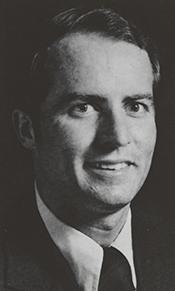
David Evans
Former U.S. Representative · Indiana District 6 · 1975–1983 · Democratic
David Evans represented Indiana's District 6 in the United States House of Representatives (1975–1983) for the Democratic party. The page below collects sourced biographical facts, term history, committee roles, and provenance for Evans.
Bioguide ID: E000239
Key facts
- Full name
- David Evans
- State
- Indiana
- District
- District 6
- Party
- Democratic
- House service
- 1975–1983
- First House term
- 1975
- Status
- Left office
- Current term ends
- —
- Born
- 1946
- Bioguide ID
- E000239
- Committee assignments
- —
- Dataset version
- 1.20260605
Biographical narrative
867 words · sourced from the Wikipedia REST extract
David W. Evans is a former American educator and politician who served as a U.S. Representative for Indiana's 6th congressional district from 1975 until 1983. A member of the Democratic Party, Evans was elected to four consecutive terms in the House of Representatives. His tenure was marked by significant political changes in Indiana, particularly following the 1980 census, which led to a redistricting that ultimately impacted his political career.
Early life and career
David Walter Evans was born on August 17, 1946, in Lafayette, Indiana. He grew up in Shoals, Indiana, where he attended public schools. His education continued at Indiana University, where he graduated in 1967. During his time at the university, he also engaged in postgraduate studies from 1967 to 1969, furthering his academic credentials. Following his time at Indiana University, Evans took on a teaching role at Butler University, where he worked from 1969 to 1971.
Between 1968 and 1974, Evans dedicated himself to education as a teacher of social studies and science. His experience in the classroom provided him with insights into the educational needs and challenges faced by students and educators alike. This background in education likely influenced his later legislative priorities and his approach to public service. In addition to his teaching career, Evans was active in the political sphere, serving as a delegate to the Democratic National Mid-term Convention in 1974. This involvement marked the beginning of his transition from education to a more active role in politics.
House tenure
Evans was elected to the U.S. House of Representatives as a Democrat in 1974, beginning his first term on January 3, 1975. He was re-elected to three subsequent terms, serving in total for eight years until January 3, 1983. During his time in Congress, Evans participated in various legislative activities and contributed to discussions on a range of issues pertinent to his constituents and the nation.
His tenure coincided with a period of significant political and social change in the United States, including the aftermath of the Watergate scandal and the subsequent shift in political dynamics. Evans represented Indiana's 6th congressional district, a position that allowed him to advocate for the interests of his constituents at the federal level. However, following the 1980 census, the political landscape in Indiana shifted dramatically. The Republican-controlled Indiana General Assembly undertook a major redistricting effort that significantly altered the boundaries of Evans' district.
The redistricting process transformed the 6th District into a heavily Republican area, particularly centered around the affluent northern suburbs of Indianapolis. This change was perceived by many as a strategic move to favor Republican candidates, particularly State Senator Dan Burton, who was positioned to contest the newly drawn district. As a result of the redistricting, Evans found his home relocated into the neighboring 10th District, which was represented by fellow Democrat Andy Jacobs. Faced with the prospect of running in a district that had become increasingly unfavorable to his party, Evans opted to challenge Jacobs in the Democratic primary for the 10th District. However, he was defeated in this primary contest, marking the end of his congressional career.
Following his departure from Congress, Evans transitioned into a new phase of his professional life. He relocated to McLean, Virginia, where he took on the role of a legislative consultant in Washington, D.C. This position allowed him to continue engaging with the political process and to utilize his experience and knowledge gained during his time in Congress.
Legislative focus and committees
During his time in the House of Representatives, David Evans was involved in a variety of legislative initiatives and discussions. While specific details regarding the bills he sponsored or the committees he served on are not provided, it is common for members of Congress to focus on issues relevant to their constituents and their personal interests. Given Evans' background in education, it is reasonable to infer that he may have been involved in educational policy discussions and initiatives aimed at improving the educational system.
Members of Congress typically serve on committees that align with their legislative priorities and the needs of their districts. These committees play a crucial role in shaping legislation, conducting hearings, and overseeing federal agencies. Evans' experience as an educator likely informed his perspectives on education-related issues, and he may have contributed to discussions on funding, educational standards, and policies affecting schools and teachers.
In addition to education, Evans may have engaged in legislative matters concerning social issues, economic development, and community welfare, reflecting the diverse needs of his constituents in Indiana. The political climate of the late 1970s and early 1980s, characterized by economic challenges and social change, would have influenced the legislative agenda during his tenure.
Overall, David Evans' time in the U.S. House of Representatives was marked by his commitment to public service and his efforts to represent the interests of his constituents. His background in education and his experience as a delegate to the Democratic National Mid-term Convention provided him with a foundation for his legislative work. Although his congressional career came to an end following redistricting and electoral defeat, Evans' contributions during his time in office reflect the complexities and challenges faced by politicians navigating the evolving landscape of American politics.
Notable legislation
Sponsored and co-sponsored legislation for David Evans is pending operator curation. The biographical narrative above carries the same provenance trail until per-bill rows are written.
Sources
- [1]https://en.wikipedia.org/wiki/David_W._EvansWikipedia · retrieved 2026-06-05
Notable quotes
Sourced quotes for David Evans are pending operator curation. Narrative-scope provenance remains attached below.
Sources
- [1]https://en.wikipedia.org/wiki/David_W._EvansWikipedia · retrieved 2026-06-05
Key positions
Curated policy positions for David Evans are pending operator review. The biographical narrative above carries the same provenance trail until per-topic positions are written.
Sources
- [1]https://en.wikipedia.org/wiki/David_W._EvansWikipedia · retrieved 2026-06-05
Terms served
- 1975–1977U.S. House · Term 1 · Democratic
- 1977–1979U.S. House · Term 2 · Democratic
- 1979–1981U.S. House · Term 3 · Democratic
- 1981–1983U.S. House · Term 4 · Democratic
Sources & provenance
Every attributable claim above carries a per-section [N] marker that resolves to the corresponding URL below. Each entry records the upstream provider, the canonical URL, and the timestamp at which the source was retrieved by the ingest pipeline.
Key facts
- https://bioguide.congress.gov/search/bio/E000239bioguide · retrieved 2026-06-05
- https://www.govtrack.us/congress/members/403923govtrack · retrieved 2026-06-05
Biographical narrative
- https://en.wikipedia.org/wiki/David_W._Evanswikipedia · retrieved 2026-06-05
Find your representative
Every U.S. state elects representatives by district. Browse Indiana’s delegation, the full former-representative roster, or explore the role and term length.
Related on The Candidate
- Preceded by William BrayEarlier holder of the Indiana District 6 House seat · Republican.Open
- Succeeded by Mike PenceLater holder of the Indiana District 6 House seat · Republican.Open
- Adam Benjamin Jr.Former U.S. Representative · Indiana District 1 · DemocraticOpen
- Alvin HoveyFormer U.S. Representative · Indiana District 1 · RepublicanOpen
- Arthur TaylorFormer U.S. Representative · Indiana District 1 · DemocraticOpen
- Benoni FullerFormer U.S. Representative · Indiana District 1 · DemocraticOpen