
Historical · U.S. House · Indiana · District 7
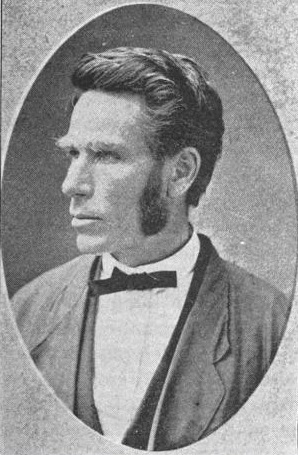
Gilbert De La Matyr
Former U.S. Representative · Indiana District 7 · 1879–1881 · National Greenbacker
Gilbert De La Matyr represented Indiana's District 7 in the United States House of Representatives (1879–1881) for the National Greenbacker party. The page below collects sourced biographical facts, term history, committee roles, and provenance for Matyr.
Bioguide ID: D000204
Key facts
- Full name
- Gilbert De La Matyr
- State
- Indiana
- District
- District 7
- Party
- National Greenbacker
- House service
- 1879–1881
- First House term
- 1879
- Status
- Left office
- Current term ends
- —
- Born
- 1825
- Bioguide ID
- D000204
- Committee assignments
- —
- Dataset version
- 1.20260606
Biographical narrative
829 words · sourced from the Wikipedia REST extract
Gilbert De La Matyr was an American cleric and politician who served as a U.S. Representative for Indiana's 7th congressional district from 1879 to 1881. A member of the National Greenbacker Party, he had a diverse career that spanned religious service and political engagement. Born in New York, he later moved to Indiana, where he became involved in both ministry and politics, reflecting the interconnected nature of his life’s work.
Early life and career
Gilbert De La Matyr was born on July 8, 1825, in Pharsalia, New York. His early life and education were rooted in the Methodist Episcopal Church, which played a significant role in shaping his future endeavors. In 1854, he graduated from a theological course offered by the church, marking the beginning of his long-standing commitment to religious service. Following his graduation, he became an itinerant elder, a role that involved traveling to various congregations to provide spiritual guidance and leadership.
His involvement in the church extended beyond local congregations; he participated in the General Conference of the Methodist Episcopal Church in 1868, a significant gathering that addressed various issues within the denomination. Additionally, he served as a Presiding Elder for a term, overseeing multiple congregations and contributing to the administrative functions of the church.
During the American Civil War, De La Matyr took on a notable role by helping to enlist soldiers for the 8th New York Heavy Artillery Regiment in 1862. His commitment to the war effort was further demonstrated through his service as the regiment's chaplain for three years, where he provided spiritual support to soldiers during a tumultuous period in American history.
After the war, De La Matyr transitioned to a political career. In 1867, he ran as a Republican candidate for the position of New York State Prison Inspector but was unsuccessful in his bid, losing to Democrat Solomon Scheu. Despite this setback, he continued to pursue opportunities in both ministry and politics.
Eventually, De La Matyr relocated to Indianapolis, Indiana, where he continued his ministerial duties. His move to Indiana marked a significant shift in his career, as he became more deeply involved in local politics and community affairs.
House tenure
Gilbert De La Matyr's political career culminated in his election to the U.S. House of Representatives. He was elected as a National Greenback candidate to represent Indiana's 7th congressional district, beginning his term on March 4, 1879. His tenure in the House lasted until March 3, 1881. As a member of the National Greenbacker Party, which advocated for the issuance of paper currency not backed by gold or silver, De La Matyr participated in the broader economic discussions of the time, which were centered around monetary policy and economic reform.
During his time in Congress, De La Matyr engaged with various legislative matters, although specific details regarding his contributions or the bills he supported are not documented in the available records. His service in the House was part of a larger movement during the late 19th century that sought to address the economic challenges faced by many Americans, particularly in the wake of the Civil War and the subsequent economic upheavals.
After completing his term in Congress, De La Matyr did not seek re-election and concluded his time in the House on March 3, 1881. Following his departure from Congress, he moved to Denver, Colorado, where he continued his work in the ministry.
Legislative focus and committees
While specific details regarding Gilbert De La Matyr's legislative focus and committee assignments during his time in the House of Representatives are not extensively documented, his affiliation with the National Greenbacker Party indicates a likely interest in issues related to monetary policy and economic reform. The National Greenbackers were known for advocating for the expansion of the money supply and addressing the economic difficulties faced by farmers and laborers during the post-Civil War era.
De La Matyr's background as a cleric and his experiences during the Civil War likely influenced his perspectives on social and economic issues. His role as a chaplain during the war may have provided him with insights into the struggles of soldiers and their families, which could have informed his legislative priorities.
After his congressional tenure, De La Matyr returned to his religious roots, engaging in preaching and church leadership. He became the pastor of Evans Chapel in Denver in 1886, where he played a significant role in the organization and construction of an expanded sanctuary known as Grace Church. His commitment to the church continued, and in 1889, he took on the role of Pastor at the First Methodist Episcopal Church in Akron, Ohio.
Gilbert De La Matyr passed away on May 17, 1892, in Akron, Ohio. His life and career reflect a blend of religious devotion and political engagement, illustrating the interconnectedness of faith and public service during a transformative period in American history. His contributions to both the church and the political landscape of his time remain a part of his legacy.
Notable legislation
Sponsored and co-sponsored legislation for Gilbert De La Matyr is pending operator curation. The biographical narrative above carries the same provenance trail until per-bill rows are written.
Sources
- [1]https://en.wikipedia.org/wiki/Gilbert_De_La_MatyrWikipedia · retrieved 2026-06-06
Notable quotes
Sourced quotes for Gilbert De La Matyr are pending operator curation. Narrative-scope provenance remains attached below.
Sources
- [1]https://en.wikipedia.org/wiki/Gilbert_De_La_MatyrWikipedia · retrieved 2026-06-06
Key positions
Curated policy positions for Gilbert De La Matyr are pending operator review. The biographical narrative above carries the same provenance trail until per-topic positions are written.
Sources
- [1]https://en.wikipedia.org/wiki/Gilbert_De_La_MatyrWikipedia · retrieved 2026-06-06
Terms served
- 1879–1881U.S. House · Term 1 · National Greenbacker
Sources & provenance
Every attributable claim above carries a per-section [N] marker that resolves to the corresponding URL below. Each entry records the upstream provider, the canonical URL, and the timestamp at which the source was retrieved by the ingest pipeline.
Key facts
- https://bioguide.congress.gov/search/bio/D000204bioguide · retrieved 2026-06-06
- https://www.govtrack.us/congress/members/403309govtrack · retrieved 2026-06-06
Biographical narrative
- https://en.wikipedia.org/wiki/Gilbert_De_La_Matyrwikipedia · retrieved 2026-06-06
Find your representative
Every U.S. state elects representatives by district. Browse Indiana’s delegation, the full former-representative roster, or explore the role and term length.
Related on The Candidate
- Preceded by John HannaEarlier holder of the Indiana District 7 House seat · Republican.Open
- Succeeded by Stanton PeelleLater holder of the Indiana District 7 House seat · Republican.Open
- Adam Benjamin Jr.Former U.S. Representative · Indiana District 1 · DemocraticOpen
- Alvin HoveyFormer U.S. Representative · Indiana District 1 · RepublicanOpen
- Arthur TaylorFormer U.S. Representative · Indiana District 1 · DemocraticOpen
- Benoni FullerFormer U.S. Representative · Indiana District 1 · DemocraticOpen