
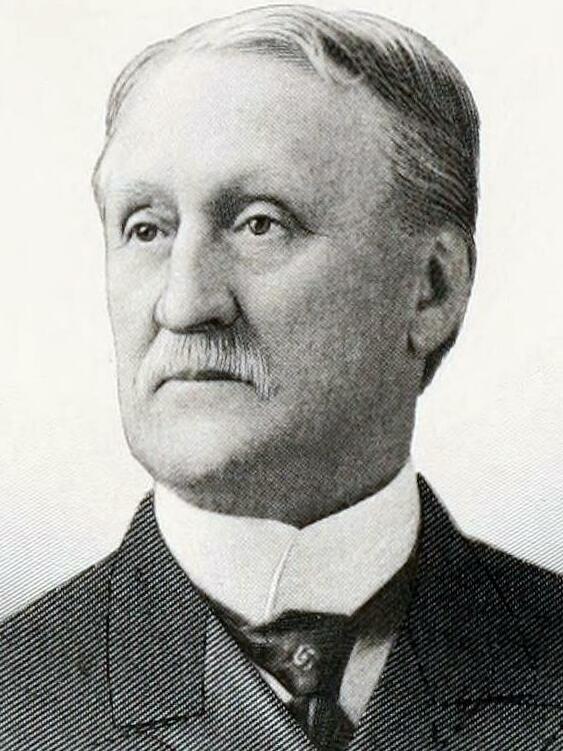
Historical · U.S. House · Indiana · District 7
Stanton Peelle
Former U.S. Representative · Indiana District 7 · 1881–1885 · Republican
Stanton Peelle represented Indiana's District 7 in the United States House of Representatives (1881–1885) for the Republican party. The page below collects sourced biographical facts, term history, committee roles, and provenance for Peelle.
Bioguide ID: P000185
Key facts
- Full name
- Stanton Peelle
- State
- Indiana
- District
- District 7
- Party
- Republican
- House service
- 1881–1885
- First House term
- 1881
- Status
- Left office
- Current term ends
- —
- Born
- 1843
- Bioguide ID
- P000185
- Committee assignments
- —
- Dataset version
- 1.20260606
Biographical narrative
802 words · sourced from the Wikipedia REST extract
Stanton Peelle was an American politician and judge who served as a U.S. Representative for Indiana's 7th congressional district. A member of the Republican Party, he held office in the late 19th century and later transitioned to a judicial career, culminating in his role as Chief Justice of the Court of Claims. Peelle's life spanned significant historical events, including the American Civil War, and his career reflected a commitment to public service both in legislative and judicial capacities.
Early life and career
Stanton Judkins Peelle was born on February 11, 1843, in Richmond, Wayne County, Indiana. He received his early education in local common schools and attended Winchester Seminary, which provided him with a foundational education. He furthered his studies at Northern Indiana Normal School, now known as Valparaiso University. Peelle's educational background equipped him with the skills necessary for a career in law and public service.
At the onset of the American Civil War, Peelle enlisted in the Eighth Regiment of the Indiana Volunteers on August 5, 1861. His military service included roles as a corporal and later as a second lieutenant, where he served until the war's conclusion. This experience likely influenced his later political career and his perspectives on governance and civic duty.
After the war, Peelle pursued a legal career by reading law under the mentorship of William A. Peelle in Centerville, Indiana. He entered private practice in Winchester, Indiana, from 1866 to 1869 before relocating to Indianapolis, where he continued his legal practice until 1892. During his time in Indianapolis, he became a notable figure in the legal community, partnering with William L. Taylor, who would later serve as Indiana's Attorney General. Peelle also held the position of assistant district attorney for Marion County, Indiana, from 1872 to 1873, which further solidified his legal credentials.
In addition to his legal practice, Peelle ventured into politics, serving as a member of the Indiana House of Representatives from 1878 to 1879. This experience in state government provided him with insights into legislative processes and the needs of his constituents, preparing him for his future role in the U.S. Congress.
House tenure
Stanton Peelle was elected to the United States House of Representatives as a Republican from Indiana's 7th congressional district. His first term began on March 4, 1881, during the 47th United States Congress, and he served until March 3, 1883. Following this initial term, Peelle was re-elected to the 48th United States Congress, where he served from March 4, 1883, until May 22, 1884. His tenure in Congress was marked by the political dynamics of the time, as he navigated the complexities of national legislation and representation for his district.
Peelle's congressional career was not without challenges. His election to the 48th Congress was contested, leading to his eventual succession by William E. English. This contest reflects the competitive nature of political office during this period in American history, as well as the importance of electoral integrity and representation.
Legislative focus and committees
During his time in the House of Representatives, Stanton Peelle was involved in various legislative matters pertinent to the interests of his constituents and the broader national agenda. While specific details about the bills he sponsored or supported are not extensively documented, his role as a member of Congress would have included participation in discussions and decisions on key issues of the day, including economic policies, civil rights, and infrastructure development.
In addition to his legislative responsibilities, Peelle's political engagement extended beyond his congressional duties. He was a delegate to the 1892 Republican National Convention, where he contributed to the party's platform and direction during a pivotal election year. This involvement indicates his active participation in shaping Republican policies and priorities at a national level.
Following his congressional service, Peelle transitioned to a judicial career, reflecting a continued commitment to public service. He was nominated by President Benjamin Harrison to serve on the Court of Claims in 1892, where he would later become Chief Justice. This move marked a significant shift in his career, allowing him to influence the judicial landscape of the United States.
Peelle's legacy includes not only his time in Congress but also his contributions to the judiciary and legal education. He served as a law professor at George Washington University Law School and was actively involved in various educational and civic organizations. His commitment to public service continued until his retirement from the judiciary in 1913.
Stanton Peelle passed away on September 4, 1928, in Washington, D.C. His contributions to both the legislative and judicial branches of government reflect a life dedicated to the principles of law, governance, and civic responsibility. He was interred in Rock Creek Cemetery in Washington, D.C., leaving behind a legacy of service that spanned several decades and significant historical events in American history.
Notable legislation
Sponsored and co-sponsored legislation for Stanton Peelle is pending operator curation. The biographical narrative above carries the same provenance trail until per-bill rows are written.
Sources
- [1]https://en.wikipedia.org/wiki/Stanton_J._PeelleWikipedia · retrieved 2026-06-06
Notable quotes
Sourced quotes for Stanton Peelle are pending operator curation. Narrative-scope provenance remains attached below.
Sources
- [1]https://en.wikipedia.org/wiki/Stanton_J._PeelleWikipedia · retrieved 2026-06-06
Key positions
Curated policy positions for Stanton Peelle are pending operator review. The biographical narrative above carries the same provenance trail until per-topic positions are written.
Sources
- [1]https://en.wikipedia.org/wiki/Stanton_J._PeelleWikipedia · retrieved 2026-06-06
Terms served
- 1881–1883U.S. House · Term 1 · Republican
- 1883–1885U.S. House · Term 2 · Republican
Sources & provenance
Every attributable claim above carries a per-section [N] marker that resolves to the corresponding URL below. Each entry records the upstream provider, the canonical URL, and the timestamp at which the source was retrieved by the ingest pipeline.
Key facts
- https://bioguide.congress.gov/search/bio/P000185bioguide · retrieved 2026-06-06
- https://www.govtrack.us/congress/members/408589govtrack · retrieved 2026-06-06
Biographical narrative
- https://en.wikipedia.org/wiki/Stanton_J._Peellewikipedia · retrieved 2026-06-06
Find your representative
Every U.S. state elects representatives by district. Browse Indiana’s delegation, the full former-representative roster, or explore the role and term length.
Related on The Candidate
- Preceded by Gilbert De La MatyrEarlier holder of the Indiana District 7 House seat · National Greenbacker.Open
- Succeeded by William BynumLater holder of the Indiana District 7 House seat · Democratic.Open
- Adam Benjamin Jr.Former U.S. Representative · Indiana District 1 · DemocraticOpen
- Alvin HoveyFormer U.S. Representative · Indiana District 1 · RepublicanOpen
- Arthur TaylorFormer U.S. Representative · Indiana District 1 · DemocraticOpen
- Benoni FullerFormer U.S. Representative · Indiana District 1 · DemocraticOpen