
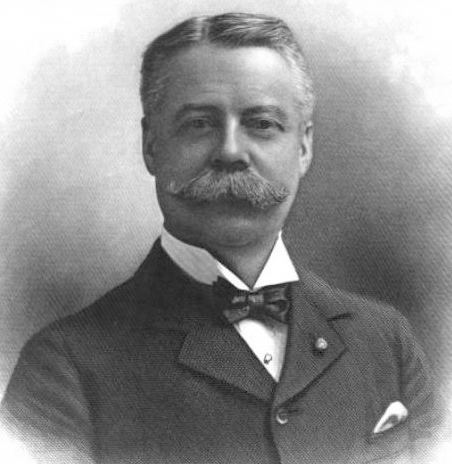
Historical · U.S. House · Indiana · District 7
William English
Former U.S. Representative · Indiana District 7 · 1883–1885 · Democratic
William English represented Indiana's District 7 in the United States House of Representatives (1883–1885) for the Democratic party. The page below collects sourced biographical facts, term history, committee roles, and provenance for English.
Bioguide ID: E000190
Key facts
- Full name
- William English
- State
- Indiana
- District
- District 7
- Party
- Democratic
- House service
- 1883–1885
- First House term
- 1883
- Status
- Left office
- Current term ends
- —
- Born
- 1850
- Bioguide ID
- E000190
- Committee assignments
- —
- Dataset version
- 1.20260606
Biographical narrative
870 words · sourced from the Wikipedia REST extract
William English was an American attorney and politician who served as a U.S. Representative for Indiana's 7th congressional district. A member of the Democratic Party, he held office during the Forty-eighth Congress from 1884 to 1885. Born into a politically active family, English pursued a career in law and politics, eventually transitioning to the Republican Party later in his life. His tenure in Congress was marked by a brief period of service, after which he continued to engage in various political and business endeavors until his death in 1926.
Early life and career
William English was born on November 3, 1850, at Englishton Park, located near Lexington, Indiana. He was the son of William Hayden English, a businessman and vice-presidential candidate, and Emma Mardulia Jackson. His family background was influential in shaping his future, as his father was deeply involved in both business and politics. The English family moved to Indianapolis in 1865, where William Hayden English expanded his real estate holdings and political connections.
In Indianapolis, William English received his education through a combination of public and private schooling. He demonstrated an aptitude for academics and pursued higher education at Northwestern Christian University, which is now known as Butler University. He graduated from the law department of the university in 1873, marking the beginning of his legal career. Shortly after graduation, he was admitted to the bar and established his law practice in Indianapolis.
In addition to his legal career, English became involved in the management of his father's newly constructed theater, English's Opera House, in 1880. His interest in the arts was evident, particularly as he had recently married Annie Fox, an actress. This connection to the theater may have influenced his public persona and his engagement with the community. His political career began to take shape when he was elected to the Indiana House of Representatives in 1880, where he served for a brief period before running for Congress.
House tenure
William English's congressional career began when he successfully contested the election of Stanton J. Peelle to the Forty-eighth Congress. He was seated in the House of Representatives on May 22, 1884, and served until March 3, 1885. His time in Congress was relatively short, as he declined to seek renomination in 1884. During his tenure, he was part of a legislative body that was navigating the complexities of post-Civil War America, including issues related to reconstruction, economic development, and social change.
Although specific details of his legislative contributions during this period are not extensively documented, English's election as a Democrat during a time of significant political realignment in the United States reflects the shifting dynamics of the era. His decision not to run for re-election suggests a strategic choice to focus on his business interests and other political activities rather than continuing in the House.
Following his congressional service, English returned to Indianapolis, where he resumed his business pursuits. His involvement in politics did not end with his congressional term; he remained active in the Democratic Party and participated in national political events. He served as a delegate to the Democratic National Conventions in 1892 and 1896, where he contributed to the party's platform and direction during a period of significant political evolution.
Legislative focus and committees
While specific legislative actions taken by William English during his time in Congress are not detailed in the available records, his background in law and business likely informed his perspectives on various issues facing the nation at the time. The Forty-eighth Congress dealt with a range of topics, including economic policies, civil rights, and foreign affairs, particularly as the nation was beginning to assert itself on the global stage.
After his tenure in Congress, English's political affiliations shifted. In 1900, he left the Democratic Party and became involved with the Republican Party. This transition may have been influenced by the changing political landscape of the time, as the Republican Party was becoming increasingly dominant in national politics. His engagement with the Republican Party culminated in his role as a delegate to the Republican National Convention in 1912, where he participated in discussions that would shape the party's future.
In addition to his involvement in national politics, English returned to state-level politics when he was elected to the Indiana State Senate in 1916. He was re-elected in 1920 and again in 1924, serving until his death in 1926. His long-standing commitment to public service is evident in his sustained engagement with both state and national political arenas.
Throughout his life, English maintained a connection to his legal roots and business interests. His work in the Indiana State Senate allowed him to influence state legislation and contribute to the governance of Indiana. His experience as a lawyer and businessman likely provided him with insights into the legislative process and the needs of his constituents.
William English passed away on April 29, 1926, in Indianapolis, Indiana. He was interred at Crown Hill Cemetery, leaving behind a legacy as a public servant who navigated the complexities of American politics during a transformative period in the nation's history. His life reflects the interplay between law, politics, and community engagement, illustrating the multifaceted roles that individuals can play in shaping their society.
Notable legislation
Sponsored and co-sponsored legislation for William English is pending operator curation. The biographical narrative above carries the same provenance trail until per-bill rows are written.
Sources
- [1]https://en.wikipedia.org/wiki/William_E._EnglishWikipedia · retrieved 2026-06-06
Notable quotes
Sourced quotes for William English are pending operator curation. Narrative-scope provenance remains attached below.
Sources
- [1]https://en.wikipedia.org/wiki/William_E._EnglishWikipedia · retrieved 2026-06-06
Key positions
Curated policy positions for William English are pending operator review. The biographical narrative above carries the same provenance trail until per-topic positions are written.
Sources
- [1]https://en.wikipedia.org/wiki/William_E._EnglishWikipedia · retrieved 2026-06-06
Terms served
- 1883–1885U.S. House · Term 1 · Democratic
Sources & provenance
Every attributable claim above carries a per-section [N] marker that resolves to the corresponding URL below. Each entry records the upstream provider, the canonical URL, and the timestamp at which the source was retrieved by the ingest pipeline.
Key facts
- https://bioguide.congress.gov/search/bio/E000190bioguide · retrieved 2026-06-06
- https://www.govtrack.us/congress/members/403878govtrack · retrieved 2026-06-06
Biographical narrative
- https://en.wikipedia.org/wiki/William_E._Englishwikipedia · retrieved 2026-06-06
Find your representative
Every U.S. state elects representatives by district. Browse Indiana’s delegation, the full former-representative roster, or explore the role and term length.
Related on The Candidate
- Preceded by Gilbert De La MatyrEarlier holder of the Indiana District 7 House seat · National Greenbacker.Open
- Succeeded by William BynumLater holder of the Indiana District 7 House seat · Democratic.Open
- Adam Benjamin Jr.Former U.S. Representative · Indiana District 1 · DemocraticOpen
- Alvin HoveyFormer U.S. Representative · Indiana District 1 · RepublicanOpen
- Arthur TaylorFormer U.S. Representative · Indiana District 1 · DemocraticOpen
- Benoni FullerFormer U.S. Representative · Indiana District 1 · DemocraticOpen