
Historical · U.S. House · Indiana · District 8
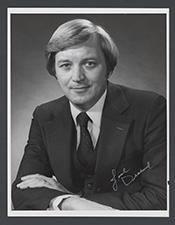
Huey Deckard
Former U.S. Representative · Indiana District 8 · 1979–1983 · Republican
Huey Deckard represented Indiana's District 8 in the United States House of Representatives (1979–1983) for the Republican party. The page below collects sourced biographical facts, term history, committee roles, and provenance for Deckard.
Bioguide ID: D000183
Key facts
- Full name
- Huey Deckard
- State
- Indiana
- District
- District 8
- Party
- Republican
- House service
- 1979–1983
- First House term
- 1979
- Status
- Left office
- Current term ends
- —
- Born
- 1942
- Bioguide ID
- D000183
- Committee assignments
- —
- Dataset version
- 1.20260605
Biographical narrative
892 words · sourced from the Wikipedia REST extract
Huey Joel Deckard was an American businessman and politician who served as a U.S. Representative for Indiana's 8th congressional district from 1979 to 1983. A member of the Republican Party, Deckard's political career was marked by two terms in the House of Representatives, during which he engaged in various legislative activities and represented the interests of his constituents. His career spanned several decades, encompassing roles in business, broadcasting, and state politics before his tenure in Congress.
Early life and career
Joel Deckard was born on March 7, 1942, in Vandalia, Illinois. He grew up in Mount Vernon, Indiana, where he attended public schools. Following his secondary education, Deckard pursued higher education at the University of Evansville from 1962 until 1967. His commitment to public service began early, as he served in the Indiana National Guard from 1966 to 1972, contributing to his community and gaining valuable experience during a formative period in his life.
Deckard's professional career began in the broadcasting industry, where he was affiliated with various radio and television stations in southern Illinois and Indiana from 1959 to 1972. This experience in media likely provided him with insights into public communication and the dissemination of information, skills that would later prove beneficial in his political career. In the mid-1970s, he transitioned into the cable television sector, serving as a legislative liaison for the Illinois-Indiana TV Association from 1974 to 1977. During this time, he was involved in advocating for the interests of the cable television industry, which was undergoing significant changes and expansion.
In addition to his work in broadcasting, Deckard ventured into the construction industry, establishing a corporation focused on the design and construction of energy-efficient and solar-heated homes and offices. This initiative reflected his interest in innovative building practices and sustainability, aligning with the growing environmental consciousness of the time. Furthermore, Deckard's political career began at the state level when he served as a member of the Indiana House of Representatives from 1966 to 1974. His tenure in the state legislature provided him with foundational experience in governance and policy-making, setting the stage for his future endeavors in Congress.
House tenure
Deckard's congressional career commenced when he was elected as a Republican to the Ninety-sixth Congress, which began on January 3, 1979. He was subsequently re-elected to the Ninety-seventh Congress, serving until January 3, 1983. During his time in the House of Representatives, Deckard was involved in various legislative initiatives and contributed to discussions on a range of issues pertinent to his constituents and the nation.
His tenure in Congress was characterized by a commitment to representing the interests of Indiana's 8th district, which included addressing local concerns and participating in national debates. However, his time in office was not without challenges. In 1982, Deckard sought re-election for a third term but faced a competitive race against Frank McCloskey, the then-mayor of Bloomington. Initially viewed as a strong candidate for re-election, Deckard's campaign was adversely affected by an automobile accident that occurred just weeks before the election. Following the incident, he was charged with driving under the influence after refusing to take a blood test.
The political landscape during this period was complex, with high unemployment rates affecting the district. McCloskey's campaign effectively leveraged these economic concerns, attempting to associate Deckard with the broader challenges facing the Republican Party and the administration of President Ronald Reagan. Ultimately, Deckard lost the election, becoming one of several incumbents from the district to be defeated during this politically tumultuous period, which was often referred to as the "Bloody Eighth."
Legislative focus and committees
During his time in Congress, Deckard's legislative focus encompassed a variety of issues relevant to his constituents and the broader national agenda. While specific details regarding the bills he sponsored or supported are not provided, it can be inferred that his background in business and broadcasting likely influenced his policy priorities. Deckard's experience in the construction industry may have led him to advocate for issues related to energy efficiency, infrastructure development, and economic growth.
As a member of the Republican Party, Deckard's legislative activities would have aligned with the party's broader goals during the late 1970s and early 1980s, which included promoting free-market principles, reducing government regulation, and fostering economic development. His role in the House would have involved participation in committee work, where he would have contributed to discussions and decisions on various legislative matters.
After his congressional tenure, Deckard continued to engage in public service and professional pursuits. He relocated to Florida, where he worked as a computer technical specialist for Citibank in Tallahassee. His involvement in technology and finance reflected a continued interest in adapting to changing industries and contributing to the workforce in new capacities.
In 2000, Deckard was the Reform Party's nominee for U.S. Senator, a candidacy that garnered a limited number of votes. His campaign became notable for the statistical analysis surrounding the controversial butterfly ballot used in Palm Beach County during the election, which sparked discussions about voting procedures and electoral integrity.
In his later years, Deckard resided in Little Elm, Texas, where he enjoyed retirement. He passed away on September 6, 2016, in McKinney, Texas, due to an apparent heart attack. His life and career reflect a diverse range of experiences in business, politics, and public service, marking him as a notable figure in Indiana's political history.
Notable legislation
Sponsored and co-sponsored legislation for Huey Deckard is pending operator curation. The biographical narrative above carries the same provenance trail until per-bill rows are written.
Sources
- [1]https://en.wikipedia.org/wiki/H._Joel_DeckardWikipedia · retrieved 2026-06-05
Notable quotes
Sourced quotes for Huey Deckard are pending operator curation. Narrative-scope provenance remains attached below.
Sources
- [1]https://en.wikipedia.org/wiki/H._Joel_DeckardWikipedia · retrieved 2026-06-05
Key positions
Curated policy positions for Huey Deckard are pending operator review. The biographical narrative above carries the same provenance trail until per-topic positions are written.
Sources
- [1]https://en.wikipedia.org/wiki/H._Joel_DeckardWikipedia · retrieved 2026-06-05
Terms served
- 1979–1981U.S. House · Term 1 · Republican
- 1981–1983U.S. House · Term 2 · Republican
Sources & provenance
Every attributable claim above carries a per-section [N] marker that resolves to the corresponding URL below. Each entry records the upstream provider, the canonical URL, and the timestamp at which the source was retrieved by the ingest pipeline.
Key facts
- https://bioguide.congress.gov/search/bio/D000183bioguide · retrieved 2026-06-05
- https://www.govtrack.us/congress/members/403344govtrack · retrieved 2026-06-05
Biographical narrative
- https://en.wikipedia.org/wiki/H._Joel_Deckardwikipedia · retrieved 2026-06-05
Find your representative
Every U.S. state elects representatives by district. Browse Indiana’s delegation, the full former-representative roster, or explore the role and term length.
Related on The Candidate
- Preceded by David CornwellEarlier holder of the Indiana District 8 House seat · Democratic.Open
- Succeeded by Francis McCloskeyLater holder of the Indiana District 8 House seat · Democratic.Open
- Adam Benjamin Jr.Former U.S. Representative · Indiana District 1 · DemocraticOpen
- Alvin HoveyFormer U.S. Representative · Indiana District 1 · RepublicanOpen
- Arthur TaylorFormer U.S. Representative · Indiana District 1 · DemocraticOpen
- Benoni FullerFormer U.S. Representative · Indiana District 1 · DemocraticOpen