
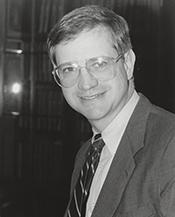
Historical · U.S. House · Indiana · District 8
Francis McCloskey
Former U.S. Representative · Indiana District 8 · 1983–1995 · Democratic
Francis McCloskey represented Indiana's District 8 in the United States House of Representatives (1983–1995) for the Democratic party. The page below collects sourced biographical facts, term history, committee roles, and provenance for McCloskey.
Bioguide ID: M000342
Key facts
- Full name
- Francis McCloskey
- State
- Indiana
- District
- District 8
- Party
- Democratic
- House service
- 1983–1995
- First House term
- 1983
- Status
- Left office
- Current term ends
- —
- Born
- 1939
- Bioguide ID
- M000342
- Committee assignments
- —
- Dataset version
- 1.20260605
Biographical narrative
938 words · sourced from the Wikipedia REST extract
Frank McCloskey was an American politician, journalist, and lawyer who served as a Democratic U.S. Representative for Indiana's 8th congressional district from 1983 until 1995. Known for his liberal stance on various issues, McCloskey's political career was marked by his commitment to economic development and social justice, as well as his active engagement in local and national politics. His tenure in Congress was characterized by significant legislative efforts and a notable election history that included a controversial recount.
Early life and career
Frank McCloskey was born on June 12, 1939, in Philadelphia, Pennsylvania. He later moved to Bloomington, Indiana, where he pursued higher education. McCloskey attended Indiana University, where he earned a bachelor's degree in political science followed by a Juris Doctor degree from the Indiana University Maurer School of Law. His academic background laid the groundwork for his future endeavors in journalism and politics.
Before entering politics, McCloskey worked as a reporter for several publications, including The Indianapolis Star, the Bloomington Herald-Telephone, and the City News Bureau of Chicago. His experience in journalism provided him with insights into public affairs and the workings of government, which would later inform his political career.
In 1970, McCloskey made his first foray into politics as the Democratic nominee for a seat in the Indiana House of Representatives. Although he did not win that election, his political ambitions continued to grow. In 1971, he was elected mayor of Bloomington, defeating the incumbent Republican, John H. Hooker Jr. McCloskey's tenure as mayor was marked by a focus on urban development and city services. He successfully secured federal funds to enhance local infrastructure and revitalized the downtown area. His administration also established Bloomington Transit, the city's public bus service, which improved transportation options for residents.
McCloskey was re-elected as mayor in 1975 and 1979, reflecting his popularity and effectiveness in office. In 1981, he was elected president of the Indiana Association of Cities and Towns, further solidifying his leadership role within the state's political landscape. Additionally, he served on a task force created by the U.S. Conference of Mayors to study urban financial policy, demonstrating his commitment to addressing the challenges faced by cities across the nation. McCloskey also participated as an alternate delegate to the 1972 Democratic National Convention, marking his involvement in national party politics.
House tenure
Frank McCloskey's congressional career began with his election to the U.S. House of Representatives in 1982. He ran against two-term incumbent Republican Joel Deckard in Indiana's 8th congressional district. McCloskey's campaign focused on the economic challenges facing the district, particularly the high unemployment rates attributed to the policies of the Reagan administration. He argued for the deferral or elimination of a scheduled tax cut and advocated for reductions in military spending, positioning himself as a representative of the working-class constituents in his district.
Despite being considered an underdog, McCloskey won the election, securing 52% of the vote compared to Deckard's 48%. His victory was significant, as he became one of the few challengers to unseat an incumbent in what had been termed "the Bloody 8th." Upon taking office, McCloskey sought a position on the Appropriations Committee but was assigned to the Armed Services Committee instead, where he became known for his liberal viewpoints and criticism of military spending.
During his first term, McCloskey focused on issues pertinent to his constituents, including economic development and the utilization of high-sulfur coal mined in the district. He maintained a strong presence in the district, which was crucial for his political survival, especially as he faced re-election in 1984.
In the 1984 election, McCloskey faced a challenge from conservative state Representative Rick McIntyre. The election was contentious, with McIntyre benefiting from a strong Republican turnout, particularly in light of President Reagan's popularity. After initial vote counts showed McCloskey leading by a narrow margin, a recount was initiated due to discrepancies in the vote tally. The recount process was fraught with controversy, as Indiana's Secretary of State certified McIntyre as the winner based on incomplete information. However, after an extensive recount conducted by the House, McCloskey was ultimately declared the winner by a mere four votes, highlighting the contentious nature of the election and the deep political divisions within the district.
Legislative focus and committees
Throughout his six terms in Congress, Frank McCloskey was known for his active engagement in legislative matters, particularly those related to defense and economic policy. As a member of the Armed Services Committee, he was involved in discussions surrounding military funding and defense contracts. McCloskey was particularly vocal in opposing excessive Pentagon spending, aligning with his broader liberal stance on fiscal matters.
In addition to his work on the Armed Services Committee, McCloskey's legislative focus included issues of economic development, particularly in relation to the coal industry, and advocating for farm credit initiatives that supported local agriculture. His commitment to these issues reflected his understanding of the economic landscape of his district and his desire to address the needs of his constituents.
McCloskey's tenure in Congress also included efforts to promote social justice and civil rights, aligning with the broader Democratic Party platform during the 1980s and early 1990s. He was known for his willingness to engage in bipartisan discussions while remaining steadfast in his principles.
After serving a total of six terms, McCloskey's congressional career concluded on January 3, 1995. His time in office was marked by significant electoral challenges and a commitment to addressing the pressing issues of his constituents, leaving a lasting impact on Indiana's political landscape. Following his departure from Congress, McCloskey continued to be involved in various civic and political activities until his passing in 2003.
Notable legislation
Sponsored and co-sponsored legislation for Francis McCloskey is pending operator curation. The biographical narrative above carries the same provenance trail until per-bill rows are written.
Sources
- [1]https://en.wikipedia.org/wiki/Frank_McCloskeyWikipedia · retrieved 2026-06-05
Notable quotes
Sourced quotes for Francis McCloskey are pending operator curation. Narrative-scope provenance remains attached below.
Sources
- [1]https://en.wikipedia.org/wiki/Frank_McCloskeyWikipedia · retrieved 2026-06-05
Key positions
Curated policy positions for Francis McCloskey are pending operator review. The biographical narrative above carries the same provenance trail until per-topic positions are written.
Sources
- [1]https://en.wikipedia.org/wiki/Frank_McCloskeyWikipedia · retrieved 2026-06-05
Terms served
- 1983–1985U.S. House · Term 1 · Democratic
- 1985–1987U.S. House · Term 2 · Democratic
- 1987–1989U.S. House · Term 3 · Democratic
- 1989–1991U.S. House · Term 4 · Democratic
- 1991–1993U.S. House · Term 5 · Democratic
- 1993–1995U.S. House · Term 6 · Democratic
Sources & provenance
Every attributable claim above carries a per-section [N] marker that resolves to the corresponding URL below. Each entry records the upstream provider, the canonical URL, and the timestamp at which the source was retrieved by the ingest pipeline.
Key facts
- https://bioguide.congress.gov/search/bio/M000342bioguide · retrieved 2026-06-05
- https://www.govtrack.us/congress/members/407351govtrack · retrieved 2026-06-05
Biographical narrative
- https://en.wikipedia.org/wiki/Frank_McCloskeywikipedia · retrieved 2026-06-05
Find your representative
Every U.S. state elects representatives by district. Browse Indiana’s delegation, the full former-representative roster, or explore the role and term length.
Related on The Candidate
- Preceded by Huey DeckardEarlier holder of the Indiana District 8 House seat · Republican.Open
- Succeeded by John HostettlerLater holder of the Indiana District 8 House seat · Republican.Open
- Adam Benjamin Jr.Former U.S. Representative · Indiana District 1 · DemocraticOpen
- Alvin HoveyFormer U.S. Representative · Indiana District 1 · RepublicanOpen
- Arthur TaylorFormer U.S. Representative · Indiana District 1 · DemocraticOpen
- Benoni FullerFormer U.S. Representative · Indiana District 1 · DemocraticOpen