
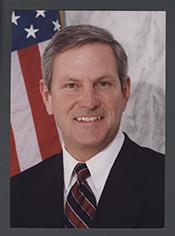
Historical · U.S. House · Indiana · District 9
Baron Hill
Former U.S. Representative · Indiana District 9 · 1999–2011 · Democratic
Baron Hill represented Indiana's District 9 in the United States House of Representatives (1999–2011) for the Democratic party. The page below collects sourced biographical facts, term history, committee roles, and provenance for Hill.
Bioguide ID: H001030
Key facts
- Full name
- Baron Hill
- State
- Indiana
- District
- District 9
- Party
- Democratic
- House service
- 1999–2011
- First House term
- 1999
- Status
- Left office
- Current term ends
- —
- Born
- 1953
- Bioguide ID
- H001030
- Committee assignments
- —
- Dataset version
- 1.20260605
Biographical narrative
937 words · sourced from the Wikipedia REST extract
Baron P. Hill is a retired American politician who served as a U.S. Representative for Indiana's 9th congressional district from 1999 to 2005 and again from 2007 to 2011. A member of the Democratic Party, Hill was known for his affiliation with the Blue Dog Coalition, a group of moderate and conservative Democrats. His congressional district encompassed a significant portion of southeastern Indiana, extending from Bloomington to the Indiana side of the Louisville metropolitan area.
Early life and career
Baron P. Hill was born on June 23, 1953, in Seymour, Indiana. He attended Seymour High School, where he distinguished himself as a talented basketball player, earning recognition as a first-team all-state player and an all-American. Hill set a school record for scoring, amassing a total of 1,724 points during his high school career. His contributions to the sport were recognized when he was inducted into the Indiana Basketball Hall of Fame in 2000.
After graduating from high school in 1971, Hill received an athletic scholarship to Furman University in Greenville, South Carolina. He completed his undergraduate education there, graduating in 1975. Following his time at Furman, Hill returned to his hometown of Seymour, where he joined his family's business, marking the beginning of his professional career outside of politics.
Hill's political career began at the state level when he was elected to the Indiana House of Representatives, where he served from 1982 to 1990. During his tenure, he played a significant role in the Democratic Caucus, chairing the Campaign Committee from 1985 to 1989. In this capacity, he was instrumental in helping the Democratic Party secure a majority in the state House.
In 1990, Hill sought to expand his political influence by running for the U.S. Senate in a special election to fill the remaining term of Dan Quayle, who had been elected Vice President. Hill's campaign garnered attention as he undertook a unique approach by walking the length of Indiana to engage with voters directly. Despite his efforts, he lost the election to Dan Coats, who had been appointed to fill the vacancy, with a margin that was narrower than anticipated.
House tenure
Baron Hill was first elected to the U.S. House of Representatives in November 1998, beginning his first term in January 1999. He served a total of five non-consecutive terms in the House, with his first stint lasting until 2005, followed by a return to Congress from 2007 until 2011. Throughout his time in office, Hill was a member of the Blue Dog Coalition, which is known for its moderate and conservative stances within the Democratic Party. He held leadership roles within the coalition, serving as co-chair for communications and later as co-chair for policy.
During his congressional tenure, Hill participated in various significant legislative actions. He voted in favor of the No Child Left Behind Act in 2001, although he later expressed concerns about the law's impact on local control and the unrealistic expectations placed on special needs students. By 2008, he advocated for a revision of the law, emphasizing the need for increased federal funding for education.
In 2002, Hill voted to authorize military action in Iraq, but he later criticized the Bush administration's approach to the reconstruction efforts in the country. He highlighted the lack of planning for post-war stability and the failure to secure international support, which he believed diverted resources from domestic priorities.
In 2007, Hill introduced a bipartisan measure with Republican Representative Lee Terry aimed at increasing Corporate Average Fuel Economy (CAFE) standards. This proposal sought to raise fuel efficiency requirements for vehicles, reflecting Hill's engagement with both environmental and industry stakeholders. The final energy bill that emerged from Congress mandated a compromise CAFE standard.
Hill's political alignment evolved over time, particularly regarding social issues. He voted against the Emergency Economic Stabilization Act of 2008, which established the Troubled Asset Relief Program, commonly referred to as the "Wall Street bailout." He supported the American Clean Energy and Security Act of 2009, a cap-and-trade proposal that ultimately did not pass, and voted in favor of the American Recovery and Reinvestment Act, an economic stimulus package introduced by President Obama.
In his later years in Congress, Hill's voting record reflected a growing support for LGBTQ+ rights. He earned a 70 percent rating from the Human Rights Campaign and supported measures such as the repeal of "don't ask, don't tell" and the Employment Non-Discrimination Act. While he did not actively campaign for same-sex marriage or co-sponsor legislation to repeal the Defense of Marriage Act, his views on marriage equality evolved, and he expressed support for equal rights during his 2015 Senate campaign.
Legislative focus and committees
Throughout his congressional career, Baron Hill served on several key committees that shaped his legislative focus. During the 107th and 108th Congresses, he was a member of the Agriculture, Armed Services, and Veterans' Affairs Committees. These assignments allowed him to engage with issues related to agriculture policy, military affairs, and veteran services.
In the 110th Congress, Hill transitioned to the Energy and Commerce Committee, as well as the Science and Technology Committee. These roles positioned him to address a range of issues, including energy policy, healthcare, and technological innovation. His involvement in these committees reflected his interest in both economic and environmental matters.
Hill's legislative priorities were influenced by his constituents and the evolving political landscape. His participation in the Blue Dog Coalition highlighted his commitment to a moderate approach within the Democratic Party, balancing fiscal responsibility with progressive social policies. His tenure in the House concluded on January 3, 2011, marking the end of a significant chapter in his political career.
Notable legislation
Sponsored and co-sponsored legislation for Baron Hill is pending operator curation. The biographical narrative above carries the same provenance trail until per-bill rows are written.
Sources
- [1]https://en.wikipedia.org/wiki/Baron_Hill_(politician)Wikipedia · retrieved 2026-06-05
Notable quotes
Sourced quotes for Baron Hill are pending operator curation. Narrative-scope provenance remains attached below.
Sources
- [1]https://en.wikipedia.org/wiki/Baron_Hill_(politician)Wikipedia · retrieved 2026-06-05
Key positions
Curated policy positions for Baron Hill are pending operator review. The biographical narrative above carries the same provenance trail until per-topic positions are written.
Sources
- [1]https://en.wikipedia.org/wiki/Baron_Hill_(politician)Wikipedia · retrieved 2026-06-05
Terms served
- 1999–2001U.S. House · Term 1 · Democratic
- 2001–2003U.S. House · Term 2 · Democratic
- 2003–2005U.S. House · Term 3 · Democratic
- 2007–2009U.S. House · Term 4 · Democratic
- 2009–2011U.S. House · Term 5 · Democratic
Sources & provenance
Every attributable claim above carries a per-section [N] marker that resolves to the corresponding URL below. Each entry records the upstream provider, the canonical URL, and the timestamp at which the source was retrieved by the ingest pipeline.
Key facts
- https://bioguide.congress.gov/search/bio/H001030bioguide · retrieved 2026-06-05
- http://baronhill.house.govhouse.gov · retrieved 2026-06-05
Biographical narrative
- https://en.wikipedia.org/wiki/Baron_Hill_(politician)wikipedia · retrieved 2026-06-05
Find your representative
Every U.S. state elects representatives by district. Browse Indiana’s delegation, the full former-representative roster, or explore the role and term length.
Related on The Candidate
- Preceded by Lee HamiltonEarlier holder of the Indiana District 9 House seat · Democratic.Open
- Succeeded by Trey HollingsworthLater holder of the Indiana District 9 House seat · Republican.Open
- Adam Benjamin Jr.Former U.S. Representative · Indiana District 1 · DemocraticOpen
- Alvin HoveyFormer U.S. Representative · Indiana District 1 · RepublicanOpen
- Arthur TaylorFormer U.S. Representative · Indiana District 1 · DemocraticOpen
- Benoni FullerFormer U.S. Representative · Indiana District 1 · DemocraticOpen