
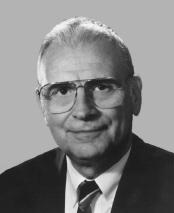
Historical · U.S. House · Indiana · District 9
Lee Hamilton
Former U.S. Representative · Indiana District 9 · 1965–1999 · Democratic
Lee Hamilton represented Indiana's District 9 in the United States House of Representatives (1965–1999) for the Democratic party. The page below collects sourced biographical facts, term history, committee roles, and provenance for Hamilton.
Bioguide ID: H000114
Key facts
- Full name
- Lee Hamilton
- State
- Indiana
- District
- District 9
- Party
- Democratic
- House service
- 1965–1999
- First House term
- 1965
- Status
- Left office
- Current term ends
- —
- Born
- 1931
- Bioguide ID
- H000114
- Committee assignments
- —
- Dataset version
- 1.20260605
Biographical narrative
928 words · sourced from the Wikipedia REST extract
Lee H. Hamilton was a prominent American politician and lawyer who served as a U.S. Representative for Indiana's 9th congressional district from 1965 until 1999. A member of the Democratic Party, Hamilton was known for his extensive tenure in Congress, where he held various leadership roles and was involved in significant legislative efforts. Following his departure from Congress, he continued to influence national policy through various advisory roles, including his service as vice chairman of the 9/11 Commission.
Early life and career
Lee Herbert Hamilton was born on April 20, 1931, in Daytona Beach, Florida. He spent his formative years in Evansville, Indiana, where he attended public schools and graduated from Evansville Central High School in 1948. During his high school years, Hamilton distinguished himself as an accomplished basketball player, leading his team to the state championship game in 1948. His athletic talent continued at DePauw University, where he played basketball under Coach Jay McCreary. Hamilton completed his undergraduate education at DePauw in 1952 and subsequently pursued a legal career, earning his law degree from the Indiana University School of Law in 1956.
After completing his education, Hamilton began practicing law in Columbus, Indiana, where he worked for a decade before entering politics. His legal background and community involvement laid the groundwork for his future political career, as he became increasingly engaged in local and state issues.
House tenure
Hamilton's political career began in earnest when he was elected to the U.S. House of Representatives in 1964, a year marked by a significant Democratic victory at the national level. He represented Indiana's 9th congressional district, a position he would hold for 17 consecutive terms until his retirement in 1999. Throughout his time in Congress, Hamilton was recognized for his leadership abilities and was appointed to chair several important committees, including the House Committee on Foreign Affairs and the U.S. House Permanent Select Committee on Intelligence. His roles on these committees allowed him to influence key areas of national policy, particularly in foreign relations and intelligence matters.
Hamilton's tenure was marked by his involvement in high-profile investigations and committees. Notably, he chaired the House Select Committee to Investigate Covert Arms Transactions with Iran in 1987. In this capacity, he made the decision not to investigate the actions of Presidents Ronald Reagan and George H. W. Bush, believing it would not be beneficial for the country to undergo another impeachment trial. Additionally, he chaired the House October Surprise Task Force in 1992, further solidifying his reputation as a significant figure in congressional oversight and investigation.
Throughout his career, Hamilton was often considered a potential candidate for higher office, including the vice presidency, due to his extensive experience in foreign policy and his connections within the Democratic Party. His political acumen and understanding of national issues positioned him as a key player in shaping the Democratic Party's direction during a time of significant political change.
Legislative focus and committees
During his long tenure in Congress, Hamilton focused on a variety of legislative issues, particularly those related to foreign affairs, intelligence, and national security. His leadership roles on various committees allowed him to shape policies that addressed both domestic and international concerns. As chairman of the House Committee on Foreign Affairs, he played a critical role in shaping U.S. foreign policy during a tumultuous period marked by the Cold War and various international conflicts.
In addition to his work on foreign affairs, Hamilton's involvement in intelligence matters was significant. As chairman of the U.S. House Permanent Select Committee on Intelligence, he oversaw the nation's intelligence operations and worked to ensure accountability and oversight within the intelligence community. His efforts in this area were particularly relevant in the context of growing concerns about national security and the effectiveness of intelligence operations.
Hamilton's commitment to public service extended beyond his congressional duties. After leaving Congress, he continued to engage in national policy discussions through various advisory roles. He was appointed vice chairman of the 9/11 Commission, which investigated the terrorist attacks on September 11, 2001, and provided recommendations for improving national security. His work on this commission further demonstrated his dedication to addressing critical issues facing the nation.
In addition to his role on the 9/11 Commission, Hamilton co-chaired the Iraq Study Group, which sought to provide recommendations for U.S. policy in Iraq. His involvement in these high-profile commissions underscored his expertise in national security and foreign policy, as well as his ability to navigate complex political landscapes.
Throughout his post-congressional career, Hamilton remained active in various organizations and initiatives aimed at promoting bipartisan cooperation in national security and foreign policy. He served on numerous advisory boards, including those of the CIA and the President's Homeland Security Advisory Council. His commitment to fostering dialogue and collaboration in addressing national challenges was evident in his work with organizations such as the Partnership for a Secure America and the Bipartisan Policy Center.
Hamilton authored a book titled "How Congress Works and Why You Should Care," in which he shared insights from his extensive experience in Congress and discussed the importance of legislative processes in American democracy. His reflections on Congress and its role in society highlighted his belief in the necessity of an informed and engaged citizenry.
In summary, Lee H. Hamilton's career as a U.S. Representative and his subsequent contributions to national policy reflect a deep commitment to public service and a dedication to addressing the complex challenges facing the nation. His leadership in Congress and his involvement in various advisory roles have left a lasting impact on American politics and governance.
Notable legislation
Sponsored and co-sponsored legislation for Lee Hamilton is pending operator curation. The biographical narrative above carries the same provenance trail until per-bill rows are written.
Sources
- [1]https://en.wikipedia.org/wiki/Lee_HamiltonWikipedia · retrieved 2026-06-05
Notable quotes
Sourced quotes for Lee Hamilton are pending operator curation. Narrative-scope provenance remains attached below.
Sources
- [1]https://en.wikipedia.org/wiki/Lee_HamiltonWikipedia · retrieved 2026-06-05
Key positions
Curated policy positions for Lee Hamilton are pending operator review. The biographical narrative above carries the same provenance trail until per-topic positions are written.
Sources
- [1]https://en.wikipedia.org/wiki/Lee_HamiltonWikipedia · retrieved 2026-06-05
Terms served
- 1965–1967U.S. House · Term 1 · Democratic
- 1967–1969U.S. House · Term 2 · Democratic
- 1969–1971U.S. House · Term 3 · Democratic
- 1971–1973U.S. House · Term 4 · Democratic
- 1973–1975U.S. House · Term 5 · Democratic
- 1975–1977U.S. House · Term 6 · Democratic
- 1977–1979U.S. House · Term 7 · Democratic
- 1979–1981U.S. House · Term 8 · Democratic
- 1981–1983U.S. House · Term 9 · Democratic
- 1983–1985U.S. House · Term 10 · Democratic
- 1985–1987U.S. House · Term 11 · Democratic
- 1987–1989U.S. House · Term 12 · Democratic
- 1989–1991U.S. House · Term 13 · Democratic
- 1991–1993U.S. House · Term 14 · Democratic
- 1993–1995U.S. House · Term 15 · Democratic
- 1995–1997U.S. House · Term 16 · Democratic
- 1997–1999U.S. House · Term 17 · Democratic
Sources & provenance
Every attributable claim above carries a per-section [N] marker that resolves to the corresponding URL below. Each entry records the upstream provider, the canonical URL, and the timestamp at which the source was retrieved by the ingest pipeline.
Key facts
- https://bioguide.congress.gov/search/bio/H000114bioguide · retrieved 2026-06-05
- https://www.govtrack.us/congress/members/404996govtrack · retrieved 2026-06-05
Biographical narrative
- https://en.wikipedia.org/wiki/Lee_Hamiltonwikipedia · retrieved 2026-06-05
Find your representative
Every U.S. state elects representatives by district. Browse Indiana’s delegation, the full former-representative roster, or explore the role and term length.
Related on The Candidate
- Preceded by Earl WilsonEarlier holder of the Indiana District 9 House seat · Republican.Open
- Succeeded by Baron HillLater holder of the Indiana District 9 House seat · Democratic.Open
- Adam Benjamin Jr.Former U.S. Representative · Indiana District 1 · DemocraticOpen
- Alvin HoveyFormer U.S. Representative · Indiana District 1 · RepublicanOpen
- Arthur TaylorFormer U.S. Representative · Indiana District 1 · DemocraticOpen
- Benoni FullerFormer U.S. Representative · Indiana District 1 · DemocraticOpen